PNP-202
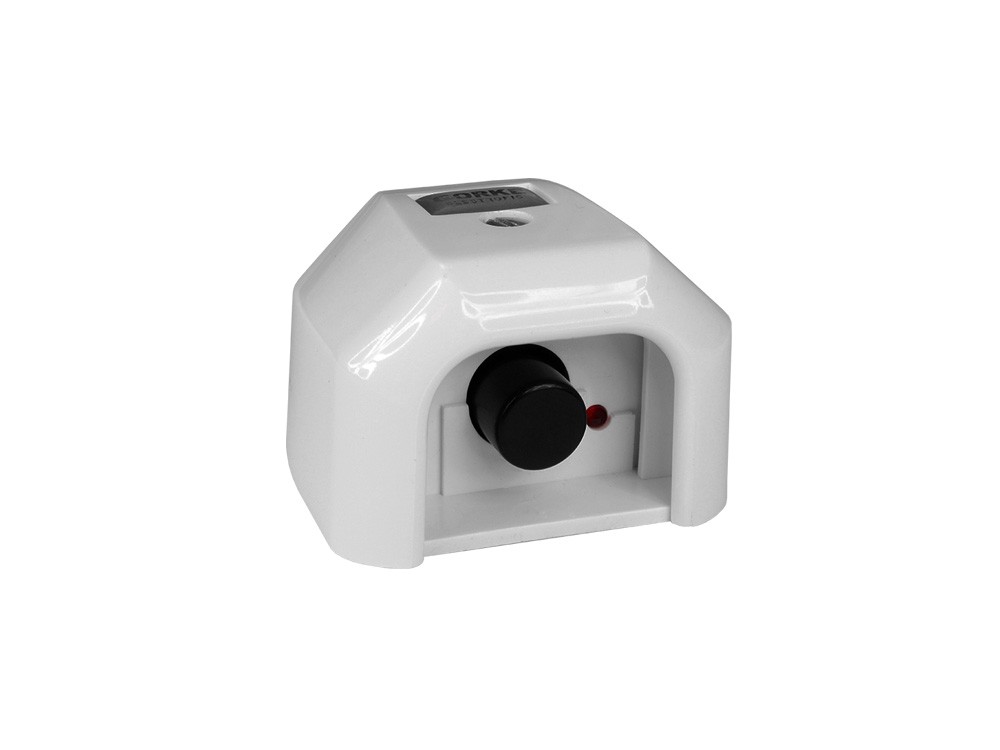
Button under the till counter: a call with a hand movement the customer cannot see. Battery-powered, with a housing tamper circuit.
Quantity: 2
Under-counter and foot buttons at two tills, a receiver showing the till number in the back office and a GSM transmitter that notifies the regional manager — also at night, when the cashier is alone at the station.
01 / Investment context
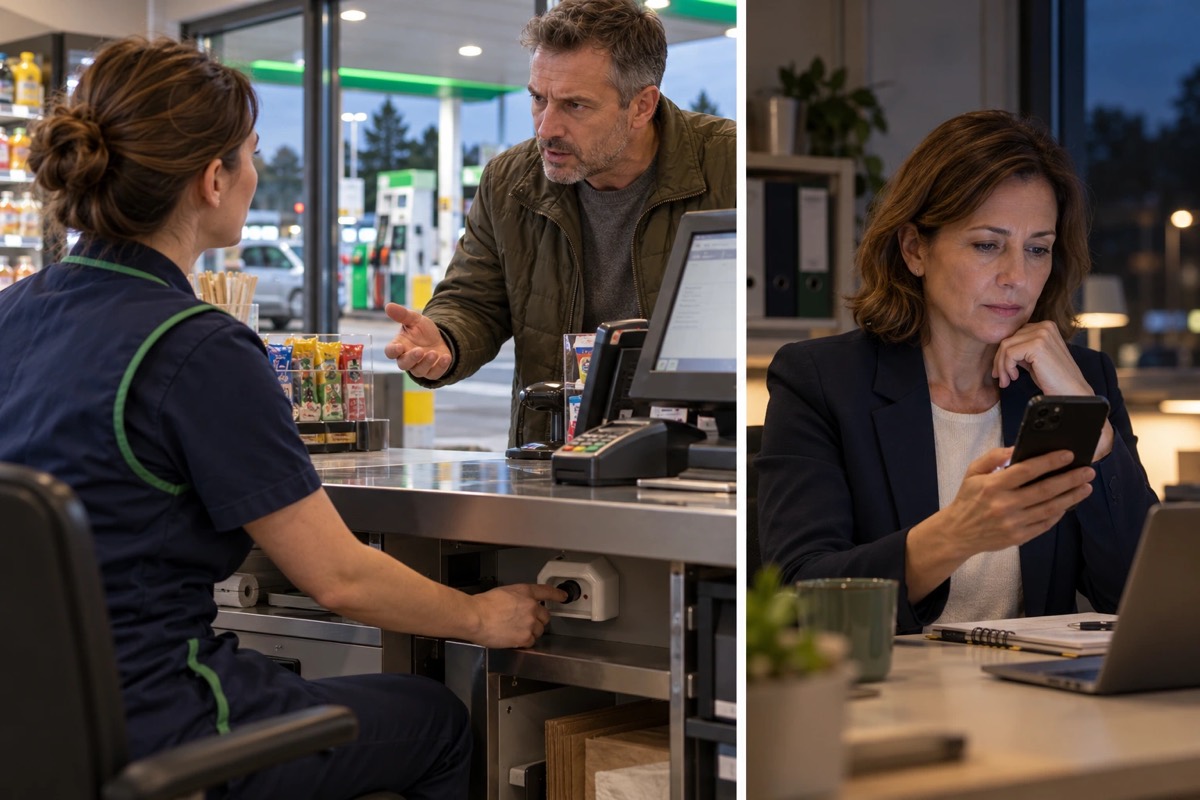
The filling station has two tills in the sales area and a back office where the shift manager works during the day. At night the cashier is alone at the station, and the regional manager is off site.
When a conversation with a customer turns difficult — the customer is aggressive, drunk or refuses to pay — the cashier needs support but must not draw attention. Reaching for the phone or shouting for the manager can only make things worse. At night, with nobody in the back office, the signal has to leave the station.
The investor’s goal: A call the customer does not see should reach the shift manager in the back office by day, and always — at night too — go by SMS to people off site.
Each till has a call button under the counter (PNP-202), and a foot button (SPR-PN1) sits on the floor by the cashier — for a situation where the hands must stay in view. The identification receiver in the back office (IDO-04/99) shows the transmitter’s number, that is, which till and which button the call came from.
The receiver’s relay switches on a signal unit with adjustable volume in the back office (SWR-108), set so that the manager hears it but customers in the sales area do not. The same relay, via a relay module (MPU-121) that galvanically separates the two circuits, feeds the input of a GSM transmitter in a housing with its own power supply (ATG-SG4set). The transmitter sends an SMS and rings (CLIP) the regional manager and a second person on the list.
The receiver, signal unit and relay module run on 12 V DC from a power supply (SPR-ZS1). An SMS goes out with every call: by day it adds to the signal in the back office, at night it is the only signal that leaves the station.
02 / Operating principle
The cashier calls for support with an under-counter or foot button; the back office sees the till number, and an SMS leaves the station.
01 / Signal source
Till Under-counter or foot button Under the counter + UnderfootThe cashier calls for support with a movement the customer cannot see.
02 / Reception
IDO-04/99 Receiver in the back officeShows the till and button number, and its relay switches on the notification.
03 / Notification
Support Shift and regional manager Back office + Off siteThe signal unit sounds in the back office; the SMS and the CLIP call go to two people.
The customer does not see the cashier call for support. An SMS goes out with every call: by day it adds to the signal in the back office, at night it is the only signal that leaves the station.
A simplified functional diagram.
03 / Installation components
An example selection — the number of devices depends on the site.
Button under the till counter: a call with a hand movement the customer cannot see. Battery-powered, with a housing tamper circuit.
Quantity: 2
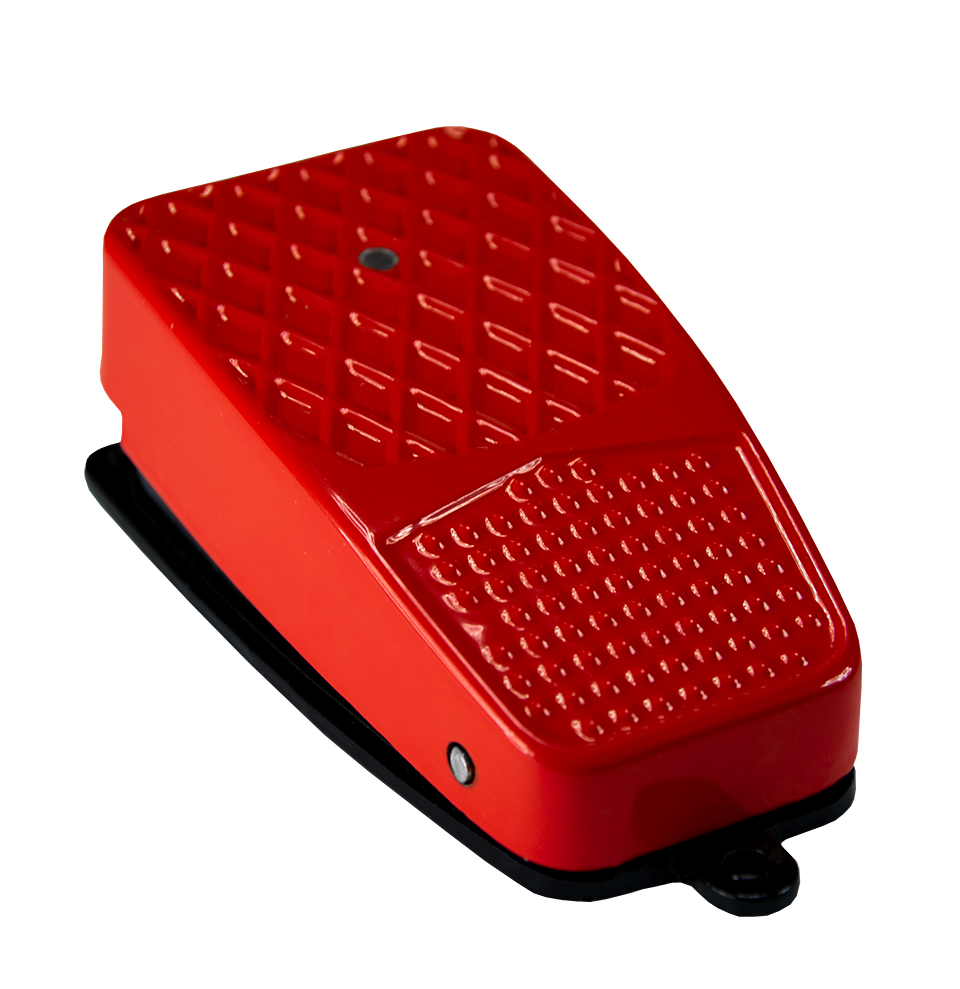
Foot button at the till: a call by foot when the cashier’s hands must stay in view. Powered by a 3.6 V lithium cell.
Quantity: 2
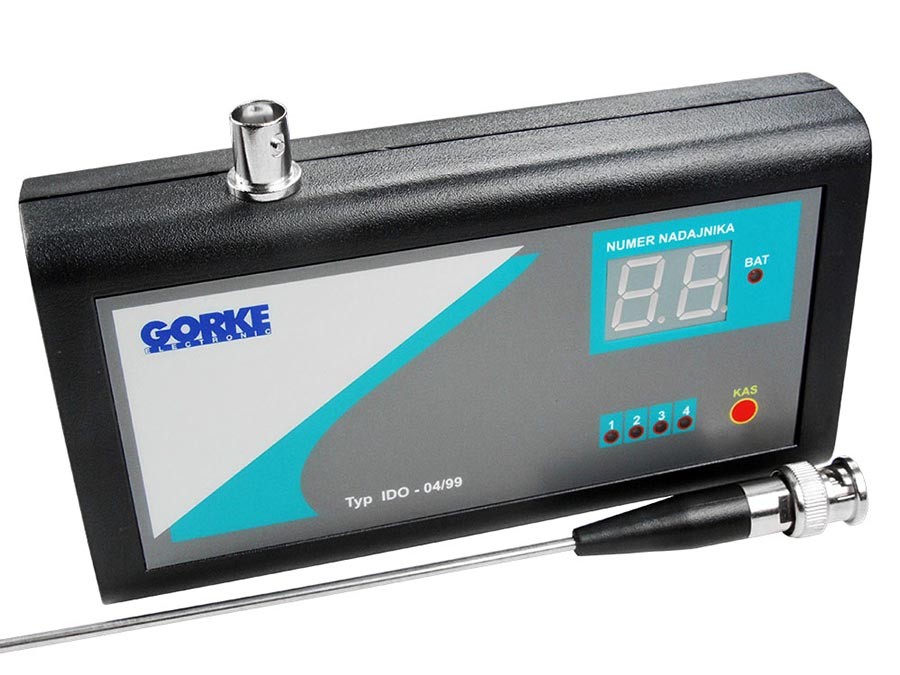
Identification receiver in the back office: shows the number of the transmitter that called, and its relay switches on the signal unit and the GSM notification.
Quantity: 1
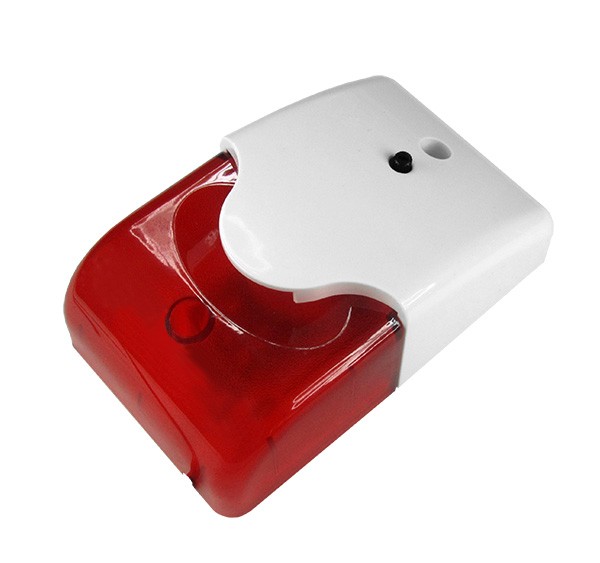
Light-and-sound signal unit in the back office; the volume knob lets it be set so the manager hears it but customers do not.
Quantity: 1
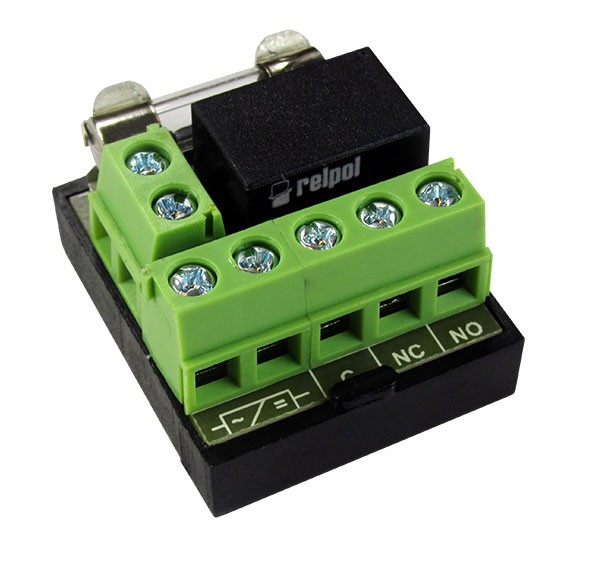
Relay module between the receiver’s output and the GSM transmitter’s input: galvanically separates the two circuits. Powered by 12 V DC.
Quantity: 1
GSM 2G/4G/LTE transmitter in a housing with a power supply and an internal antenna: after a call it sends an SMS and rings (CLIP) the people on the list.
Quantity: 1
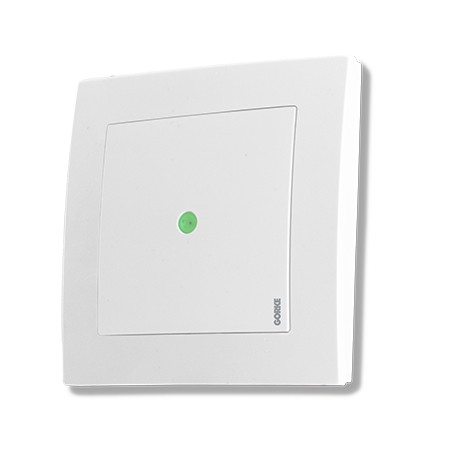
Mains power supply, 230 V AC, in the back office: powers the receiver, signal unit and relay module, which run on 12 V DC.
Quantity: 1
Catalogue figures describe a device under stated conditions, usually in open terrain, and are not a guaranteed range in every installation. Device quantities in the examples are indicative.
04 / Value for the investor
A button under the counter or under foot and a signal only in the back office — the cashier asks for support without escalating the conversation with the customer.
At night, when the cashier is alone, the SMS and the CLIP call reach the regional manager and a second person on the list, so someone off site can respond.
The number on the receiver points to the till and the button, so the shift manager goes straight to the right till.
05 / Before installation
Before devices are chosen, what matters is the site’s conditions and how the system ties into the final installation.
Example configuration — it needs a technical selection for your site.
More from this sector
Retail and services
A wholesale market on two storeys: an alarm from any of 270 stalls reaches the guard room and the patrol’s pagers with the stall number, with an event log and a text message.
Retail and services
A business owner with several retail outlets and offices switches the outdoor lighting of closed premises on and off from a mobile phone — with a “switch on” or “switch off” command.
Retail and services
A self-service car wash with 6 bays: a button at each bay’s terminal, a text message to the owner, and a receiver that shows the number of the bay where the customer is waiting.
A project for your site
Send us the key requirements — GORKE will help define the scope, the technology and the components that fit the investment.