PNH-201
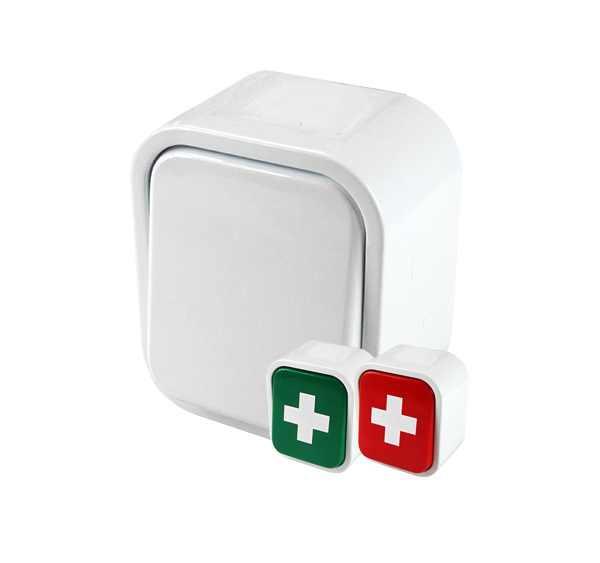
Sealed battery button at the bay’s payment terminal, under cover, with a “Call staff” sticker. Each one has its own code.
Quantity: 6
A staff call for a car wash with no permanent staff: the customer presses a button at the payment terminal, the owner gets a text message and, on arrival, reads on the receiver which bay the call came from.
01 / Investment context
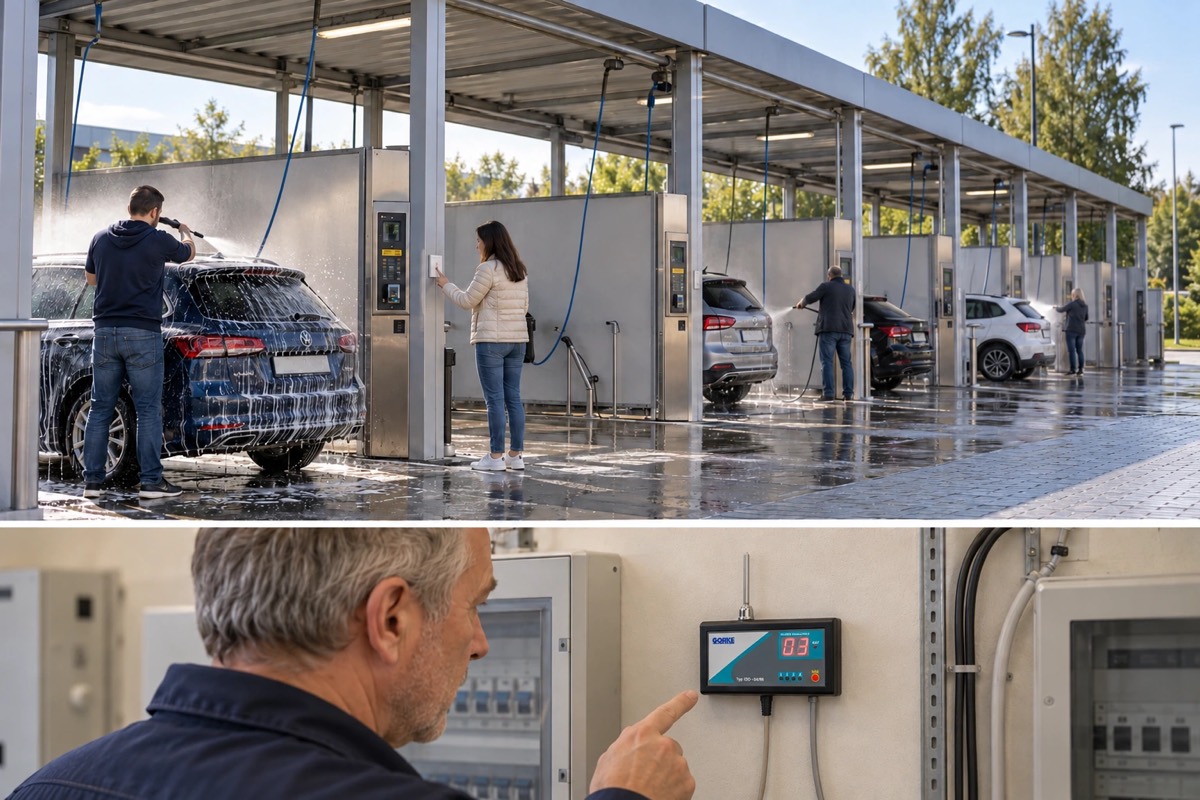
The car wash has six bays and runs without permanent staff — the owner comes out when called. A customer whose payment the terminal did not accept, or whose programme stopped halfway, is left in the bay with a wet car and nobody to ask.
Calling the number on the sign does not always get through: the owner may be driving, working elsewhere or have the phone on silent. And even when the owner answers, the customer cannot always say which bay they are in and what exactly happened. Anyone who gets no help drives off with the problem unresolved — and the owner does not even know that someone needed help.
The investor’s goal: Fewer customers driving off with their problem unresolved: a call from a bay reaches the owner by text message, and on site it is clear at once which bay called.
At the payment terminal of every bay, under a canopy, hangs a sealed battery button (PNH-201) with a sticker saying “Call staff”. Each of the six buttons has its own code, stored in the identification receiver (IDO-04/99) in the plant room under the number of its bay.
The receiver recognises which button has transmitted and shows the bay number. Its relay signals the input of a GSM transmitter in a housing with a power supply (ATG-SG4set), which sends the owner a text message about the call. On arrival, the owner reads on the receiver which bay the call came from. The receiver is powered by a mains power supply (SPR-ZS1) in a dry part of the room.
The buttons run on batteries, so no cables have to be laid to the terminals. The receiver’s relay works in monostable mode: with each call it switches on for the set time — 30 s or 1 s — and in this way triggers the GSM transmitter.
02 / Operating principle
A button at the terminal of each of the 6 bays calls the owner by text, and the receiver shows the bay number.
01 / Signal source
PNH-201 Button at the bay’s terminalThe customer presses “Call staff” when the terminal or the programme fails.
02 / Reception
IDO-04/99 In the plant roomIdentifies the button, shows the bay number and triggers the GSM transmitter.
03 / Notification
Owner Text from the ATG-SG4set transmitterReceives a text message about the call as soon as the button is pressed.
On arrival it is clear which bay called. The text does not give the bay number — the receiver shows it, so on arrival there is no need to walk round the car wash or question the customer.
A simplified functional diagram.
03 / Installation components
An example selection — the number of devices depends on the site.
Sealed battery button at the bay’s payment terminal, under cover, with a “Call staff” sticker. Each one has its own code.
Quantity: 6
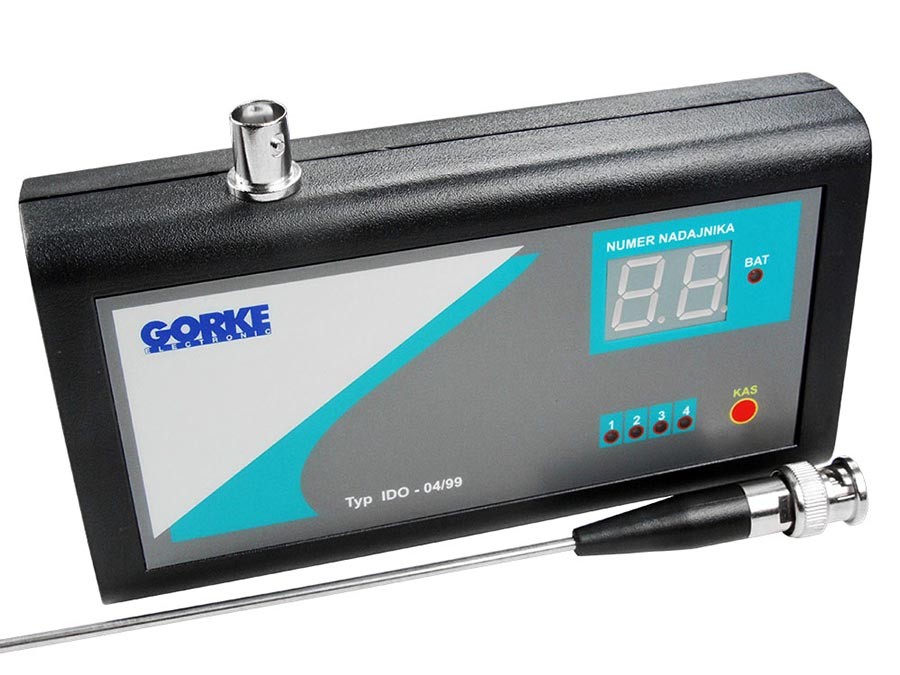
Identification receiver in the plant room: shows the number of the bay the call came from, and triggers the GSM transmitter via its relay.
Quantity: 1
GSM transmitter, 2G/4G/LTE, in a housing with a power supply: on the receiver’s signal it sends the owner a text about the call.
Quantity: 1
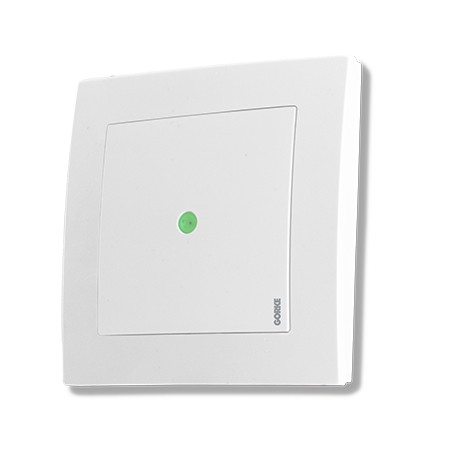
A 230 V AC power supply for the identification receiver, in a dry part of the plant room.
Quantity: 1
Catalogue figures describe a device under stated conditions, usually in open terrain, and are not a guaranteed range in every installation. Device quantities in the examples are indicative.
04 / Value for the investor
The text goes out as soon as the button is pressed, so the call does not get lost like a missed phone call from a customer.
The receiver shows the bay number, so on arrival there is no need to walk round the car wash or question the customer.
Customers have a simple way to call for staff right at the terminal, so fewer of them drive off with an unresolved payment or programme problem.
05 / Before installation
Before devices are chosen, what matters is the site’s conditions and how the system ties into the final installation.
Example configuration — it needs a technical selection for your site.
More from this sector
Retail and services
A wholesale market on two storeys: an alarm from any of 270 stalls reaches the guard room and the patrol’s pagers with the stall number, with an event log and a text message.
Retail and services
A business owner with several retail outlets and offices switches the outdoor lighting of closed premises on and off from a mobile phone — with a “switch on” or “switch off” command.
Retail and services
A filling station with two tills: the cashier calls for support with a button under the counter or by foot, the back office sees the till number, and an SMS reaches the regional manager.
A project for your site
Send us the key requirements — GORKE will help define the scope, the technology and the components that fit the investment.