IDO-1000
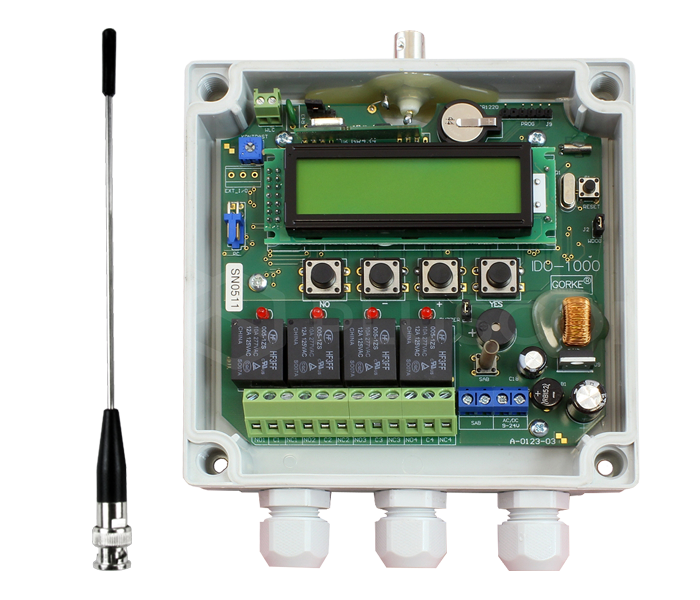
Identification receiver in the ground-floor guard room: recognises which button sent the alarm and passes the event to Tablica Synoptyczna. Powered from 9–24 V AC or DC.
Quantity: 1
A radio alarm identification system for a two-storey wholesale market with several hundred sales units: a repeater on each storey, Tablica Synoptyczna (synoptic board software) in the guard room, patrol pagers and text messages.
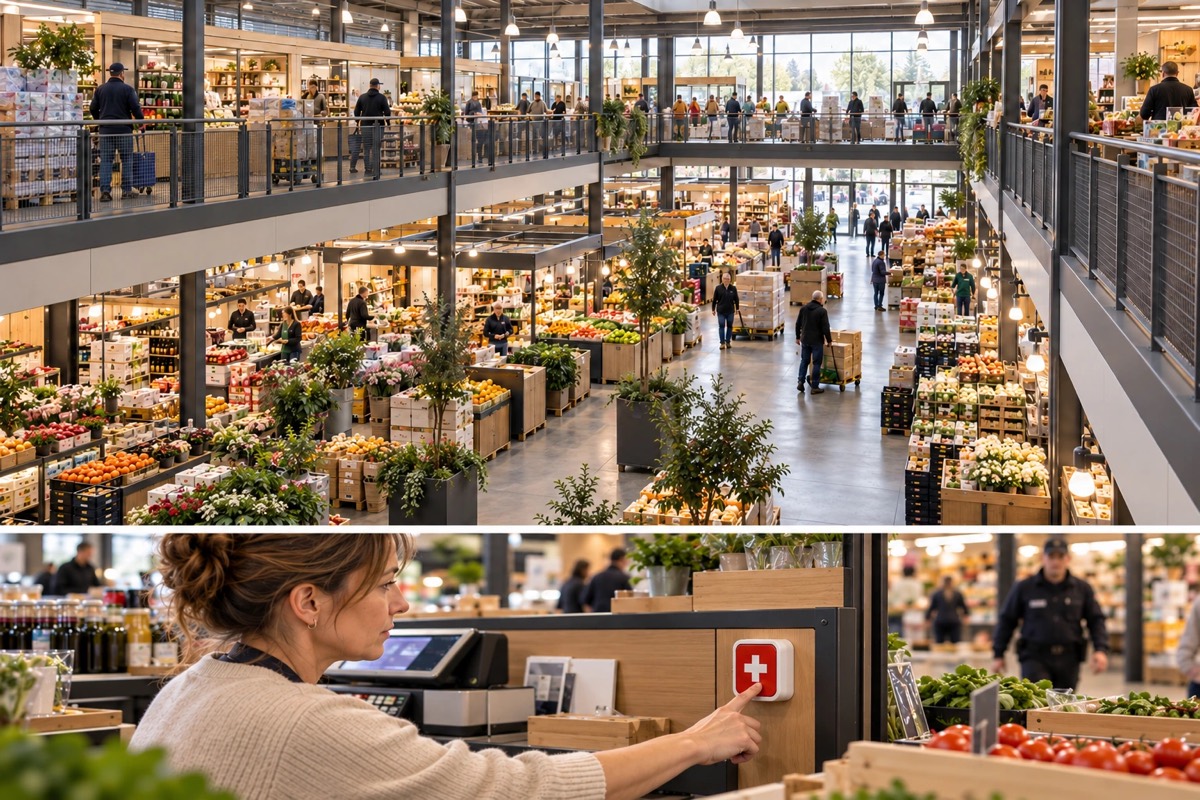
01 / Investment context
The wholesale market occupies a two-storey building with several hundred sales units. Security works around the clock; during opening hours it staffs the guard room and runs a two-person patrol through the building.
Each of the 270 stalls is to have a button whose signal reaches both the guard room and the patrol — with the stall number, because among hundreds of similar units there is no time to search for where the alarm came from.
The investor also required a log covering the type of event, the stall number, the time of the event and the time the guard room acknowledged it, and every alarm was also to be sent by text message to a designated phone number. With hundreds of buttons on two storeys, the signal delivery time and the load on the radio band also mattered.
The investor’s goal: The stall number with security — in the guard room and with the patrol on its rounds — with a record of every event and its acknowledgement, and a text message for every alarm.
The ground-floor guard room was fitted with an identification receiver (IDO-1000) and the Tablica Synoptyczna software on a computer — today also available as a set with a touch-screen computer (SPA-1000/T). After range tests one repeater (RTS-1000) was installed on each storey, and every button was programmed to the nearest one only. This assignment by area means a signal never passes through two repeaters: it arrives faster and puts less load on the band.
The repeaters pass the signals from the stalls to the guard room and to the patrol’s pagers, which is why even the smallest buttons could be used at the stalls. Each stall chose its own: a key-fob remote with a flap (PUK-151), a three-button remote control (PUK-303), a sealed button (PNH-201), a wristwatch transmitter (PUK-121) or a PNP-121 panic button, whose equivalent today is the under-counter button (PNP-202). The patrol’s pagers showed the storey and the stall number; today this role is filled by the OBI-4SH pager.
A field with the stall’s description and location flashes on the Tablica screen and the computer sounds an alert; the software also sends a text message with the time of the event and the stall’s description to a designated number — through a GSM add-on (today GSU-SP1000/L). Pressing the flashing field stops the sound and records the acknowledgement, so the log holds all the data the investor required.
02 / Operating principle
An alarm from any of the 270 stalls reaches the guard room and the patrol with the stall number, and is recorded in the log.
01 / Signal source
Stall A button chosen by the stallKey fob, remote, wristwatch or button — each stall chose its own.
02 / Transmission
RTS-1000 Repeater on each storeyPasses the signal of its assigned buttons to the guard room and the patrol’s pagers.
03 / Notification
Security Guard room, patrol and SMS Screen + PagersThe stall number on the Tablica screen, the alarm on the pagers and a text message to the designated number.
Security knows which stall to run to. Pressing the flashing field stops the sound, and the log records the stall number, the time of the event and the time of acknowledgement.
A simplified functional diagram.
03 / Installation components
The models used in the project, with their equivalents in the current range.
Identification receiver in the ground-floor guard room: recognises which button sent the alarm and passes the event to Tablica Synoptyczna. Powered from 9–24 V AC or DC.
Quantity: 1
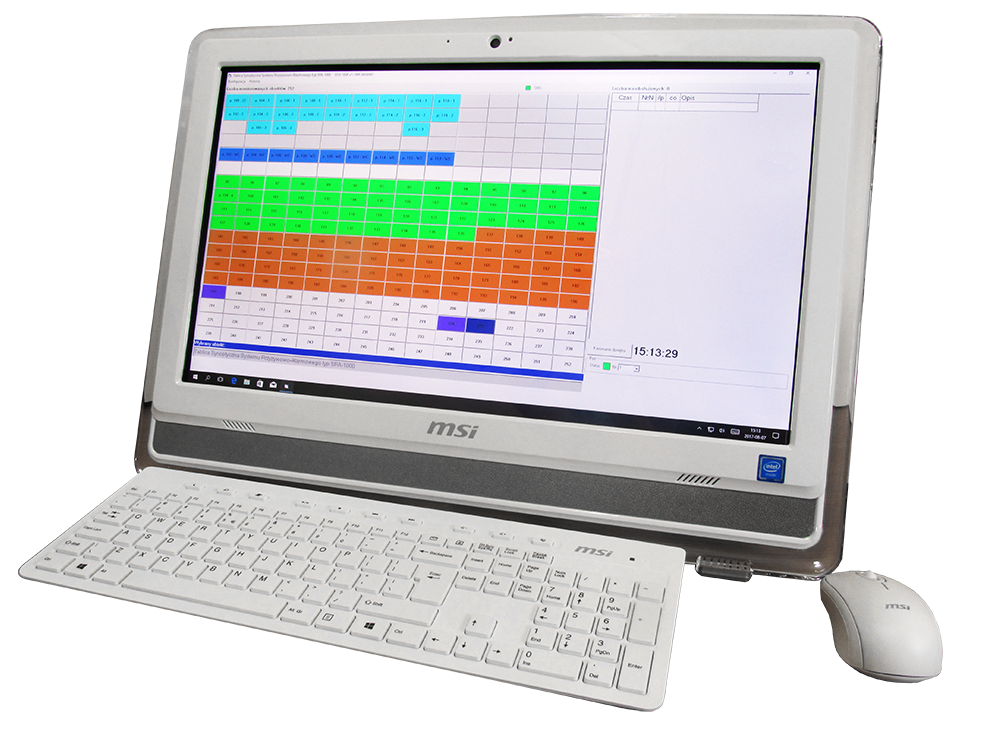
Tablica Synoptyczna with a touch-screen computer — today’s set for the software used in the installation: the stall number on screen, acknowledgement by pressing the field, and an event log with acknowledgement times.
Quantity: 1
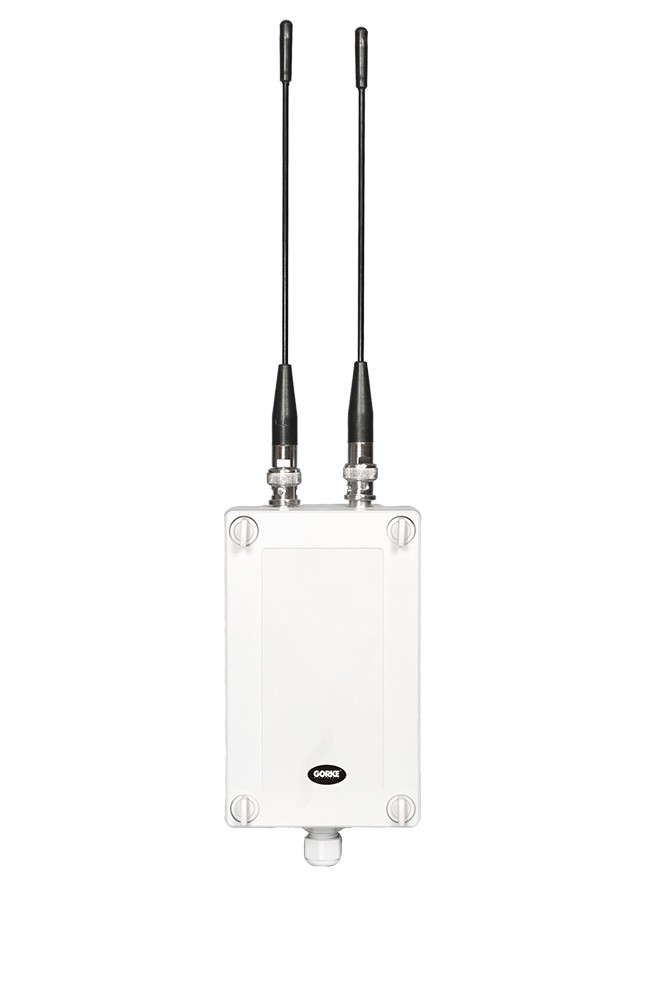
Repeater on each storey: passes to the guard room and the patrol’s pagers the signals of only those buttons assigned to it. 12 V DC supply.
Quantity: 2
Patrol pager — today’s equivalent of the pagers used in the installation. The alarm reaches security on their rounds, away from the guard room.
Quantity: 2
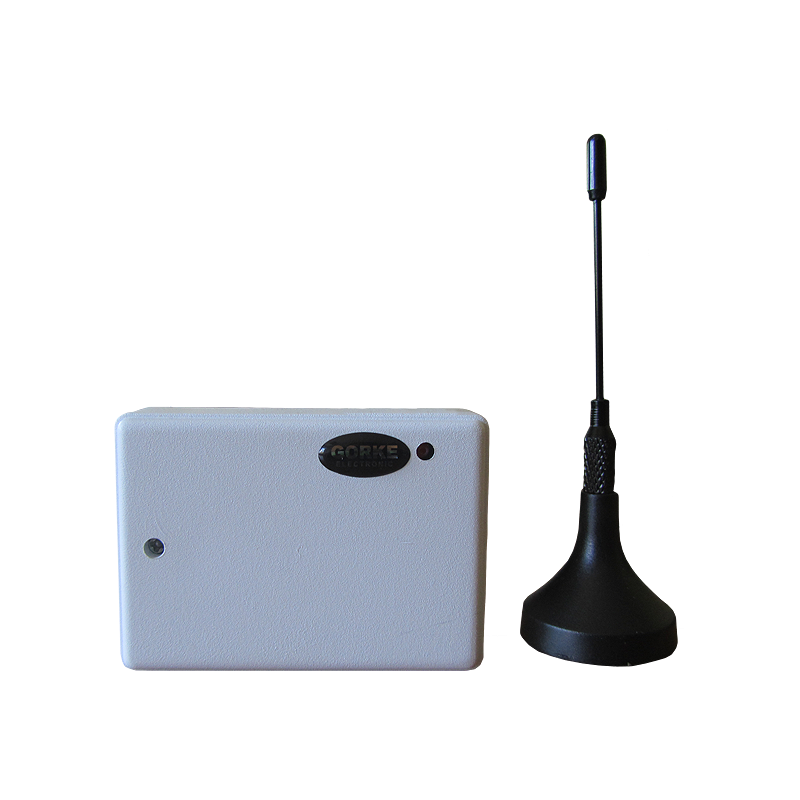
SMS add-on for Tablica Synoptyczna (LTE) — today’s equivalent of the GSU-SP1 GSM transmitter used in the installation. Sends a text message about every alarm, to up to 10 numbers.
Quantity: 1

Key-fob remote with a sliding flap, carried by the seller — the flap protects the key from being pressed by accident.
Quantity: as chosen by stalls
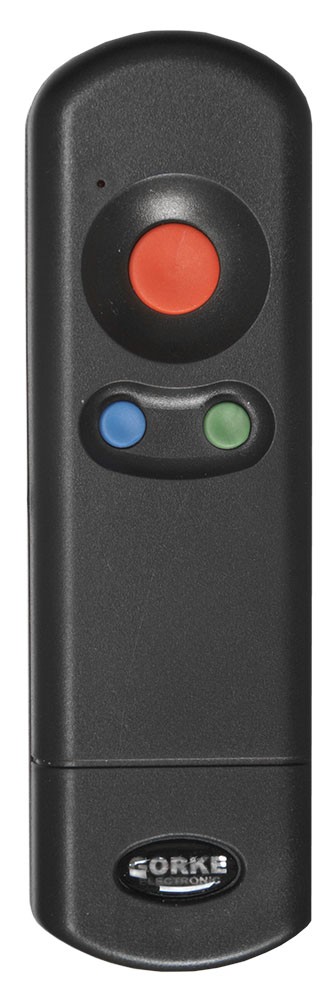
Three-button remote control with the main key in a recess, easy to feel and resistant to accidental pressing.
Quantity: as chosen by stalls
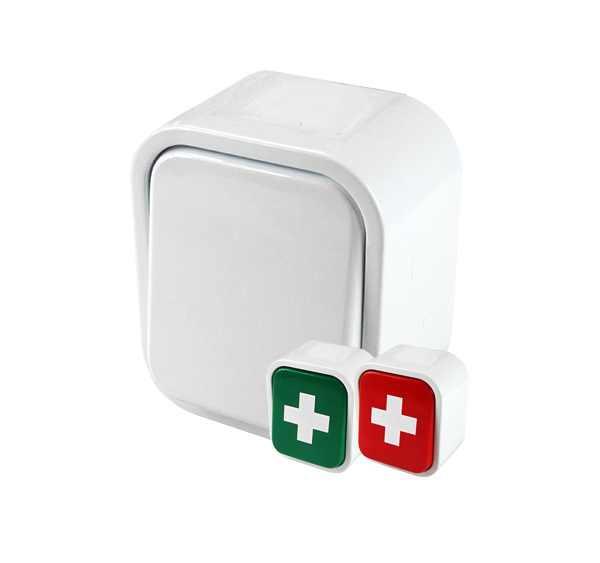
Sealed button on the wall or post of the unit — a fixed alarm point known to everyone working at the stall.
Quantity: as chosen by stalls
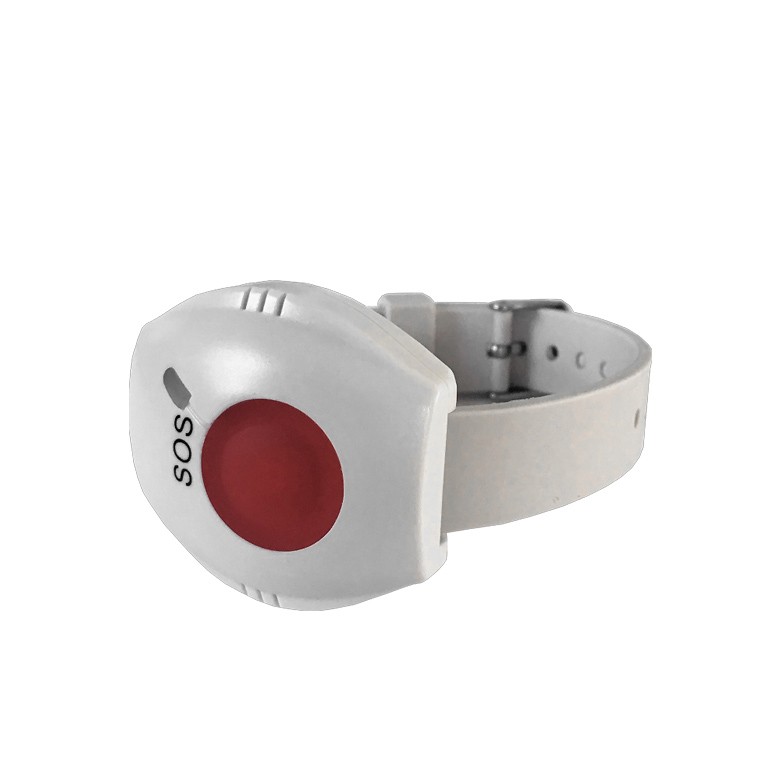
SOS transmitter worn on the wrist like a watch — always with the seller, even away from the counter.
Quantity: as chosen by stalls
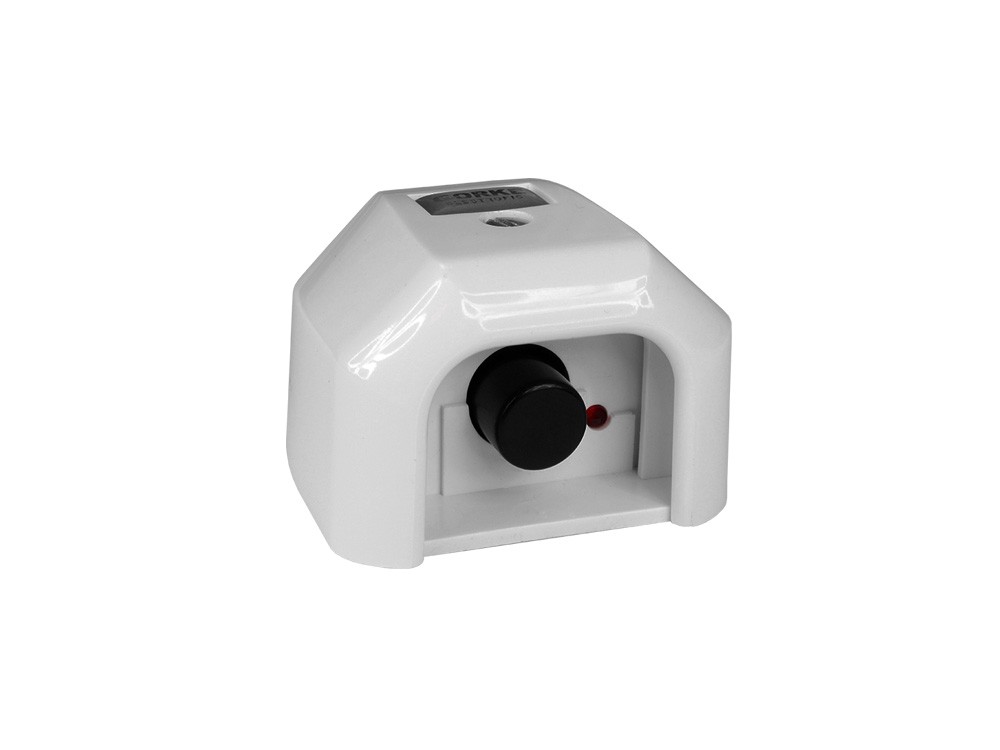
Panic button under the counter top — today’s equivalent of the PNP-121 button used in the installation. An alarm from under the counter, without reaching for a transmitter.
Quantity: as chosen by stalls
Catalogue figures describe a device under stated conditions, usually in open terrain, and are not a guaranteed range in every installation. Device quantities in the examples are indicative.
04 / Value for the investor
The guard room and the patrol know which of the 270 stalls to run to, instead of searching two storeys for the source of the alarm.
The alarm reaches the guard room screen, the patrol’s pagers and, by text message, the designated phone, so whoever is nearest can respond.
The Tablica records the time of the event and of the acknowledgement, so the head of security can check how quickly each alarm was taken.
05 / Before installation
Before devices are chosen, what matters is the site’s conditions and how the system ties into the final installation.
Source: an archived GORKE description of the installation. For a new investment we choose current models.
More from this sector
Retail and services
A business owner with several retail outlets and offices switches the outdoor lighting of closed premises on and off from a mobile phone — with a “switch on” or “switch off” command.
Retail and services
A filling station with two tills: the cashier calls for support with a button under the counter or by foot, the back office sees the till number, and an SMS reaches the regional manager.
Retail and services
A self-service car wash with 6 bays: a button at each bay’s terminal, a text message to the owner, and a receiver that shows the number of the bay where the customer is waiting.
A project for your site
Send us the key requirements — GORKE will help define the scope, the technology and the components that fit the investment.