PNH-201C
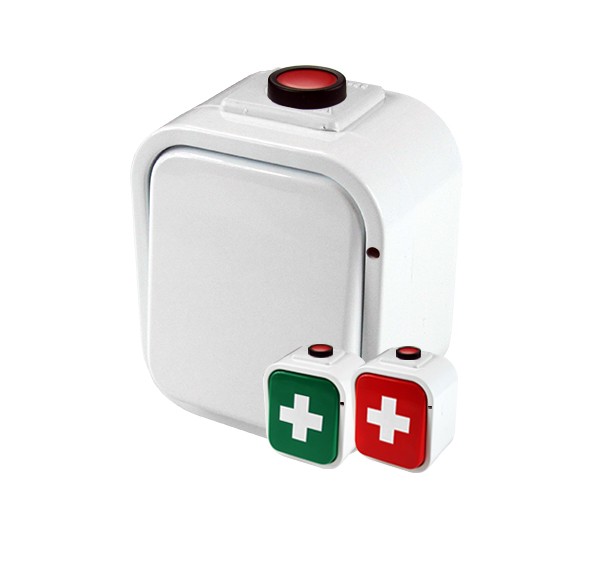
Sealed button with a cancel key at the dock, labelled with the dock number: the call repeats every 30 s until cancelled on the spot. Battery-powered, IP44.
Quantity: 24
Buttons with a cancel key at the docks, the dock name on the receiver in the dispatch office and its number on the forklift operators’ pagers, and a repeater that carries the signal to the far end of the hall.
01 / Investment context
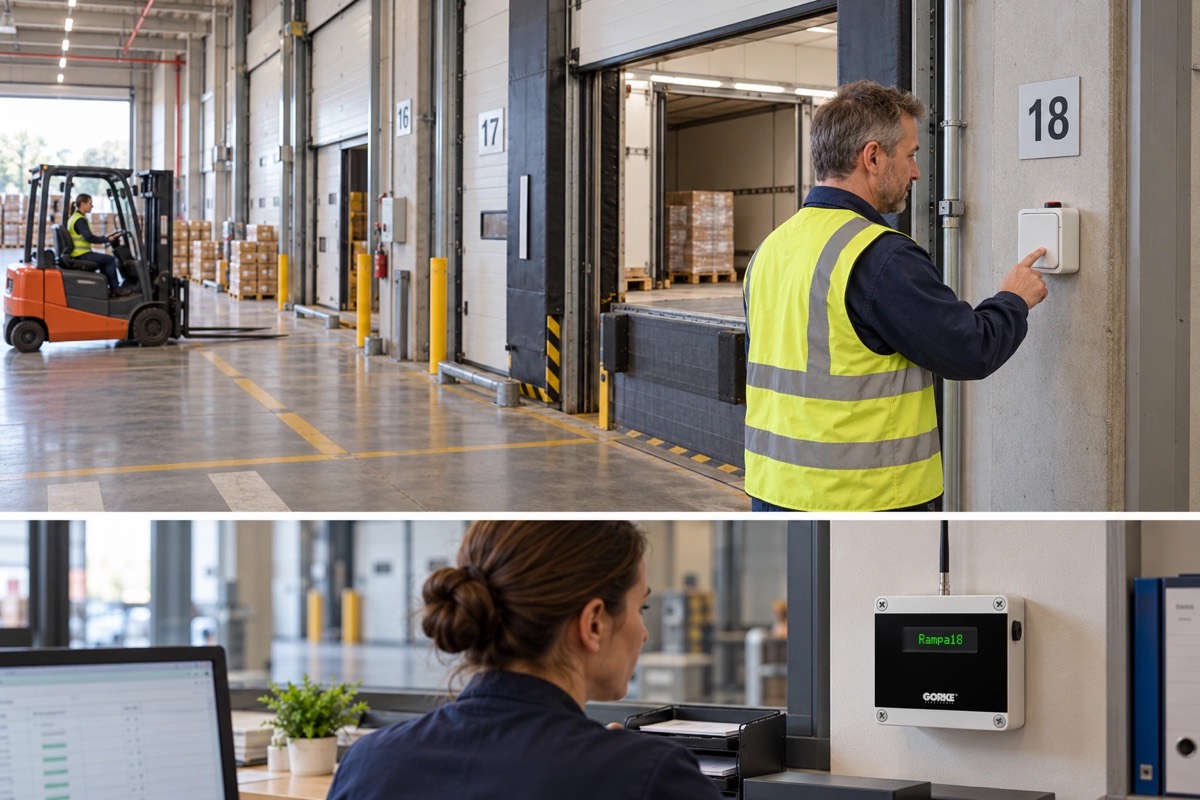
The distribution centre has 24 loading docks along one wall of the hall, a dispatch office at one end and three forklift operators per shift. At a dock, a driver or warehouse worker regularly needs a forklift operator — for unloading or loading.
Today the request goes over a two-way radio and is anonymous: the dispatcher hears that “someone needs a forklift” and has to ask which dock. In the noise of the hall some calls are lost, and a truck stands at the dock longer than unloading requires. For the centre that means slipped time slots and a queue of trucks in the yard.
The investor’s goal: An unambiguous request from a specific dock that reaches the dispatcher and the forklift operators and lasts until someone has dealt with the dock.
At each dock, inside the hall, is mounted a sealed button with a cancel key (PNH-201C) labelled with the dock number. The driver or warehouse worker presses it once, and the call repeats every 30 seconds until someone cancels it with the key at the same dock — the dock is not forgotten even if the first call comes at a moment when everyone is busy.
In the dispatch office a receiver with a text display (IDO-1000U/E) shows “Dock 18” instead of a transmitter number, and the forklift operators see the dock number on their pagers (OBI-4SH), which receive the call directly from the buttons. The dispatcher calls no one — they only decide who goes when several calls come in at once.
High-bay racking and the hall’s metal structure attenuate the signal, so a repeater (RTS-1000) powered at 12 V DC works at the far end of the hall. It repeats only the buttons programmed into it, so it does not pass on other radio traffic.
02 / Operating principle
A button at the dock calls a forklift operator, and the dispatch office and the pagers show the dock number.
01 / Signal source
PNH-201C Button with a cancel key at the dockThe driver or warehouse worker presses it once to call a forklift operator.
02 / Transmission
RTS-1000 Repeater at the far end of the hallRelays the signal from the farthest docks, which the racking attenuates.
03 / Notification
Dock number Receiver and operators’ pagers Dispatch office + PagersThe dispatcher sees “Dock 18”, and the forklift operators see the dock number on their pagers.
The forklift goes straight to the right dock. The call repeats every 30 seconds until someone cancels it at the same dock, so no dock is forgotten.
A simplified functional diagram.
03 / Installation components
An example selection — the number of devices depends on the site.
Sealed button with a cancel key at the dock, labelled with the dock number: the call repeats every 30 s until cancelled on the spot. Battery-powered, IP44.
Quantity: 24
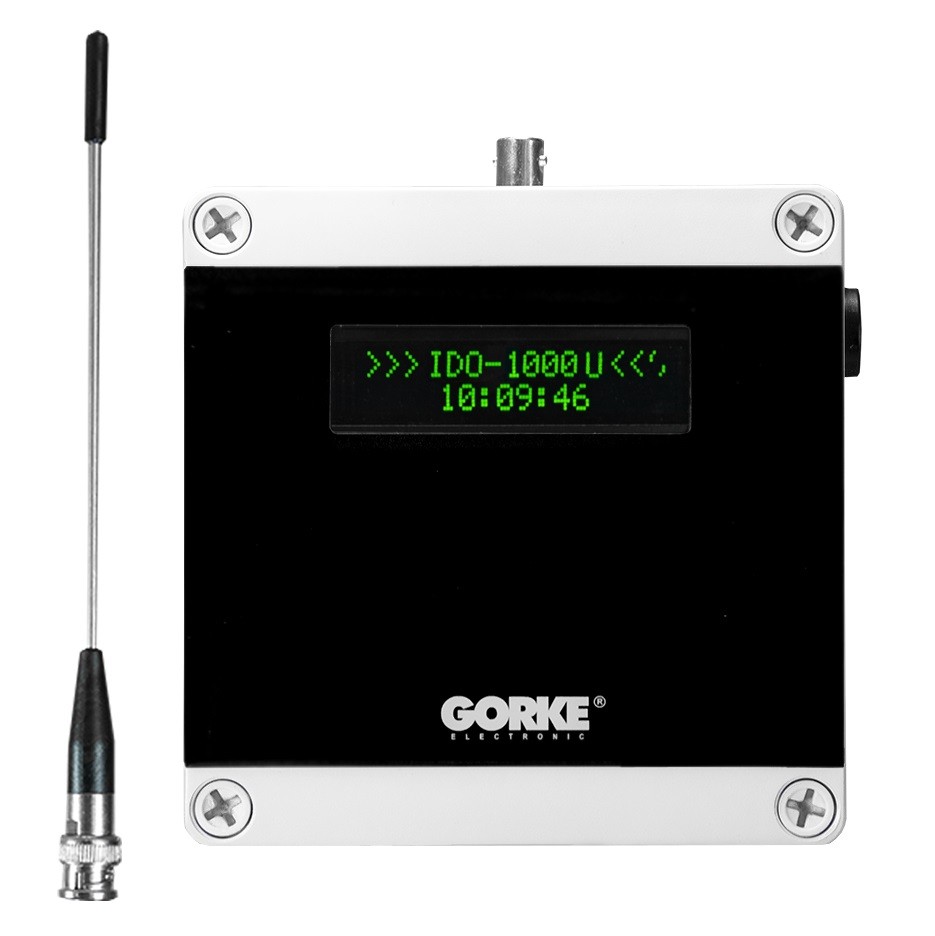
Receiver in the dispatch office: displays the dock’s label, e.g. “Dock 18”, instead of the transmitter number; labels are entered from a computer via USB.
Quantity: 1
Forklift operator’s pager: the call with the dock number comes straight from the button, wherever the forklift is. Charged by USB or wirelessly.
Quantity: 3
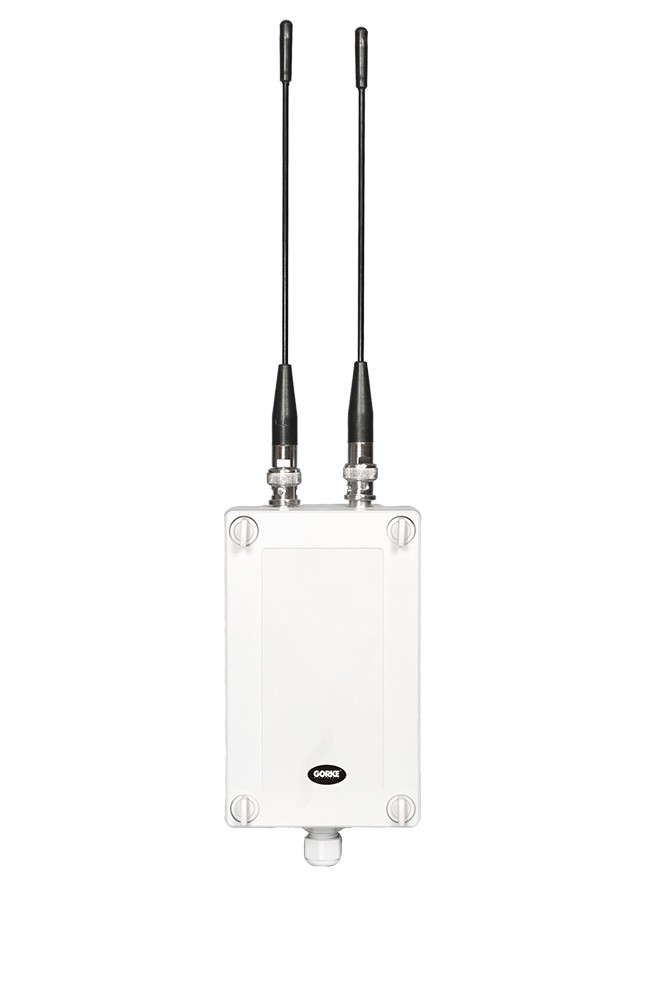
Repeater at the far end of the hall: passes the signal from the farthest docks on to the dispatch office and the pagers; repeats only its programmed transmitters.
Quantity: 1
Power supply next to the repeater at the far end of the hall; the repeater needs 12 V DC.
Quantity: 1
Catalogue figures describe a device under stated conditions, usually in open terrain, and are not a guaranteed range in every installation. Device quantities in the examples are indicative.
04 / Value for the investor
The dispatcher and the operator know where to go without asking over the radio — the forklift reaches the right dock first time.
The call repeats until it is cancelled at the dock, so no dock is forgotten at peak times and trucks spend less time standing at the docks.
The two-way radio is kept for unusual matters, and routine dock calls no longer take up the dispatcher’s attention.
05 / Before installation
Before devices are chosen, what matters is the site’s conditions and how the system ties into the final installation.
Example configuration — it needs a technical selection for your site.
More from this sector
Logistics and transport
A logistics company: the driver signals with a remote control, head office receives a text and opens the warehouse gate by phone — and arrival times stay in the messages.
Logistics and transport
Filling stations, loading centres, transit warehouses: the night-shift worker confirms presence at intervals, and the supervision point sees whether the confirmations arrive on time.
Logistics and transport
A shipowner: a person at the ship’s entrance presses a button, the call runs by cable through the metal hull to every level, and from there by radio to the duty officers’ pagers.
A project for your site
Send us the key requirements — GORKE will help define the scope, the technology and the components that fit the investment.