Installation component
TdN-07
Battery-powered LX call kit for one toilet: a 3-in-1 button, a signal unit above the door and a receiver with battery monitoring. One kit per toilet.
Quantity: 2
Battery-powered LX call kits for two accessible toilets in a finished clinic building: a button with a pull cord in the toilet, a signal unit above the door and a receiver at reception — no cables, no chasing walls.
01 / Investment context
The clinic operates in a completed building on two floors. There is one toilet for people with disabilities on the ground floor and one on the upper floor, while reception — the one place staffed throughout opening hours — is on the ground floor. No cable runs to the toilets that could be used for a call installation.
A patient who feels faint or falls in the toilet is behind a closed door and may not have the strength to shout. They must be able to call for help with one movement — even from the floor — and reception must know at once which toilet the call came from. Chasing walls and laying cables in a working clinic, between patient appointments, is out of the question.
The investor’s goal: A call for help from each accessible toilet, visible in the corridor and at reception, cancelled at the patient’s side — from a system installed with no cables and no break in the clinic’s work.
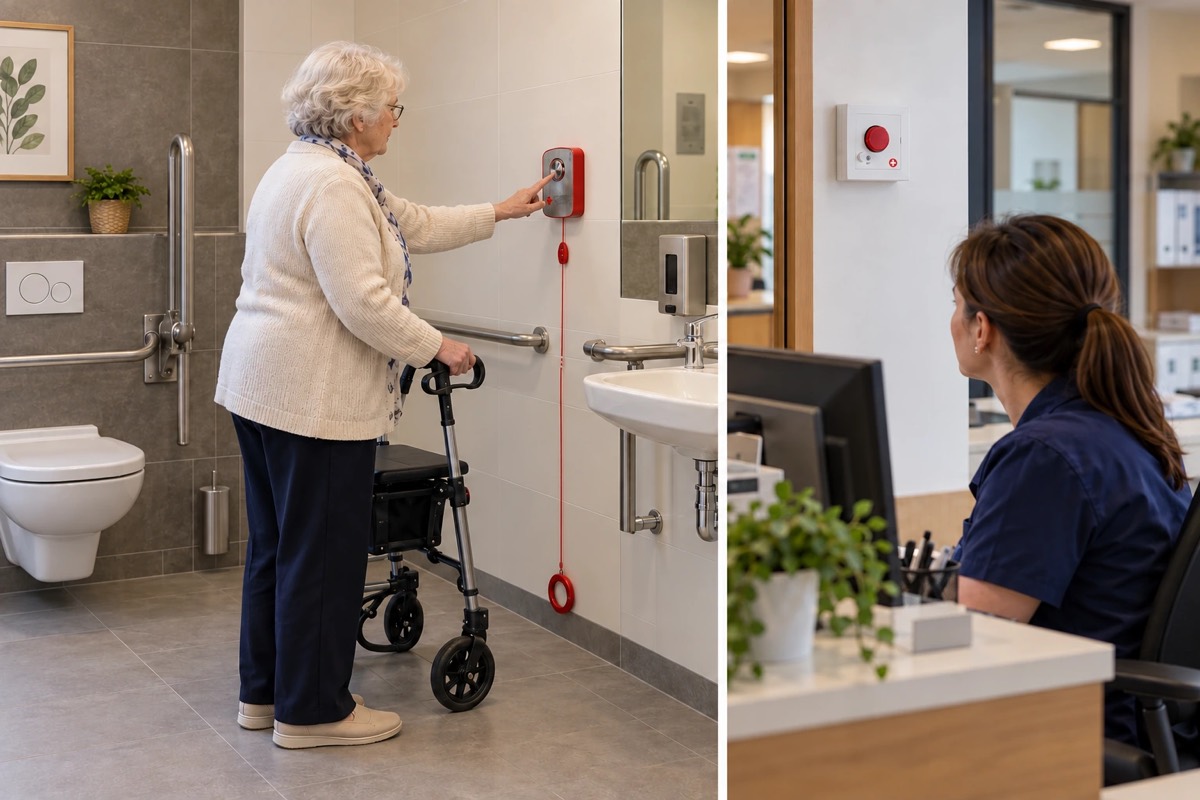
Each toilet gets its own battery-powered LX call kit (TdN-07). In the toilet there is an illuminated 3-in-1 button (SPX-PK1C): a call by the key or by a pull cord that even someone lying on the floor can reach, and cancellation of the call on the button itself.
The call switches on the light-and-sound signal unit above the toilet door, on the corridor side (BSX-400), so staff see at once where help is needed. At the same time the kit’s receiver at reception (SPX-CS1/B/NT) signals the call. The receivers of both toilets hang there side by side, labelled “Toilet — ground floor” and “Toilet — upper floor”, so reception knows where to go or whom to send. The call lasts until a member of staff cancels it with the button in the toilet — that is, at the patient’s side.
All three devices in the kit run on batteries and are surface-mounted, with no power supply to run; the receiver has battery monitoring. The LX link reaches up to 4 km in open terrain; through the floor slab between the upper-floor toilet and reception, a range test before installation confirms it.
02 / Operating principle
Each accessible toilet has its own battery-powered LX kit: a button, a signal unit above the door and a receiver at reception.
01 / Signal source
SPX-PK1C 3-in-1 button in the toiletThe patient presses the key or pulls the cord, even from the floor.
02 / Reception
SPX-CS1/B/NT Receiver at receptionSignals the call and is labelled with the name of its toilet.
03 / Notification
BSX-400 Signal unit above the doorMarks the toilet in the corridor with light and sound.
The call ends at the patient’s side. It lasts until a member of staff cancels it with the button in the toilet; the kit goes up without cables.
A simplified functional diagram.
03 / Installation components
An example selection — the number of devices depends on the site.
Battery-powered LX call kit for one toilet: a 3-in-1 button, a signal unit above the door and a receiver with battery monitoring. One kit per toilet.
Quantity: 2
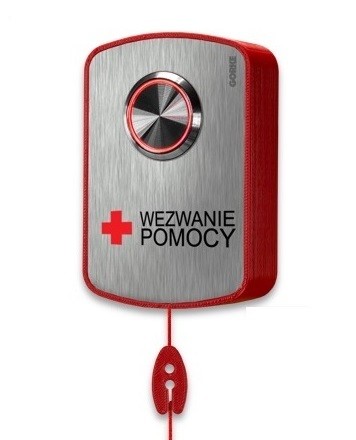
Button in the toilet: a call by the key or by a cord that a person lying on the floor can reach, and cancellation on the button itself. Surface-mounted.
Quantity: included in TdN-07
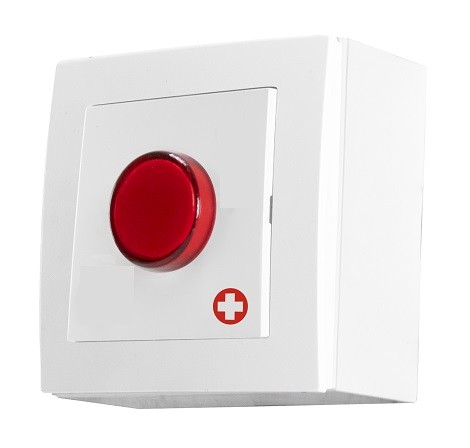
Light-and-sound signal unit above the toilet door, on the corridor side: shows staff which room the call came from.
Quantity: included in TdN-07
The kit’s receiver at reception, labelled with its toilet: signals the call and has battery monitoring. Battery-powered, surface-mounted.
Quantity: included in TdN-07
Catalogue figures describe a device under stated conditions, usually in open terrain, and are not a guaranteed range in every installation. Device quantities in the examples are indicative.
04 / Value for the investor
All parts run on batteries and are surface-mounted, so the toilets are equipped without cables and without interrupting patient appointments.
The call is cancelled with the button in the toilet, so the signal above the door does not go off before a member of staff reaches the patient.
The signal unit above the door guides staff in the corridor, and a separate, labelled receiver for each toilet tells reception which toilet to go to.
05 / Before installation
Before devices are chosen, what matters is the site’s conditions and how the system ties into the final installation.
Example configuration — it needs a technical selection for your site.
More from this sector
Care and health
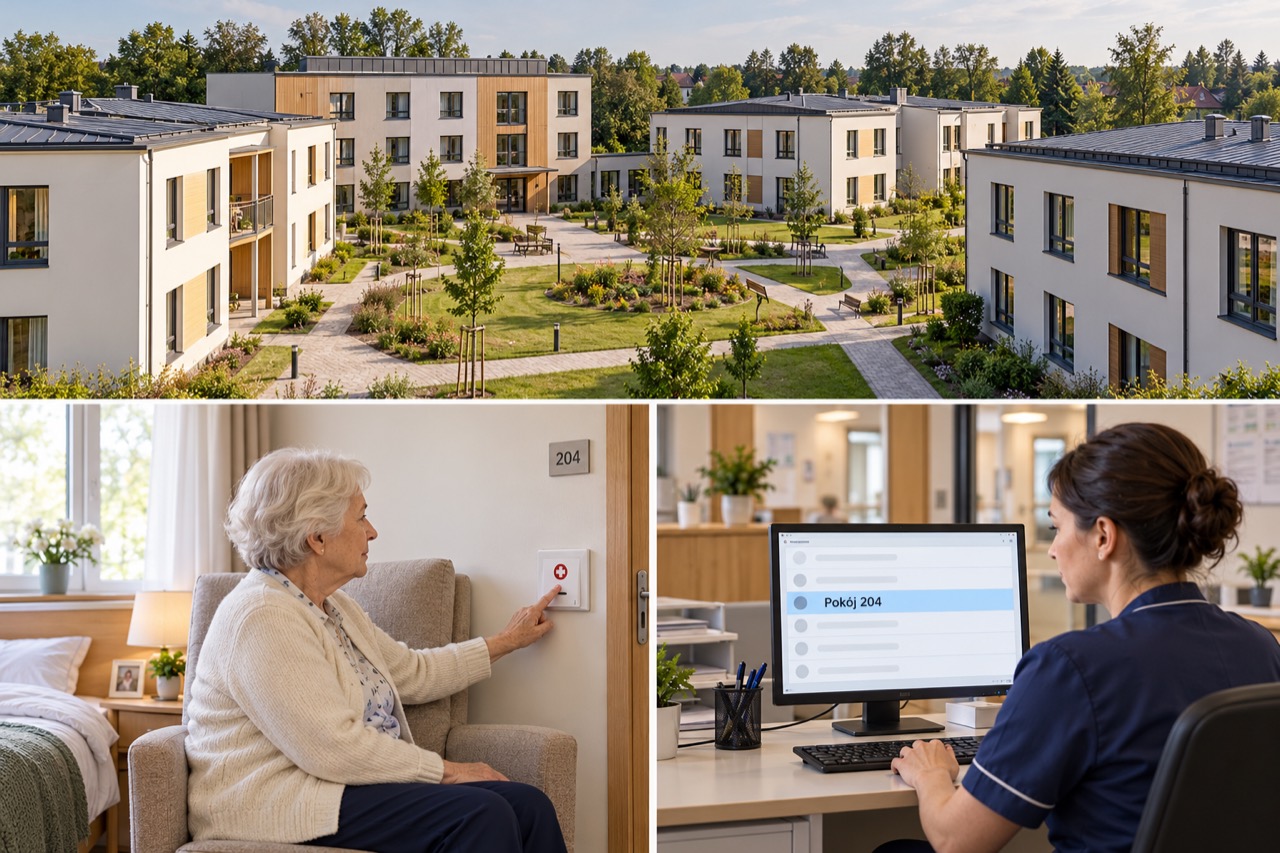
A social care home in four buildings: calls from the rooms and bathrooms of about 200 residents reach four operator panels and 20 staff pagers.
Care and health
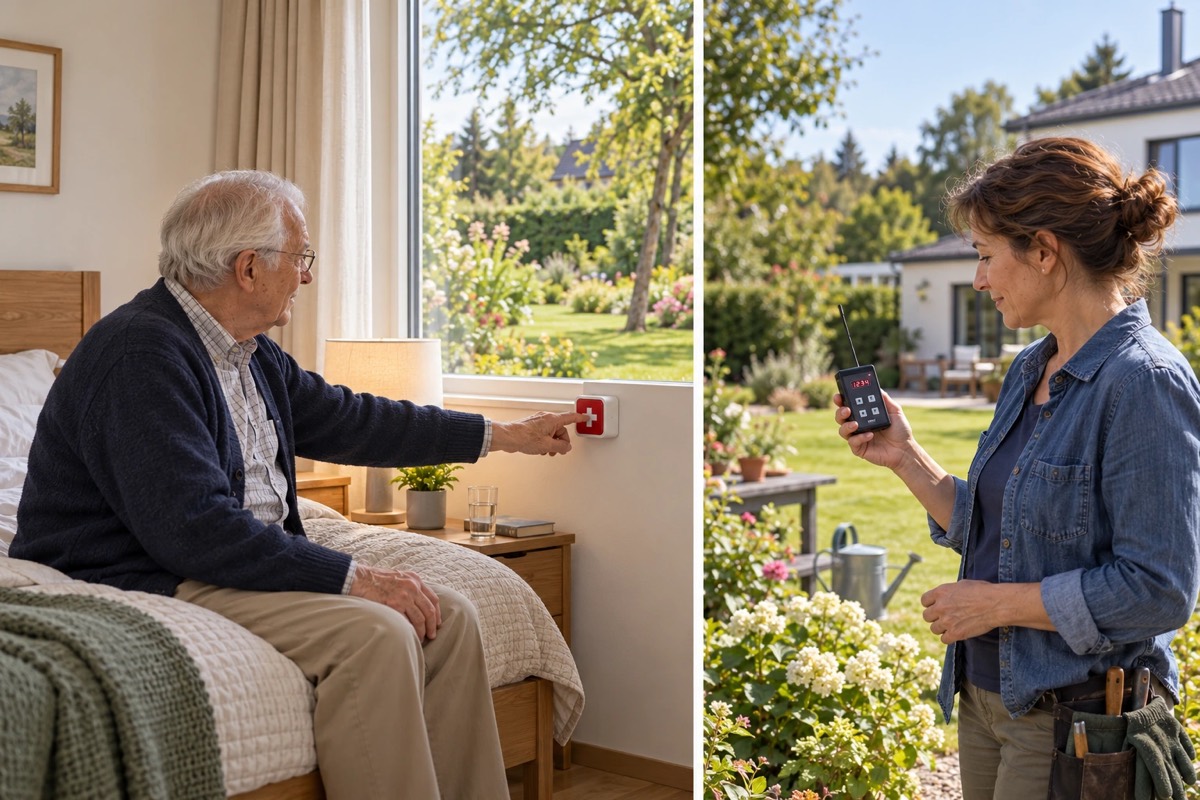
Home care: a large button with a tactile flap or a wrist transmitter sends the call straight to the carer’s pager — no control unit, no installation, in a single-family house.
Care and health
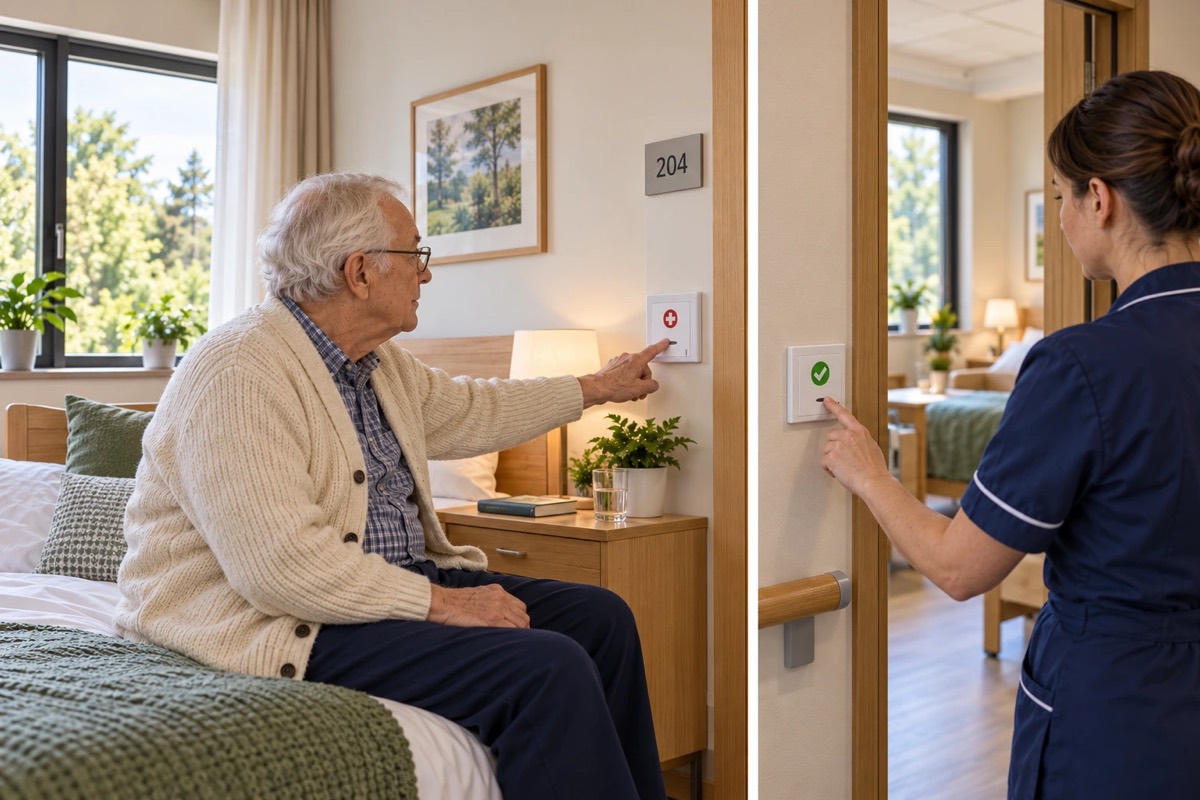
A care home with 32 rooms: a call from the bed or the bathroom shows above the door, at the nurses’ station and on the pager, and ends only at the resident’s side.
A project for your site
Send us the key requirements — GORKE will help define the scope, the technology and the components that fit the investment.