PNH-201
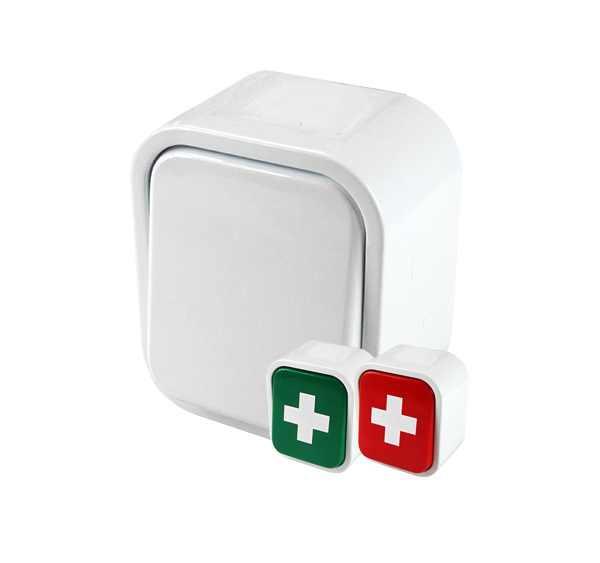
Button within the person’s reach: large, with a tactile flap, easy to use even with some impairment of the hand. The model used in the installation, still in the range.
Quantity: 1
A simple call set: a button or a wrist transmitter for the person who is ill and a pager for the carer. The range of the set with the button — 400 m in open terrain — is enough for use within a single-family house.
01 / Investment context
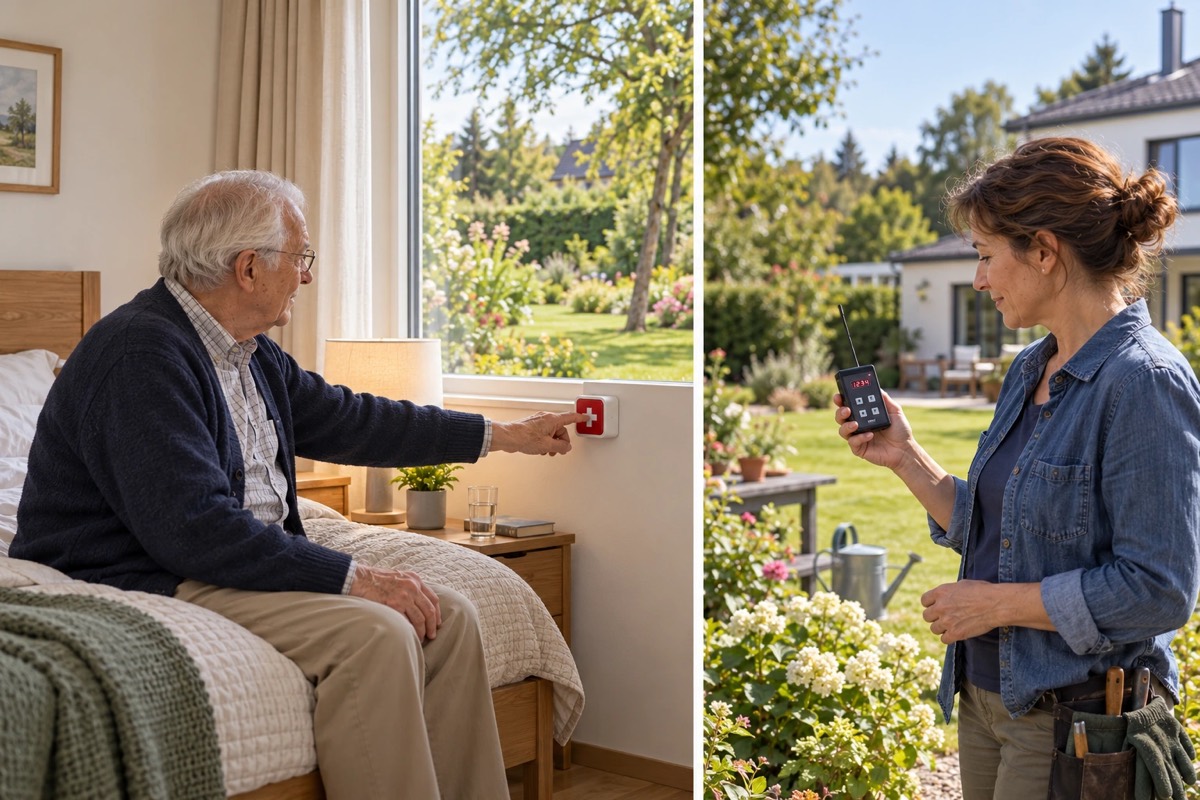
A bedridden person spends much of the day alone in their room while the carer looks after the house. The carer cannot sit by the bed all day — and the person who is ill cannot always call loudly enough to be heard in another part of the house or behind closed doors.
A phone does not solve this: it has to be within reach, unlocked and a number dialled, which can be too much for a weak or impaired hand. What is needed is one clear press, after which the carer knows at once that they are being called — in whatever part of the house they happen to be.
The investor’s goal: The person who is ill should be able to signal with one press that they need help, and the carer should know at once — whatever they are doing in the house.
The person who is ill has a button within reach (PNH-201) — large, with a tactile flap, easy to use even with some impairment of the hand. The alternative is an SOS transmitter worn on the wrist like a watch (PUK-121), which is always with the user.
The signal goes straight to the carer’s pager — no control unit, no installation. The installation used an OBI-3SH pager, which signalled the call with a sound and a message on its display. Today its successor is the OBI-4SH with an OLED display, charged by USB or wirelessly (Qi). All it takes is storing the transmitter in the pager’s memory.
The open-terrain range is up to 400 m with the button and up to 200 m with the wrist transmitter. Inside the house, walls and floors shorten it, so it is worth testing from the places where the carer spends time. If the transmitter must always be with the person and the wrist transmitter’s range is not enough, the alternative is a pendant transmitter (SPR-P41) — up to 800 m in open terrain with today’s pager.
02 / Operating principle
The person’s transmitter sends the call straight to the carer’s pager — no control unit, no installation.
01 / Signal source
PNH-201 Button with a flap you can feelOne press calls the carer; the alternative is the PUK-121 wrist transmitter.
02 / Transmission
Radio signal Straight to the pagerUp to 400 m with the button, up to 200 m with the wrist transmitter, in open terrain.
03 / Notification
OBI-4SH Carer’s pagerReceives the call and shows it on the OLED display.
The carer knows at once that they are being called. The carer keeps the pager on them; the transmitter only has to be stored in its memory, with no control unit and no cables.
A simplified functional diagram.
03 / Installation components
The models used in the project, with their equivalents in the current range.
Button within the person’s reach: large, with a tactile flap, easy to use even with some impairment of the hand. The model used in the installation, still in the range.
Quantity: 1
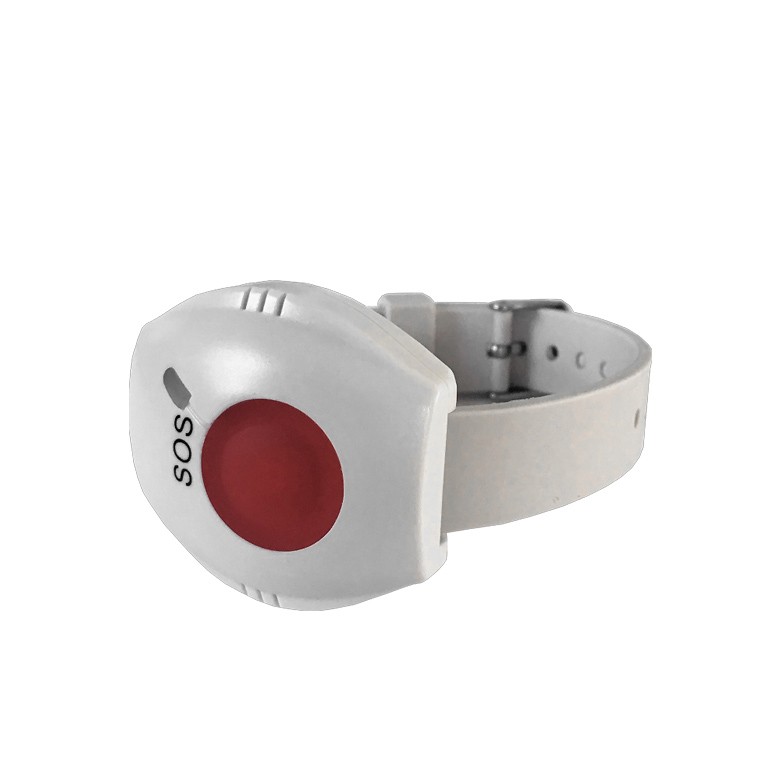
SOS transmitter worn on the wrist like a watch, 17 g — the option named in the installation for a person who should always have the transmitter on them. Range up to 200 m in open terrain.
Quantity: instead of PNH-201
Carer’s pager — the successor of the OBI-3SH model used in the installation: receives the call and shows it on the OLED display. Charged by USB or wirelessly (Qi).
Quantity: 1
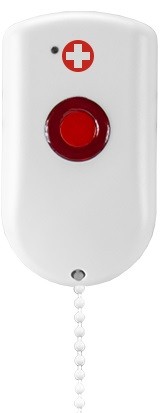
Alternative to the wrist transmitter: a pendant worn round the neck; with the OBI-4SH pager the range is up to 800 m in open terrain.
Quantity: optional
Catalogue figures describe a device under stated conditions, usually in open terrain, and are not a guaranteed range in every installation. Device quantities in the examples are indicative.
04 / Value for the investor
The transmitter and pager work as soon as they are paired — no cables are laid and no control unit is installed in the house.
The carer keeps the pager on them, so they can get on with the house in other rooms without losing contact with the person who is ill.
A large button with a tactile flap or a transmitter on the wrist — one press, without a phone, numbers or unlocking a screen.
05 / Before installation
Before devices are chosen, what matters is the site’s conditions and how the system ties into the final installation.
Source: an archived GORKE description of the installation. For a new investment we choose current models.
More from this sector
Care and health
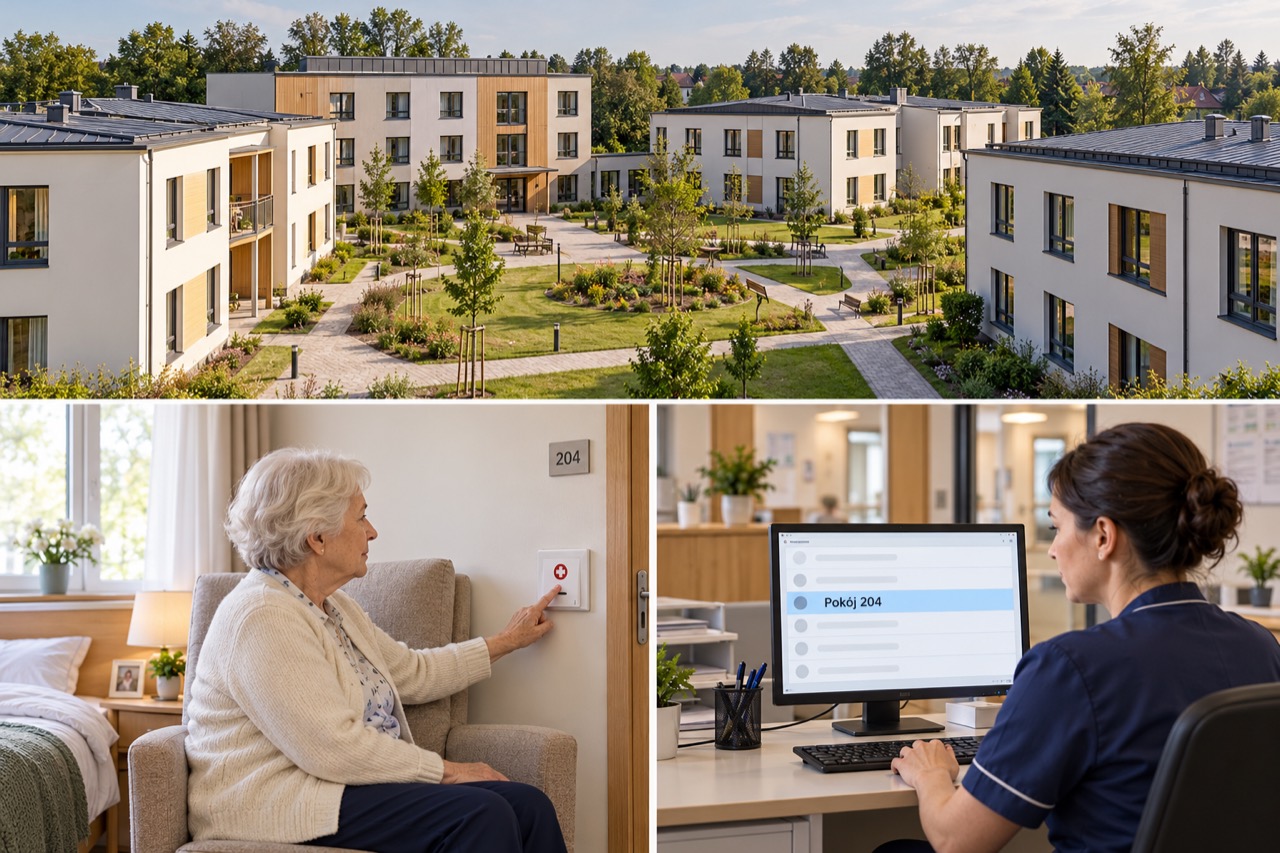
A social care home in four buildings: calls from the rooms and bathrooms of about 200 residents reach four operator panels and 20 staff pagers.
Care and health
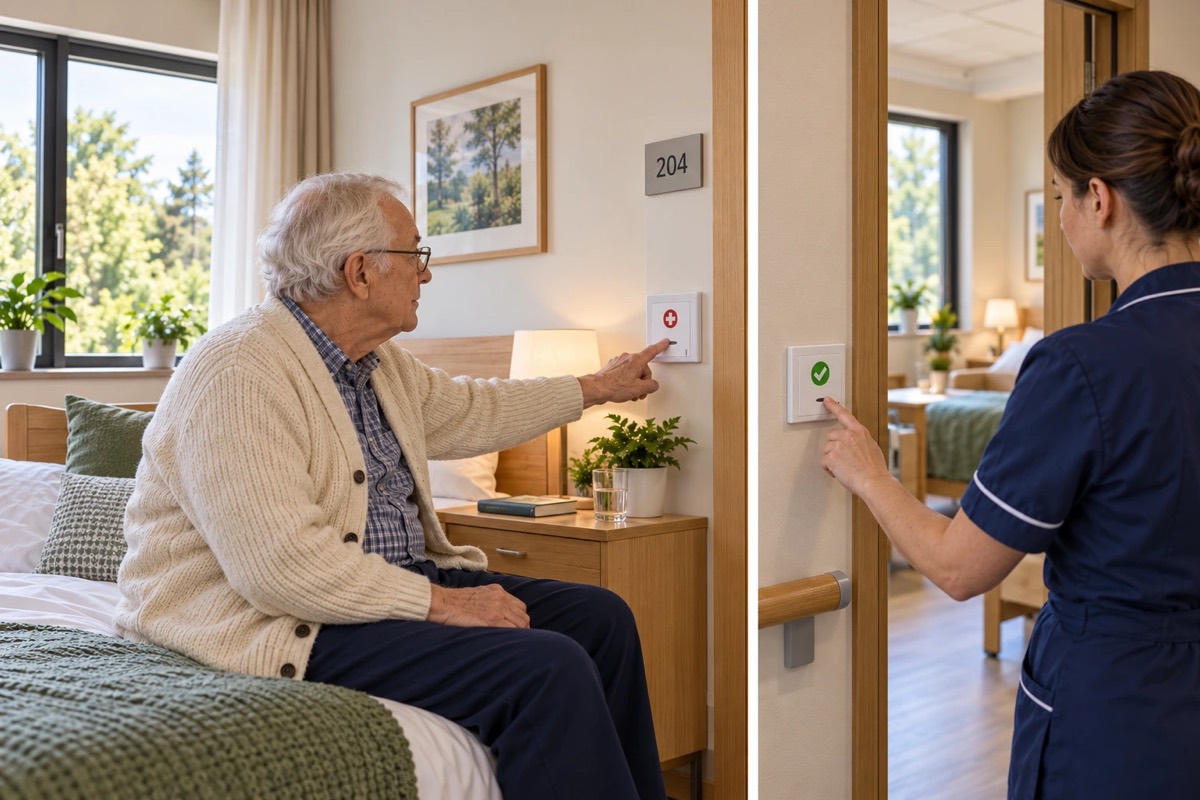
A care home with 32 rooms: a call from the bed or the bathroom shows above the door, at the nurses’ station and on the pager, and ends only at the resident’s side.
Care and health
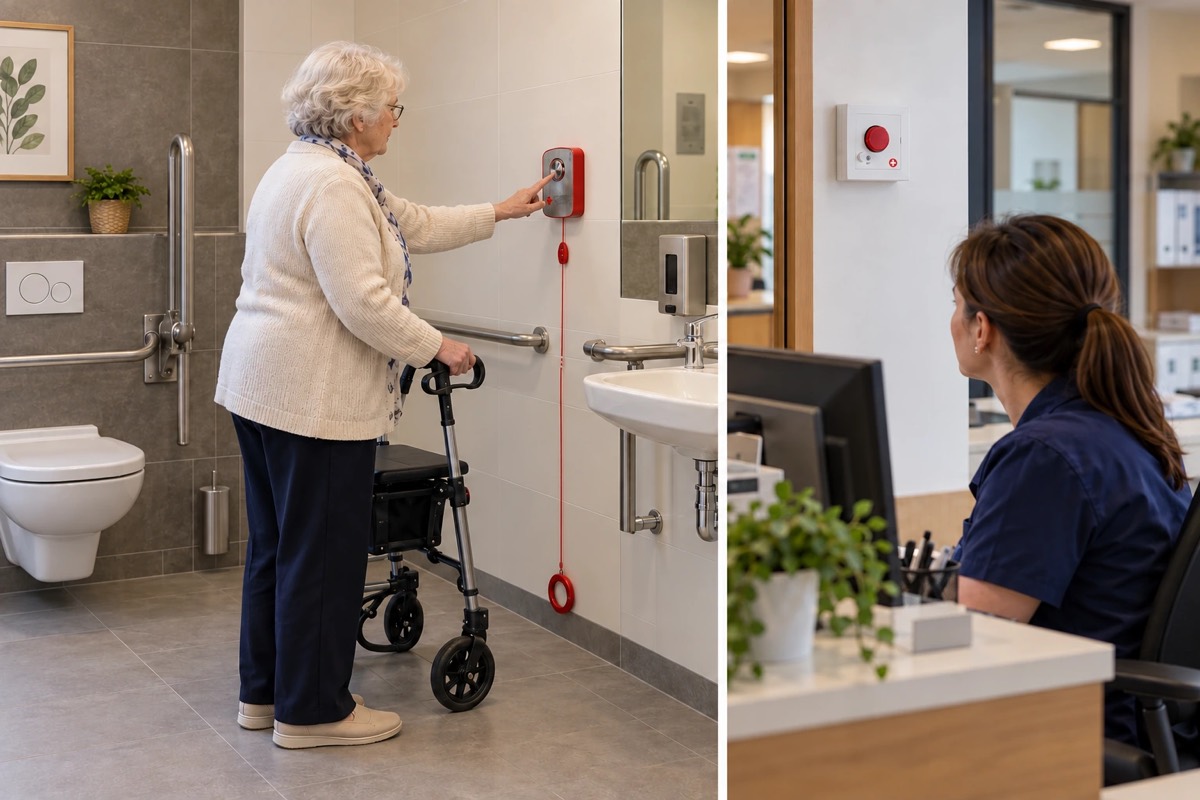
A clinic on two floors: a patient calls for help from an accessible toilet by key or pull cord, reception knows which toilet, and the call is cancelled at the patient’s side.
A project for your site
Send us the key requirements — GORKE will help define the scope, the technology and the components that fit the investment.