IDO-1000
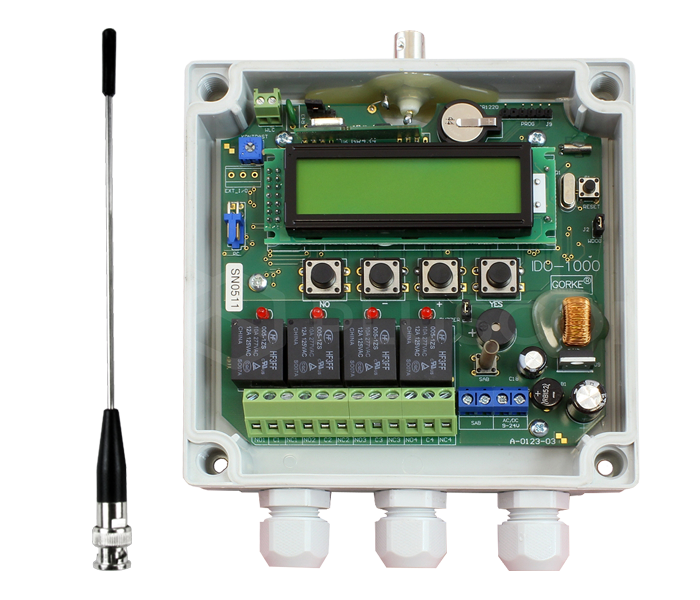
The identification receiver specified in the proposal: recognises each remote, stores up to 1,000, and its four relays control the barrier or gate. It allows remotes to be blocked temporarily and deleted individually.
Quantity: 1
The solution GORKE specified for a car park where remotes are often lost or never returned: an identification receiver with software in which the operator blocks, unblocks and deletes subscribers’ remotes.
01 / Investment context
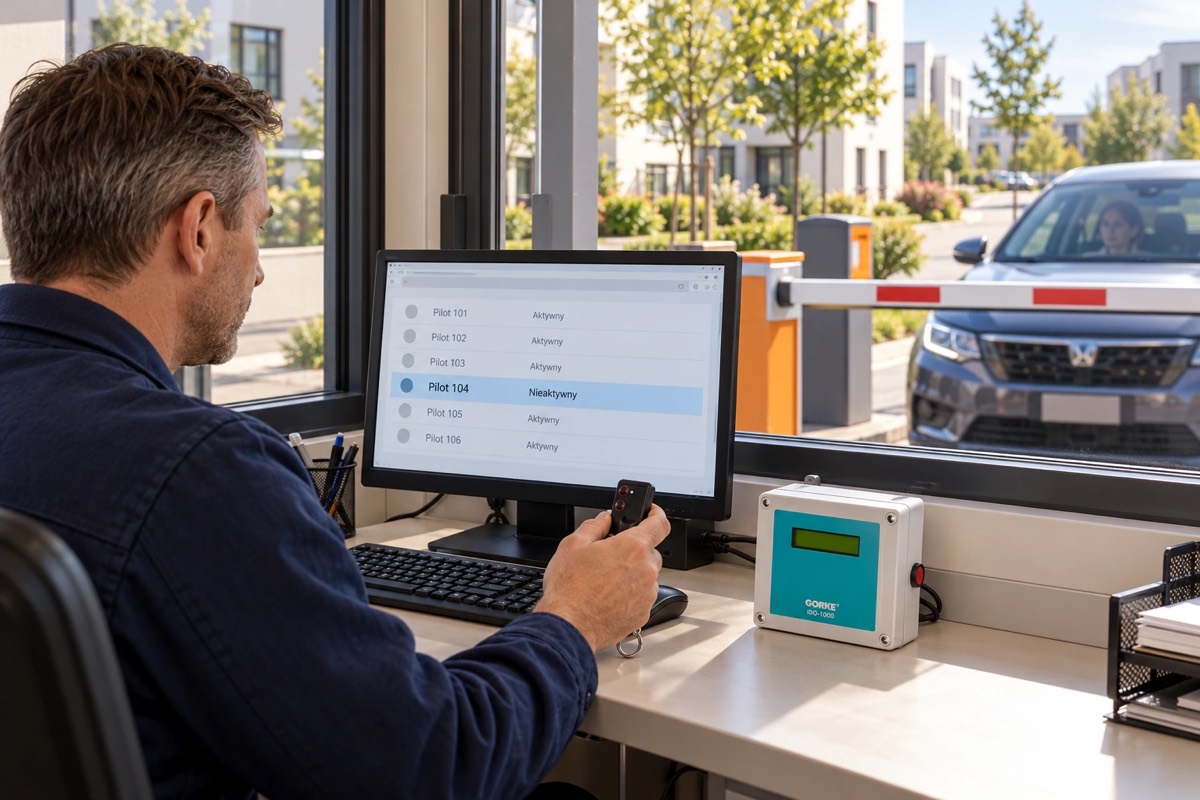
The car park has several hundred customers on monthly subscriptions and high turnover. About 20% of the remotes were lost each month or never came back to the operator. A remote that has not come back but still opens the entrance lets in someone who does not pay for parking, and issuing new ones means a constant cost and constant work for the staff.
A remote could not be transferable: entry is for whoever pays the subscription, not for someone to whom a remote has been lent or resold. Customers were to drive in and out on their own, with as little involvement of third parties as possible, and the investor needed a system that is simple to operate and in which entry can also be stopped for non-payment — without taking the remote back from the customer.
The investor’s goal: Subscribers control entry and exit themselves, and the investor has a system that is simple to operate, in which it controls access and payments: blocking, unblocking and deleting remotes.
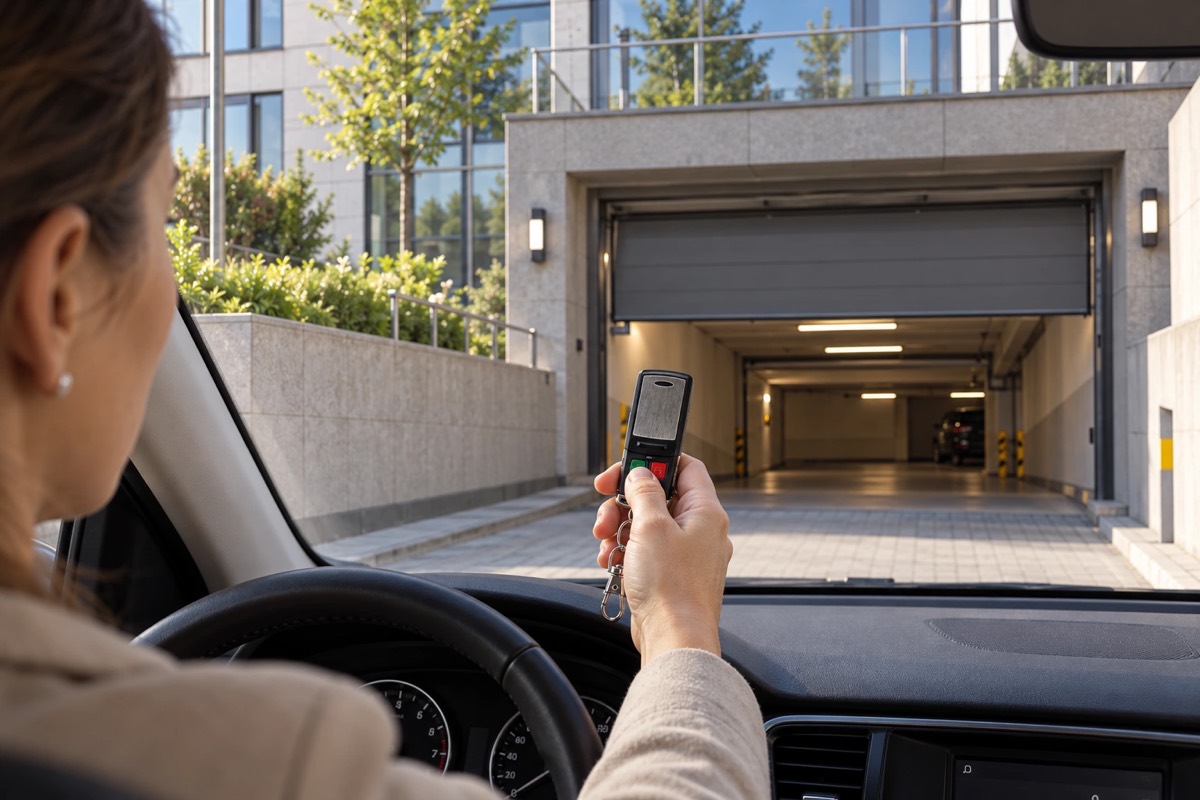
For these needs GORKE specified an identification receiver (IDO-1000) with the Tablica Synoptyczna software (today SPA-1000/PR). The receiver recognises each remote individually — up to 1,000 remotes can be programmed into it — and its four relays control the barrier or the gate. Each subscriber receives a two-button remote (today the PUK-102) to control entry and exit.
The operator temporarily blocks the remote of an unpaid subscription — it is enough to select the customer number and tick the “block” option — and reactivates it after payment; a lost or outdated remote is deleted individually while all the others keep working. The software displays and archives events, and every remote can be labelled with the customer’s data — name, phone number, the car’s registration number and make — so it is clear whose remote opened the entrance and when.
The remotes transmit a rolling code, and the receiver flags an unusual number of presses, which helps detect an attempt to use an intercepted code. Adding a new remote and deleting an outdated one are simple and quick — with high subscriber turnover, the operator does this regularly.
02 / Operating principle
GORKE’s proposal: an identification receiver controls the barrier or the gate, and the operator blocks and deletes remotes in the software.
01 / Signal source
Subscriber’s remote Two-button remoteThe subscriber uses it to control entry and exit.
02 / Reception
IDO-1000 Identification receiverRecognises each remote individually and checks whether it is active.
03 / Action
Barrier or gate Entry or exitA relay sends a pulse to the drive’s control input.
The operator blocks a remote for non-payment without taking it back. It takes ticking “block” next to the customer number; after payment the remote is reactivated, and a lost one is deleted individually.
A simplified functional diagram.
03 / Installation components
The devices named in the description of the installation.
The identification receiver specified in the proposal: recognises each remote, stores up to 1,000, and its four relays control the barrier or gate. It allows remotes to be blocked temporarily and deleted individually.
Quantity: 1
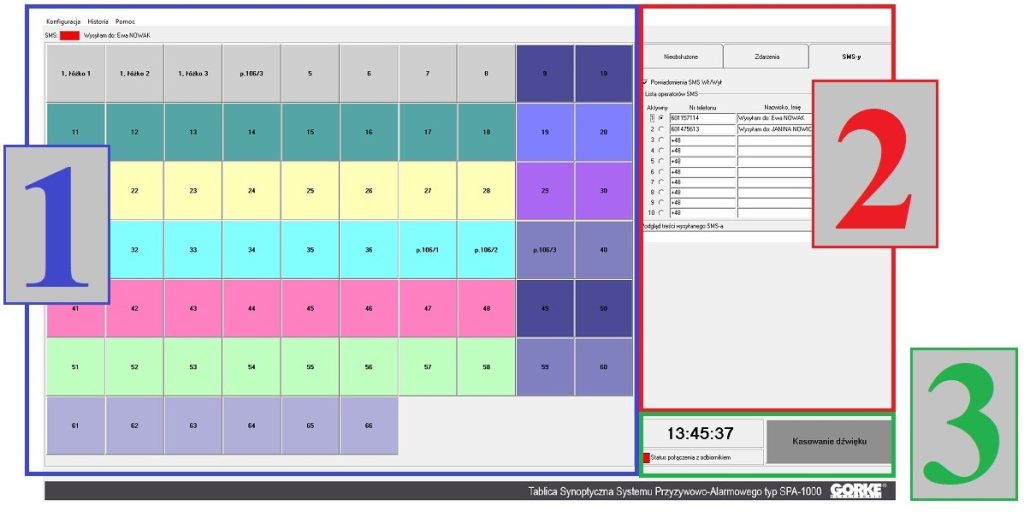
Tablica Synoptyczna software on the operator’s computer — today’s version of the software specified in the proposal: event archive and customer data for each remote.
Quantity: 1
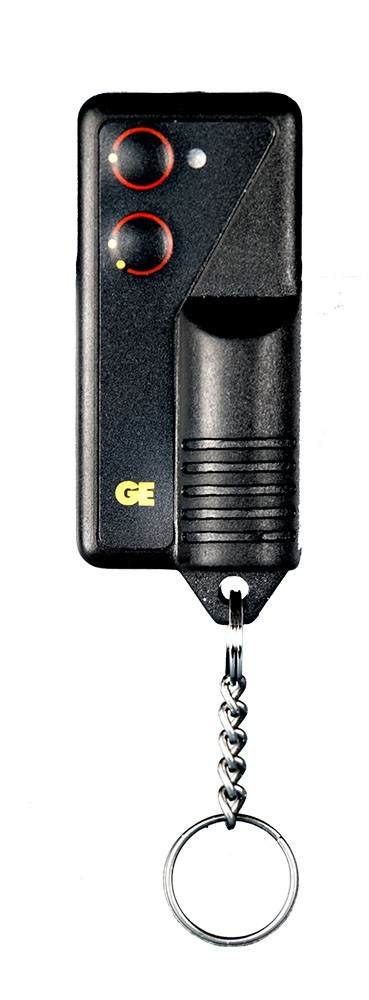
Subscriber’s two-button remote with rolling code — today’s model of the two-button remote in the proposal: controls entry and exit.
Quantity: 1 per subscriber
Catalogue figures describe a device under stated conditions, usually in open terrain, and are not a guaranteed range in every installation. Device quantities in the examples are indicative.
04 / Value for the investor
The remote of an unpaid subscription is blocked by ticking “block” next to the customer number and reactivated after payment — without taking the remote back.
Every remote carries the subscriber’s data in the software, and the archive shows its entries — a remote handed to someone else does not give anonymous access.
Adding a new remote and deleting an outdated one are simple and quick — with several hundred subscribers and high turnover, this saves staff time.
05 / Before installation
Before devices are chosen, what matters is the site’s conditions and how the system ties into the final installation.
Source: an archived GORKE description of the installation. For a new investment we choose current models.
More from this sector
Housing and property
A housing estate in Katowice: one remote control opens the shared barrier and the car park gate of the resident’s part of the estate, and the investor manages the rights of more than 2,000 remotes over the IP network.
Housing and property
86 houses and about 400 users: a remote control opens the estate gates, and the security staff see on screen in which house an alarm has gone off.
Housing and property
An office building with Wiegand access control: the receiver at the barrier works like another reader, the tenant’s remote control like a card, and the rights stay in the system the property manager already uses.
A project for your site
Send us the key requirements — GORKE will help define the scope, the technology and the components that fit the investment.