ATG-SG4set
GSM transmitter in a housing with a power supply, in the farm’s technical room. It turns the alarm from the climate controllers into a text and a call (CLIP) to the owner’s phone.
Quantity: 1
Two independent notification paths for the same failure: a GSM transmitter texts and calls the owner, and a battery-powered LX transmitter carries the alarm to the owner’s home, where it sets off a signal unit.
01 / Investment context
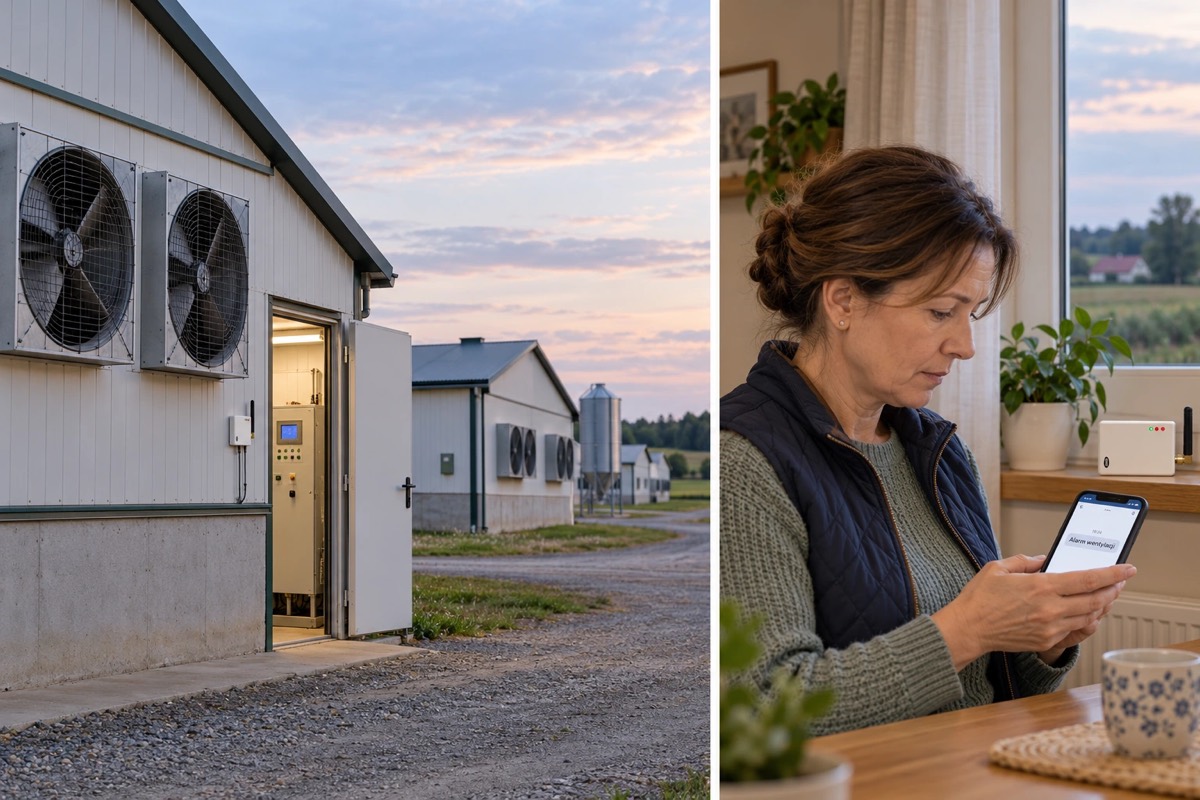
The farm has two poultry houses with mechanical ventilation, each run by its own climate controller. The owner lives 800 m from the farm. At night and on days off nobody is on site, and the rounds take place a few times a day.
If the ventilation stops or the power fails in hot weather, minutes count: with a large flock the temperature in the house rises very quickly. The climate controller detects the failure and sounds its siren, but at night there is nobody at the poultry house to hear it, and it cannot be heard in a home 800 m away.
A text message alone is not enough either: phones get muted for the night, left in another room or lose coverage. The alarm has to reach the owner by two paths that do not depend on each other.
The investor’s goal: The climate controller’s alarm reaches the owner at once and by two independent paths — also when the phone is muted or the mobile network is down.
The alarm contacts of the climate controllers in both houses are wired to the farm’s technical room. A GSM transmitter in a housing with a power supply (ATG-SG4set) works there: an alarm triggers a text message and a call (CLIP) to the owner’s phone. A backup battery — bought separately, as it is not part of the set — keeps the transmitter running when the farm loses power.
The second path is radio. The same alarms go to the two inputs of a battery-powered LX transmitter (NBX-102): input 1 is house 1, input 2 is house 2. The transmitter sends them to an LX receiver in the owner’s home (RSX-K02), which returns a receipt confirmation. The receiver’s relays switch on a light-and-sound signal unit with volume control (SWR-108), placed where it can be heard from the bedroom.
The LX transmitter runs on batteries, so it passes on the alarm even when the farm has no power. Both paths report what the climate controller signals, independently of each other: the signal unit wakes the household, and the text message reaches the owner even when away from home.
02 / Operating principle
The climate controller’s alarm reaches the owner by two independent paths: by text to the phone, and by radio to a signal unit in the house.
01 / Signal source
Climate controller Alarm contact of each poultry houseA ventilation or power failure opens the alarm contact.
02 / Transmission
ATG-SG4set GSM transmitter at the farmTurns the alarm into a text and a call; without mains power it runs on its backup battery.
03 / Notification
Phone The farm’s owner Text message + CallThe text and the call reach the owner even when away from home.
The owner knows of a failure at once, at night too. A failure is known as soon as the controller detects it, not at the next round — and in hot weather minutes count.
01 / Signal source
NBX-102 LX transmitter at the farmInput 1 is house 1, input 2 is house 2; it runs on batteries.
02 / Reception
RSX-K02 LX receiver in the house, 800 m awaySends back a confirmation and switches on the signal unit with its relays.
03 / Notification
SWR-108 Signal unit audible from the bedroomLight and sound wake the household even if the phone is muted.
The alarm gets through even when the phone stays silent. The radio path does not depend on the mobile network, and the battery-powered transmitter passes on the alarm even when the farm has no power.
A simplified functional diagram.
03 / Installation components
An example selection — the number of devices depends on the site.
GSM transmitter in a housing with a power supply, in the farm’s technical room. It turns the alarm from the climate controllers into a text and a call (CLIP) to the owner’s phone.
Quantity: 1
Keeps the GSM transmitter running during a power cut at the farm. Not included in the set — chosen separately.
Quantity: 1
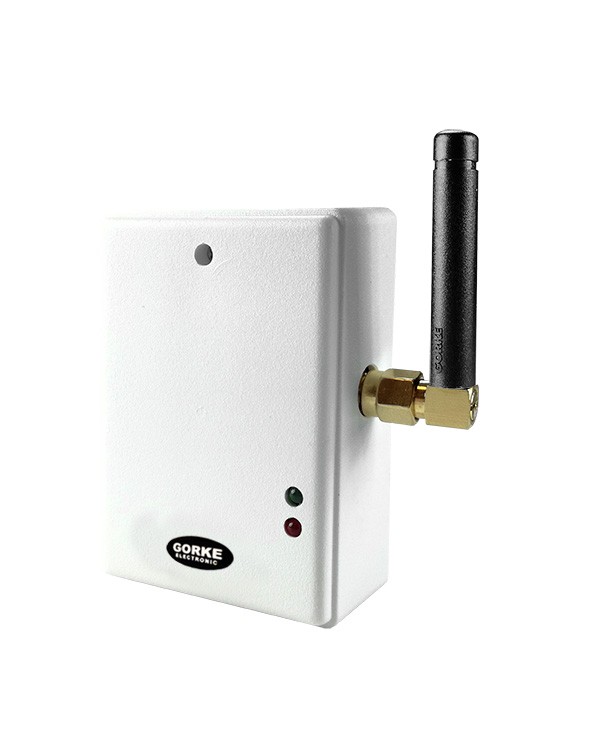
Battery-powered LX transmitter in the farm’s technical room: input 1 is the alarm of house 1, input 2 that of house 2. It carries the alarm to the house with receipt confirmation, even with no power at the farm.
Quantity: 1
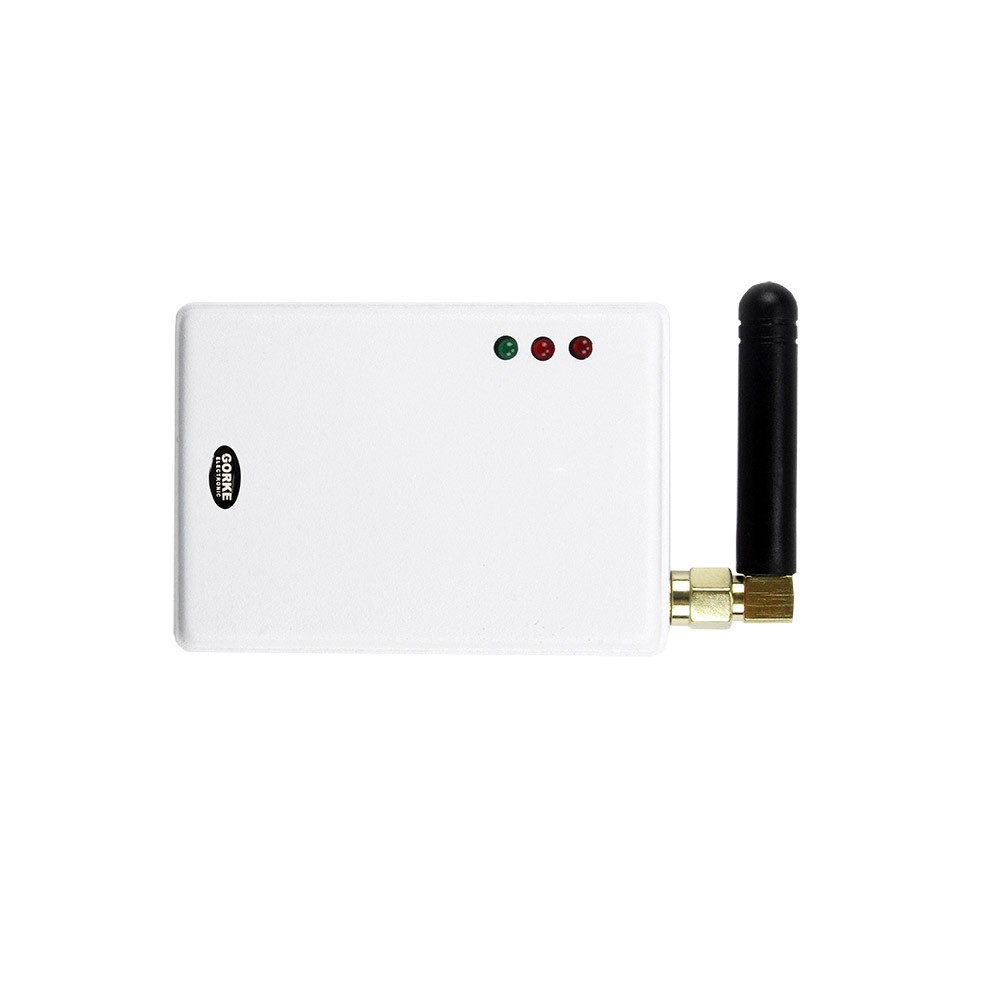
LX receiver in the owner’s home: its two relays correspond to the two poultry houses and switch on the signal unit. It sends a receipt confirmation back to the transmitter.
Quantity: 1
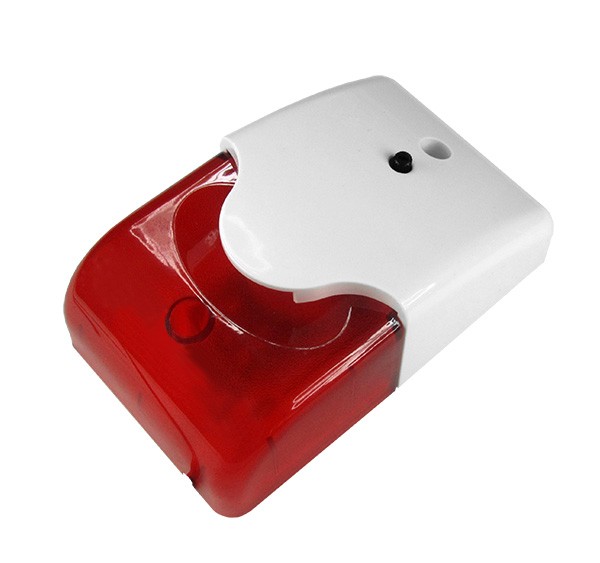
Light-and-sound signal unit in the house, placed where it can be heard from the bedroom. The volume is set with a knob on the housing.
Quantity: 1
Powers the receiver and the signal unit in the house (12 V DC) and keeps them running during a power cut.
Quantity: 1
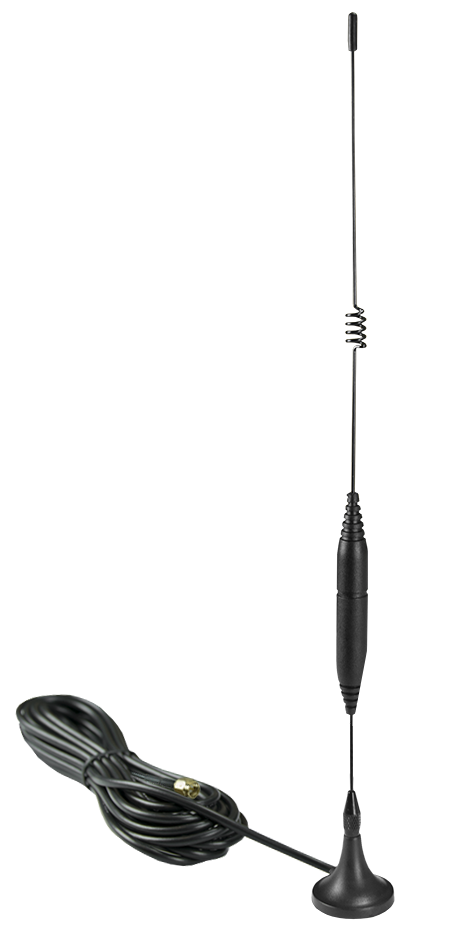
Magnetic-base 5 dBi GSM antenna — if the transmitter’s internal antenna does not get reliable coverage inside the farm building.
Quantity: optional
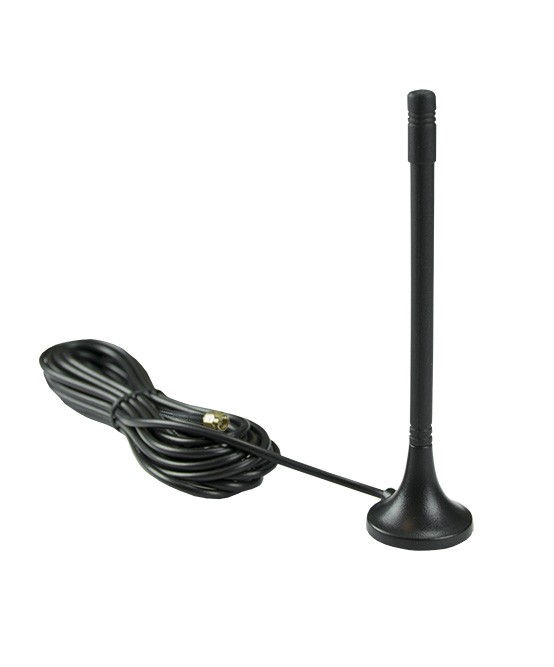
434 MHz antenna on a 3 m cable for the LX transmitter if it sits in a sheet-metal building — it takes the antenna outside the metal wall.
Quantity: optional
Catalogue figures describe a device under stated conditions, usually in open terrain, and are not a guaranteed range in every installation. Device quantities in the examples are indicative.
04 / Value for the investor
A ventilation failure is known as soon as the controller detects it, not at the next round — and in a poultry house in hot weather minutes count.
GSM and LX radio do not depend on each other: a muted phone or a mobile network outage does not stop the alarm reaching the house.
The alarm covers the 800 m from the farm to the house by radio — with no signal cable laid across fields and yard.
05 / Before installation
Before devices are chosen, what matters is the site’s conditions and how the system ties into the final installation.
Example configuration — it needs a technical selection for your site.
More from this sector
Agriculture
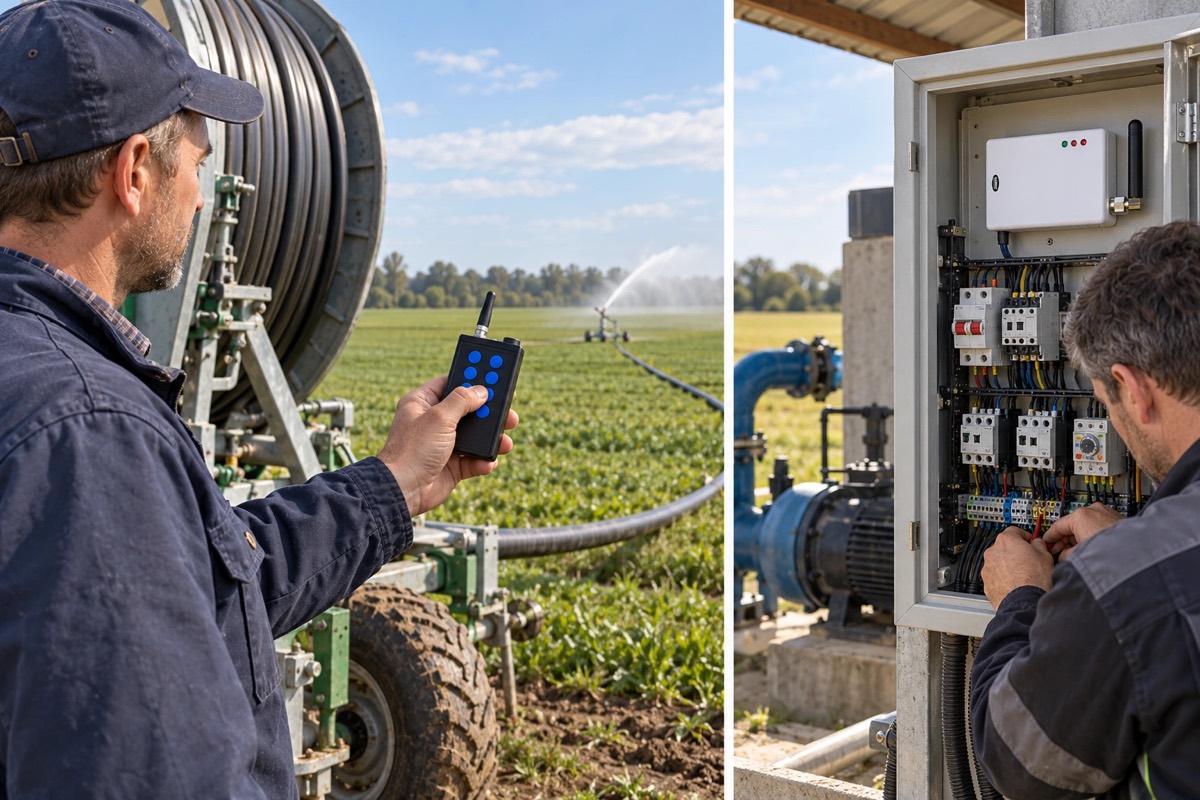
A farm: the operator of a hose-reel irrigator switches two pumps on and off without help, using a remote control, from the place of work up to 2 km away — without driving out to them.
Agriculture
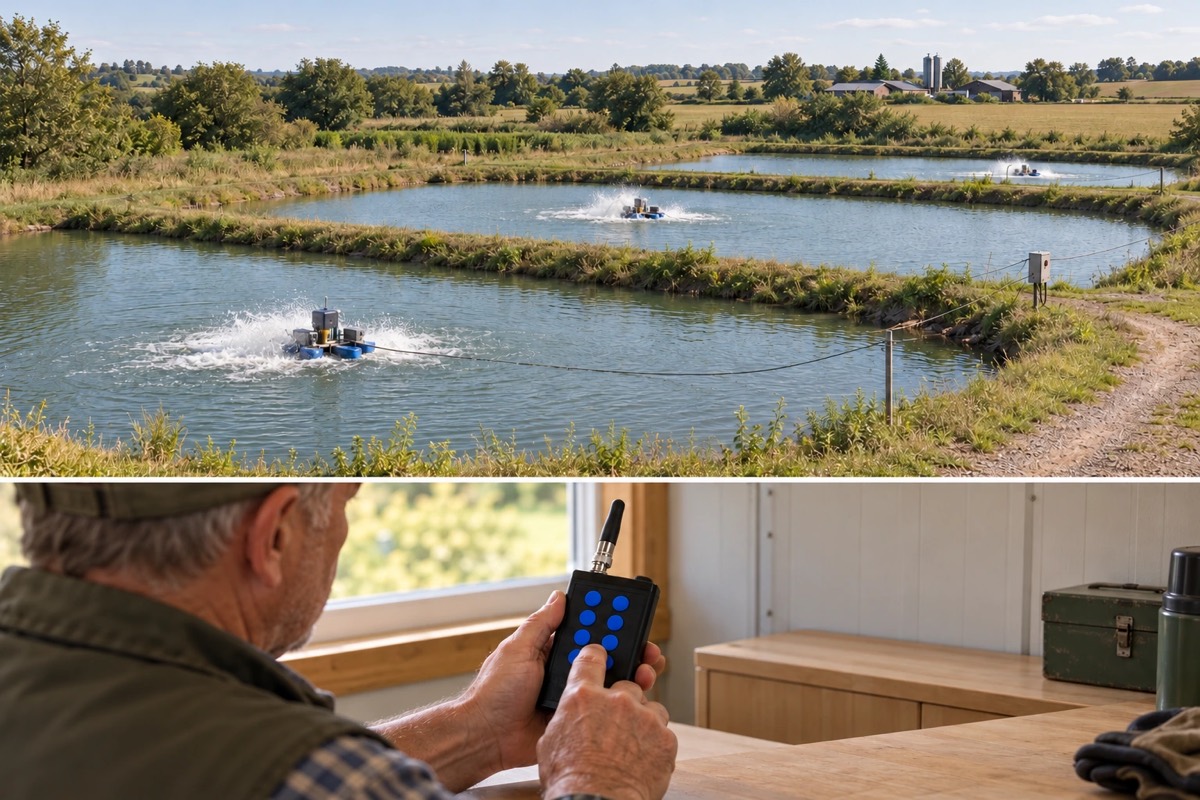
A fish farm with three ponds: each aerator is switched on from the house, and a signal from the switchboard at the pond shows whether it is running or has been tripped by its protection.
Agriculture
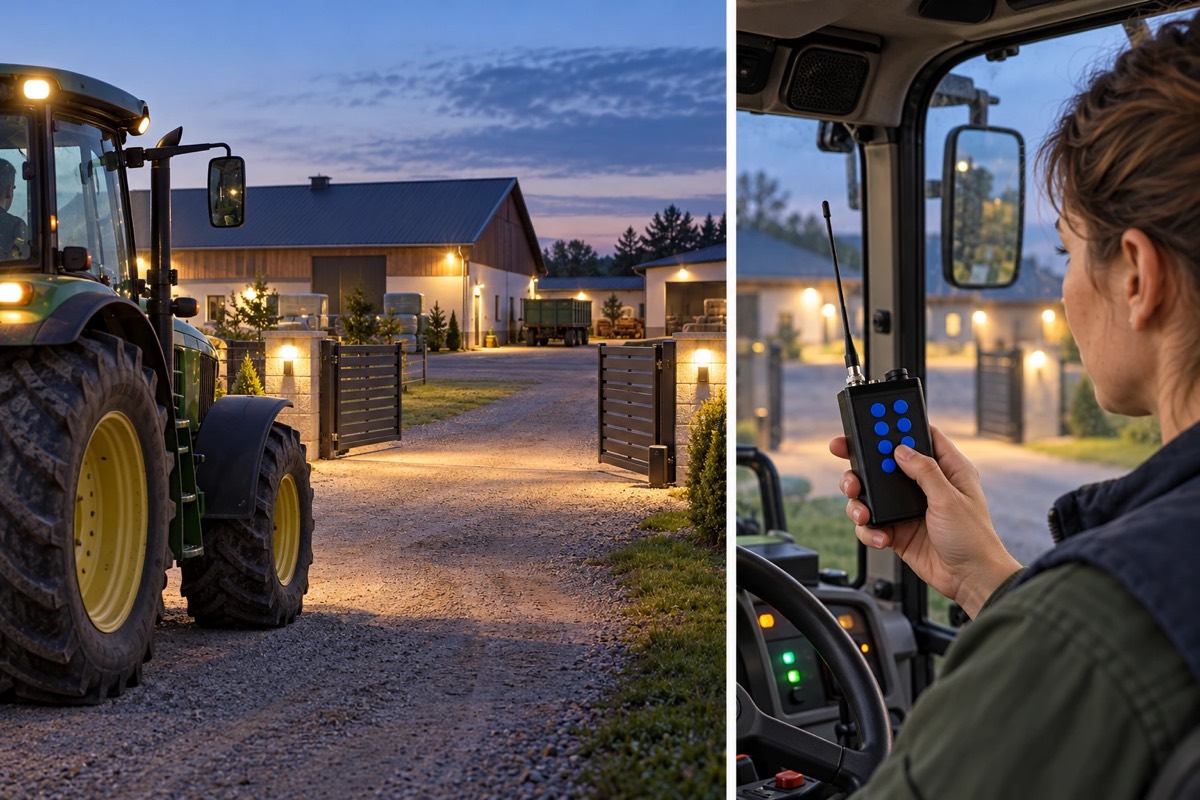
A farm where machines come back after dark: the driver opens the gate and switches on the yard lights with a remote control from the cab, without getting out.
A project for your site
Send us the key requirements — GORKE will help define the scope, the technology and the components that fit the investment.