RNX-101S
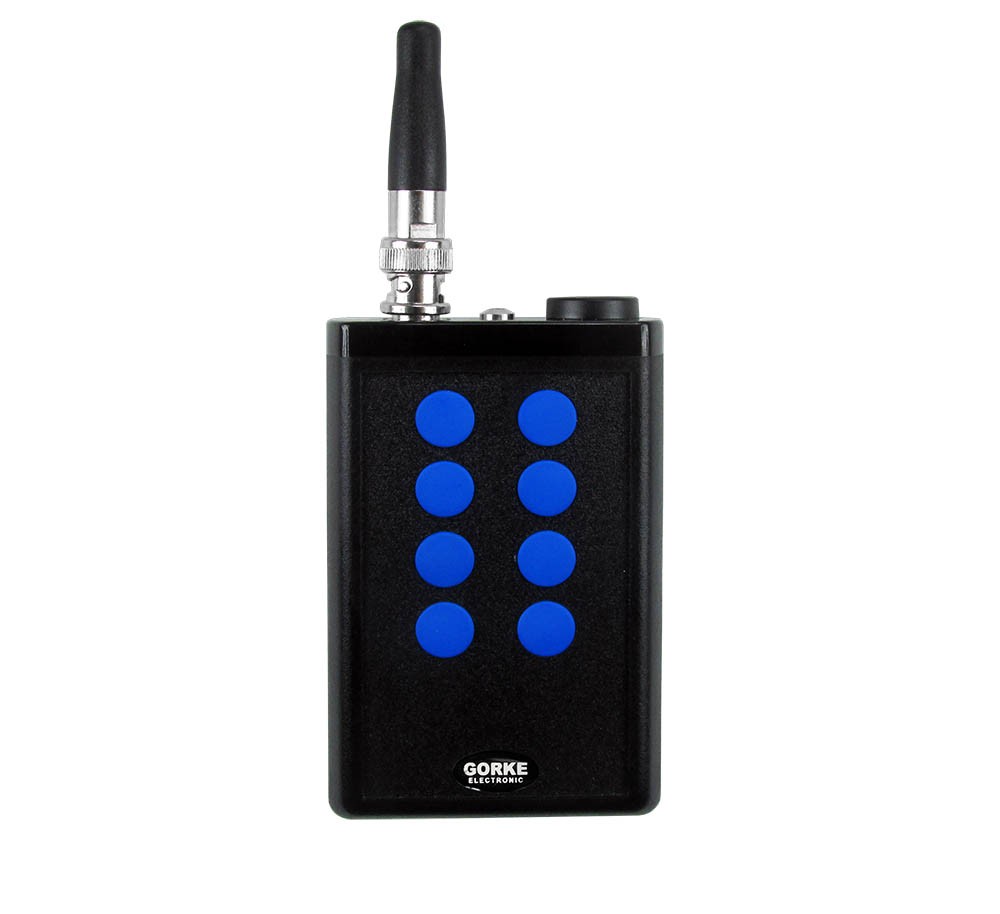
The operator’s remote control, nine keys: two for each pump, “on” and “off”. It shows with an LED, sound or vibration that the receiver has taken the command.
Quantity: 1
A two-way LX radio system for running a hose-reel irrigator: the operator’s remote control sends separate “on” and “off” commands, and the receivers at the pumps confirm that they have received them.
01 / Investment context
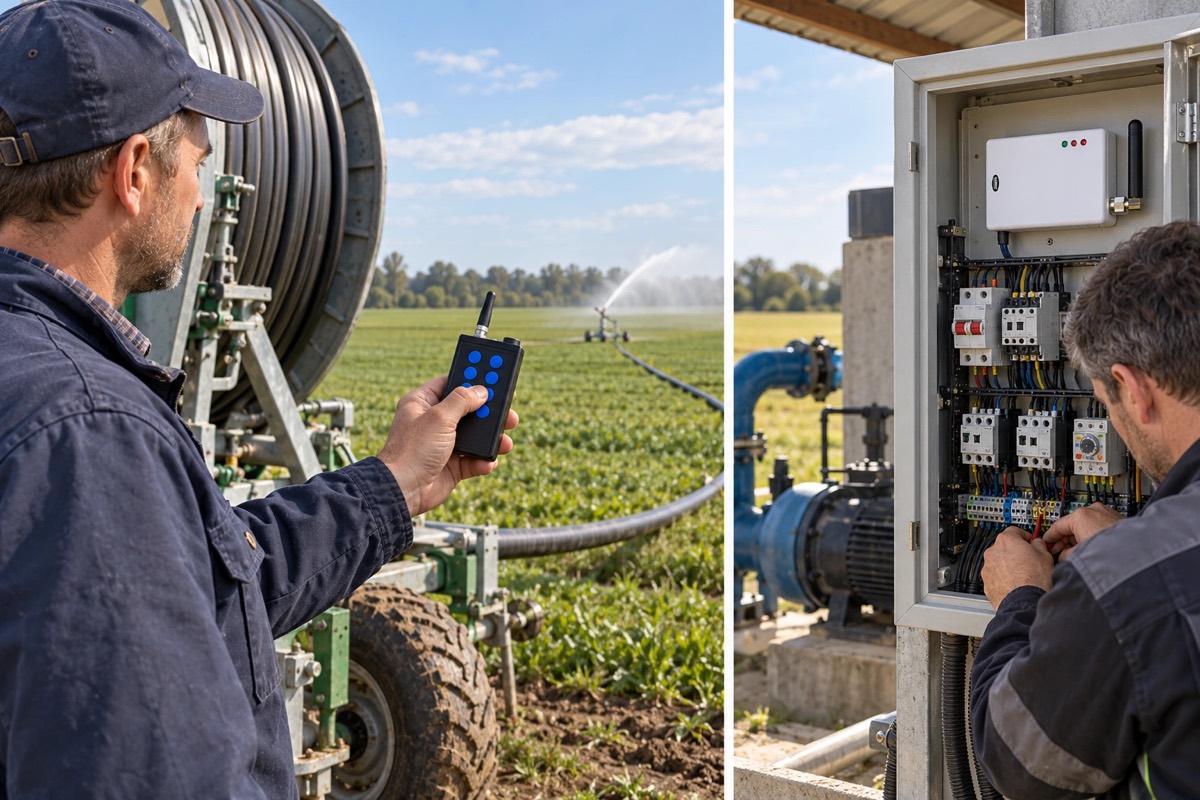
The farm irrigates crops over a large area with two hose-reel irrigators. Before irrigating, the operator lays out the water supply hose — about 400 m — and only then is the pump switched on. The irrigator moves, so its distance from the pumps ranges from about 500 m to 2 km.
Without remote control, a pump is switched on and off at the pump itself. The operator who has laid out the hose at the irrigator therefore has to cover up to 2 km to the pump and back every time, or rely on a second person waiting at the pump.
A control cable to each pump would be long and exposed to damage during field work, and its end would still stay in one place while the operator moves along with the irrigator.
The investor’s goal: The operator switches the pumps on and off without help, from the place of work at the irrigator, and knows that the receiver at the pump has taken the command.
The operator carries a nine-key long-range LX remote control (RNX-101S). Each of the two pumps has two keys on it: a separate “on” and a separate “off”. A command therefore always means the same thing, whatever state the pump is in — unlike a single key that toggles.
Each pump has an LX receiver (RSX-K02) working in bistable two-key mode: one key on the remote control switches its relay on, the other switches it off. The relay works in the control circuit of the pump contactor — the motor is fed through the contactor with the pump’s protection devices, not by the receiver itself.
The link is two-way: the receiver sends back a confirmation, and the remote control signals it with an LED, a sound or vibration. The operator knows the command has arrived even though the pump is up to 2 km away. The confirmation refers to receipt of the command — not to the motor actually running or water flowing.
02 / Operating principle
The irrigator operator switches the pumps on and off from the field with an LX remote control, and the receiver at the pump confirms that it has taken the command.
01 / Signal source
RNX-101S Operator’s remote at the irrigatorHas two keys per pump: a separate “on” and a separate “off”.
02 / Reception
RSX-K02 LX receiver at the pumpReceives the command from up to 2 km away and sends back a confirmation.
03 / Action
Pump Contactor with the pump’s protectionThe receiver’s relay works in the control circuit of the pump contactor.
The operator no longer drives out to switch the pump on. The remote control shows with an LED, a sound or vibration that the receiver has taken the command — even though the pump is up to 2 km away.
A simplified functional diagram.
03 / Installation components
The devices named in the description of the installation.
The operator’s remote control, nine keys: two for each pump, “on” and “off”. It shows with an LED, sound or vibration that the receiver has taken the command.
Quantity: 1
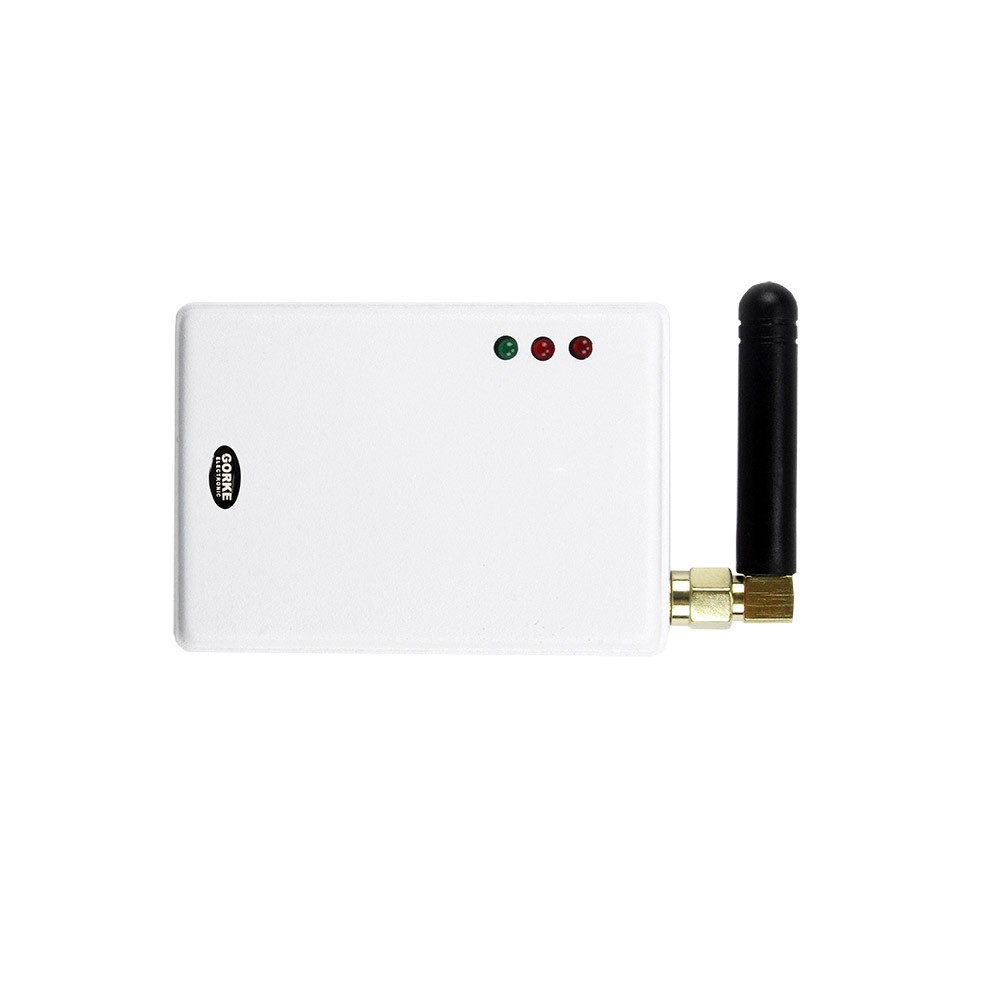
LX receiver at the pump, in bistable two-key mode. Its relay works in the control circuit of the pump contactor, and a receipt confirmation goes back to the remote control.
Quantity: 2
Catalogue figures describe a device under stated conditions, usually in open terrain, and are not a guaranteed range in every installation. Device quantities in the examples are indicative.
04 / Value for the investor
The pump is switched on and off from the workplace at the irrigator, so the operator no longer drives out to it just to press a button.
The confirmation on the remote control shows that the receiver at the pump has taken the command, even though the pump may be as far as 2 km away.
The control link is radio, so no signal line has to be laid across the fields, where machinery could damage it during field work.
05 / Before installation
Before devices are chosen, what matters is the site’s conditions and how the system ties into the final installation.
Source: an archived GORKE description of the installation. For a new investment we choose current models.
More from this sector
Agriculture
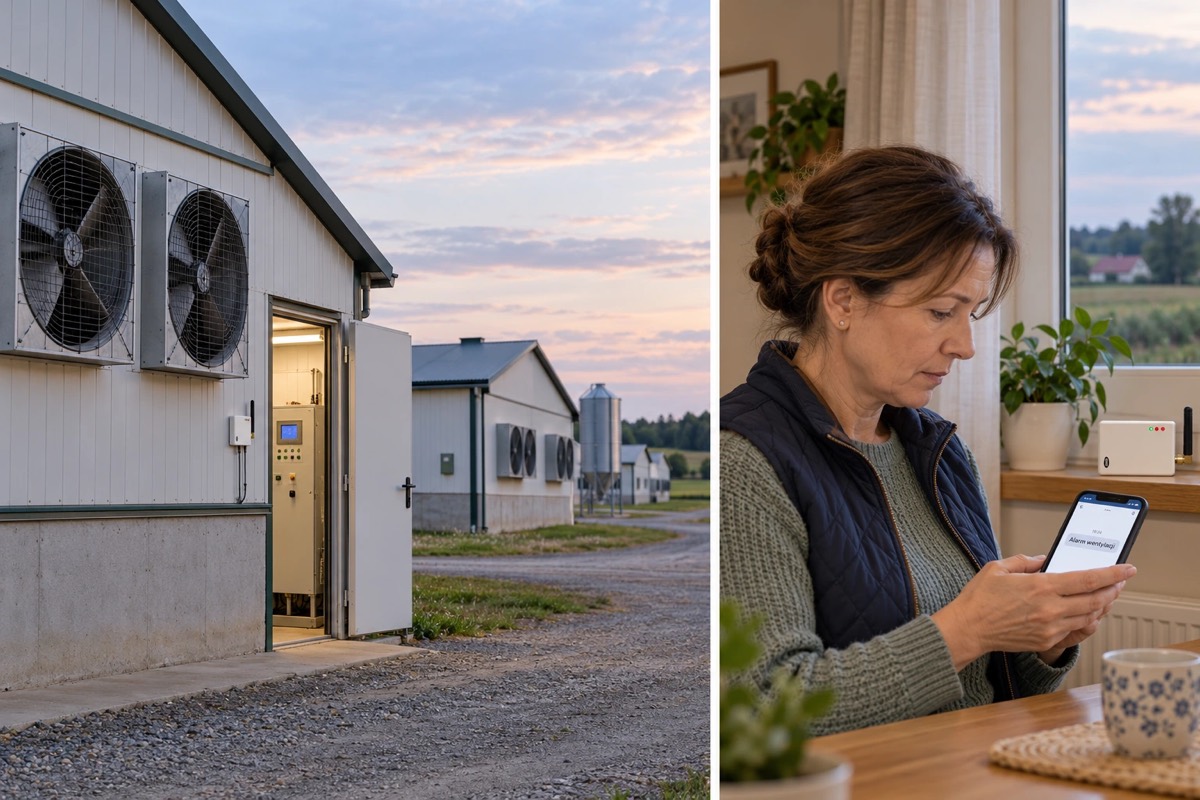
Two poultry houses 800 m from the owner’s home: the climate controller’s alarm reaches the owner’s phone by text and call, and a signal unit in the house by radio.
Agriculture
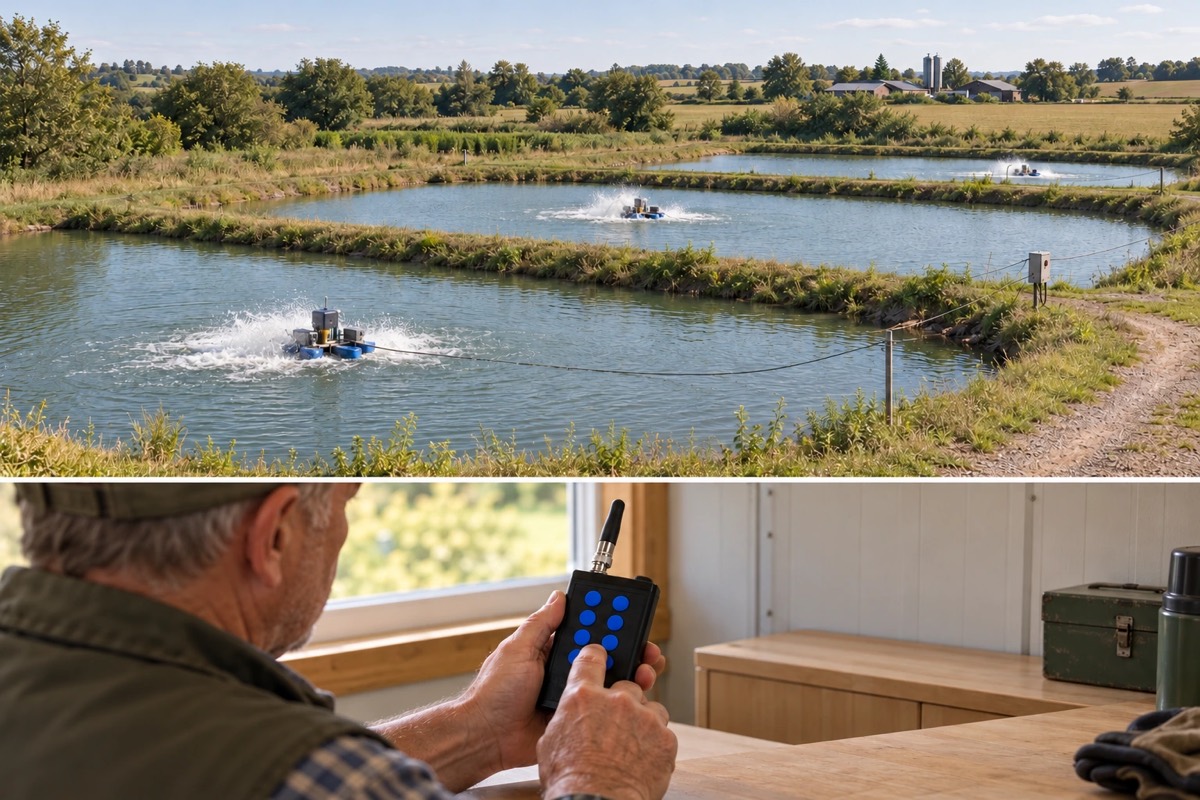
A fish farm with three ponds: each aerator is switched on from the house, and a signal from the switchboard at the pond shows whether it is running or has been tripped by its protection.
Agriculture
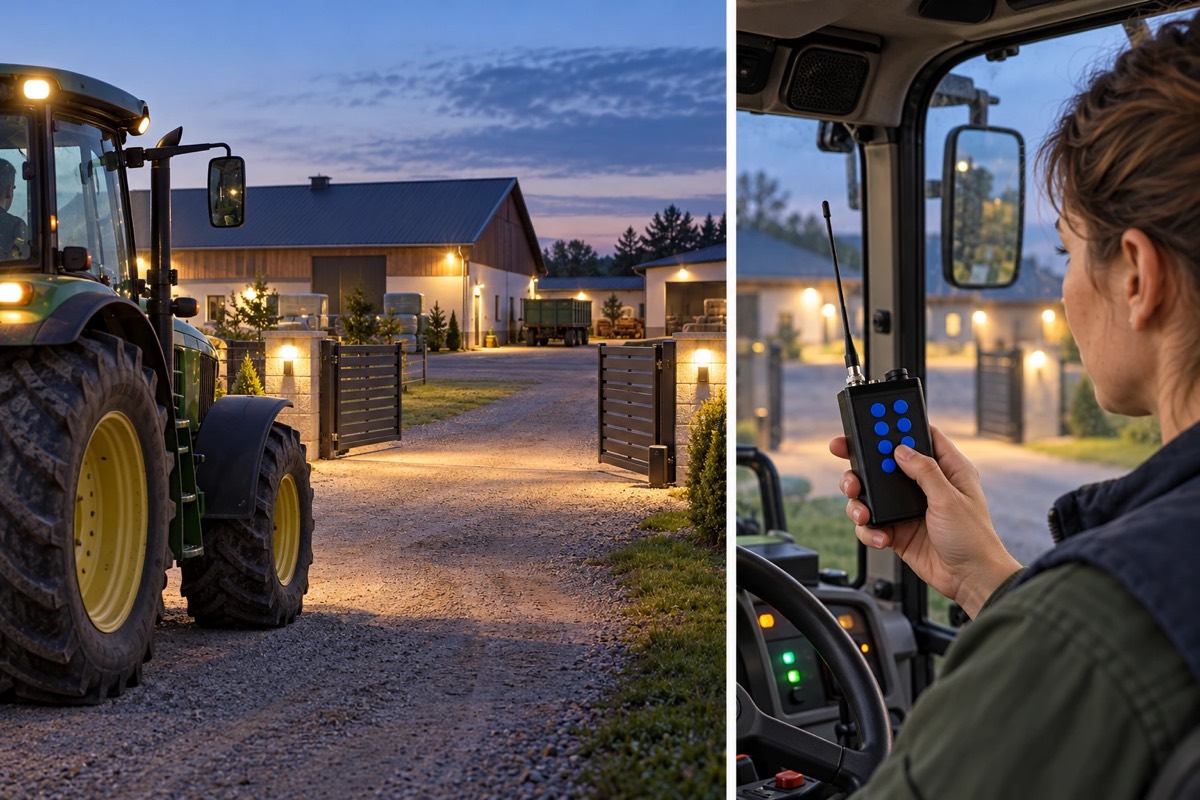
A farm where machines come back after dark: the driver opens the gate and switches on the yard lights with a remote control from the cab, without getting out.
A project for your site
Send us the key requirements — GORKE will help define the scope, the technology and the components that fit the investment.