PNH-201C
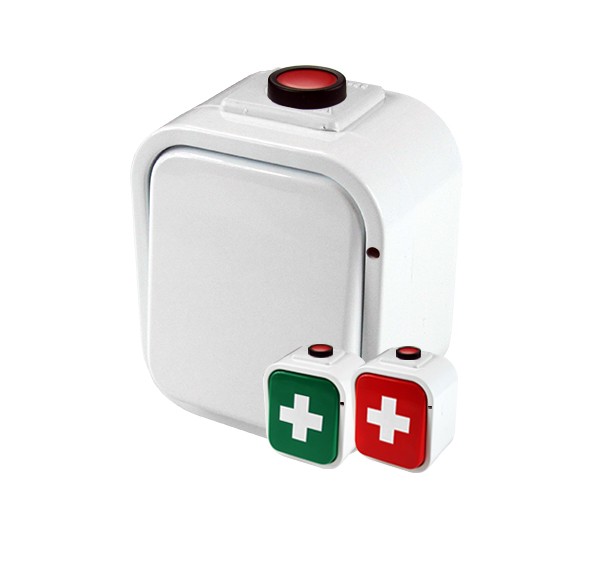
Sealed button with a cancel key at the workstation: the transport call repeats every 30 s until the operator cancels it with the key on the spot. Battery-powered, no wiring.
Quantity: 1 per workstation
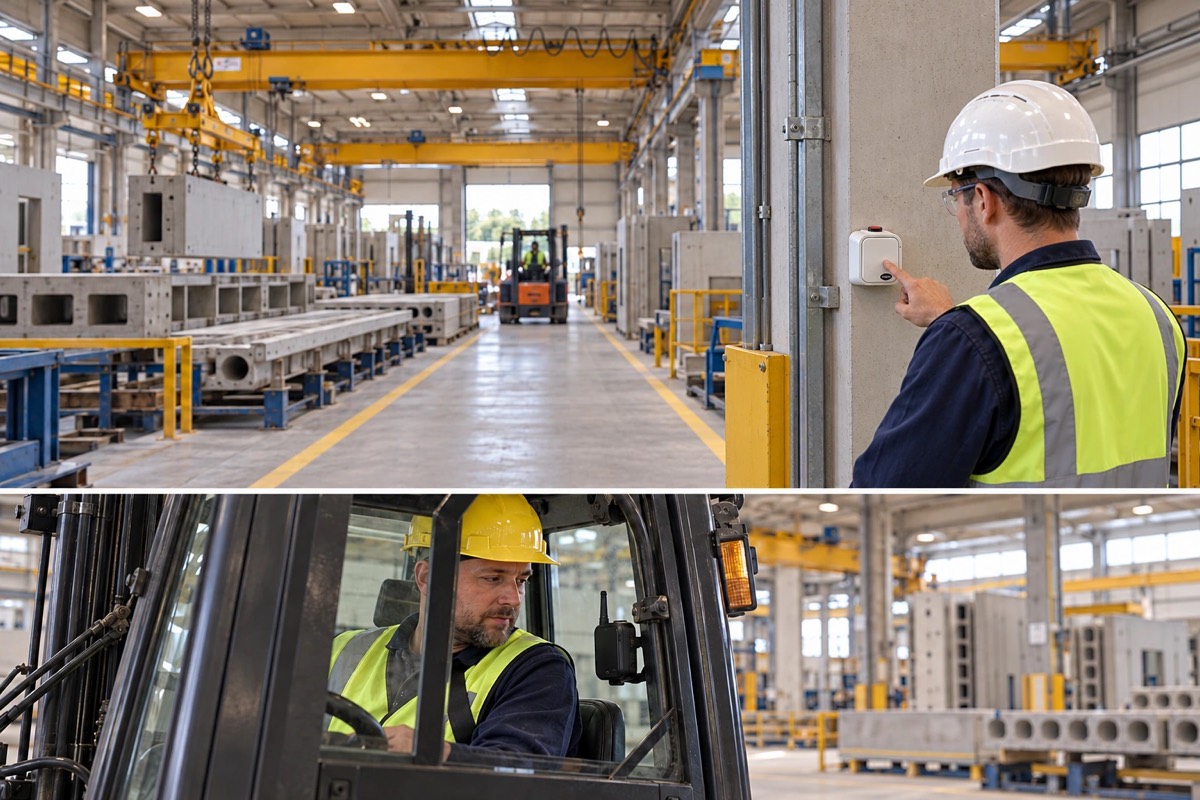
In-plant transport called up in a precast concrete hall where structures and conveying equipment run at a height of about 4 m and above. A radio link connects the workstations with the transport crew.
01 / Investment context
In the hall of the precast concrete plant the workstations run at different rhythms. Each finishes its part of the work at a different moment, and each needs material at a different moment. Material therefore has to be collected or delivered exactly when the workstation is ready — and only the worker standing at it knows when that is.
Structures and conveying equipment run through the hall at a height of about 4 m and above. Cables from the workstations to the transport crew would have to run beneath them, through the working production area. Without a signal from the workstation, the worker has to leave the job to look for the forklift operator, and the operator does not know which workstation is waiting or for how long.
The investor’s goal: A transport call that clearly identifies the workstation and reaches the forklift operator anywhere in the hall — without extensive cabling through the production area.
The installation linked the workstations with the transport crew by radio. A worker sends a call from the workstation, and the transport operator receives clear information about where it came from. No extensive cabling had to be run through the production area.
For a similar hall GORKE today selects a sealed button with a cancel key (PNH-201C) for each workstation. The call repeats every 30 seconds until someone cancels it, so it is not lost while the operator is busy manoeuvring a loaded forklift. The forklift operator carries a pager (OBI-4SH) that shows the workstation number, and on arrival cancels the call with the key on the same button.
If the forklifts are directed from a transport office, a receiver with a text display (IDO-1000U/E) shows the workstation’s name there instead of a number. Metal structures reflect and attenuate radio waves, so a range test is carried out before installation; if it reveals dead spots, a repeater (RTS-1000) powered at 12 V DC carries the signal.
02 / Operating principle
Workers call a forklift from their workstation by radio, and the operator knows where the call came from — without extensive cabling across the hall.
01 / Signal source
Workstation Collection or delivery of materialThe worker sends a call when the workstation is ready.
02 / Transmission
Radio link No extensive cablingLinks the workstations with the transport crew without cables under the structures.
03 / Notification
Forklift operator In-plant transportReceives clear information about which workstation the call came from.
The forklift operator knows which workstation is waiting. The operator plans the order of runs instead of circling the hall looking for jobs, and the workstation waits less for transport.
A simplified functional diagram.
03 / Installation components
The description of the installation names no models — this is GORKE’s choice for a similar site.
Sealed button with a cancel key at the workstation: the transport call repeats every 30 s until the operator cancels it with the key on the spot. Battery-powered, no wiring.
Quantity: 1 per workstation
Forklift operator’s pager: receives the call directly from the buttons and shows the workstation number, also while driving around the hall.
Quantity: 1 per operator
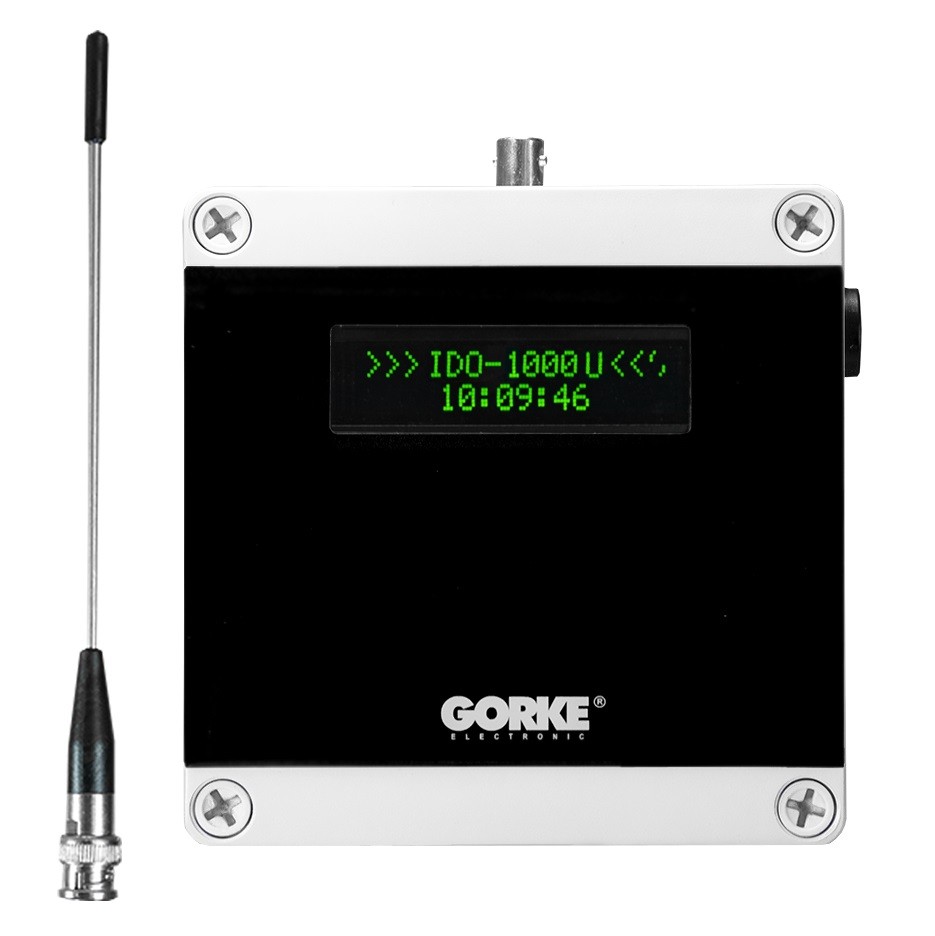
Receiver in the transport office: shows the workstation’s name instead of the transmitter number, where a dispatcher directs the forklifts.
Quantity: optional
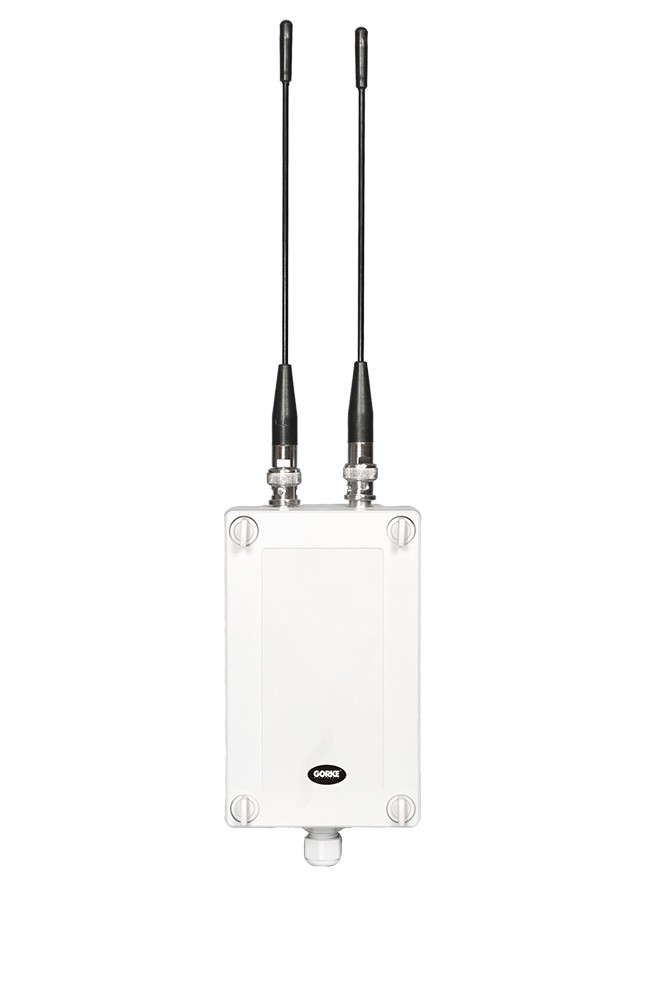
Repeater mounted high in the hall if the range test reveals dead spots between the structures; it passes the buttons’ signal on. Powered at 12 V DC from a power supply.
Quantity: per range test
Catalogue figures describe a device under stated conditions, usually in open terrain, and are not a guaranteed range in every installation. Device quantities in the examples are indicative.
04 / Value for the investor
The operator knows which workstation is waiting and plans the order of runs instead of circling the hall looking for jobs.
The call reaches the operator when the workstation is ready, so material waits less between production stages, and the worker does not leave the job to look for a forklift.
The radio link needs no cables run beneath the structures and conveying equipment, and a battery button can be moved along with any change in the workstation layout.
05 / Before installation
Before devices are chosen, what matters is the site’s conditions and how the system ties into the final installation.
Source: the description of the installation under Custom projects.
More from this sector
Industry
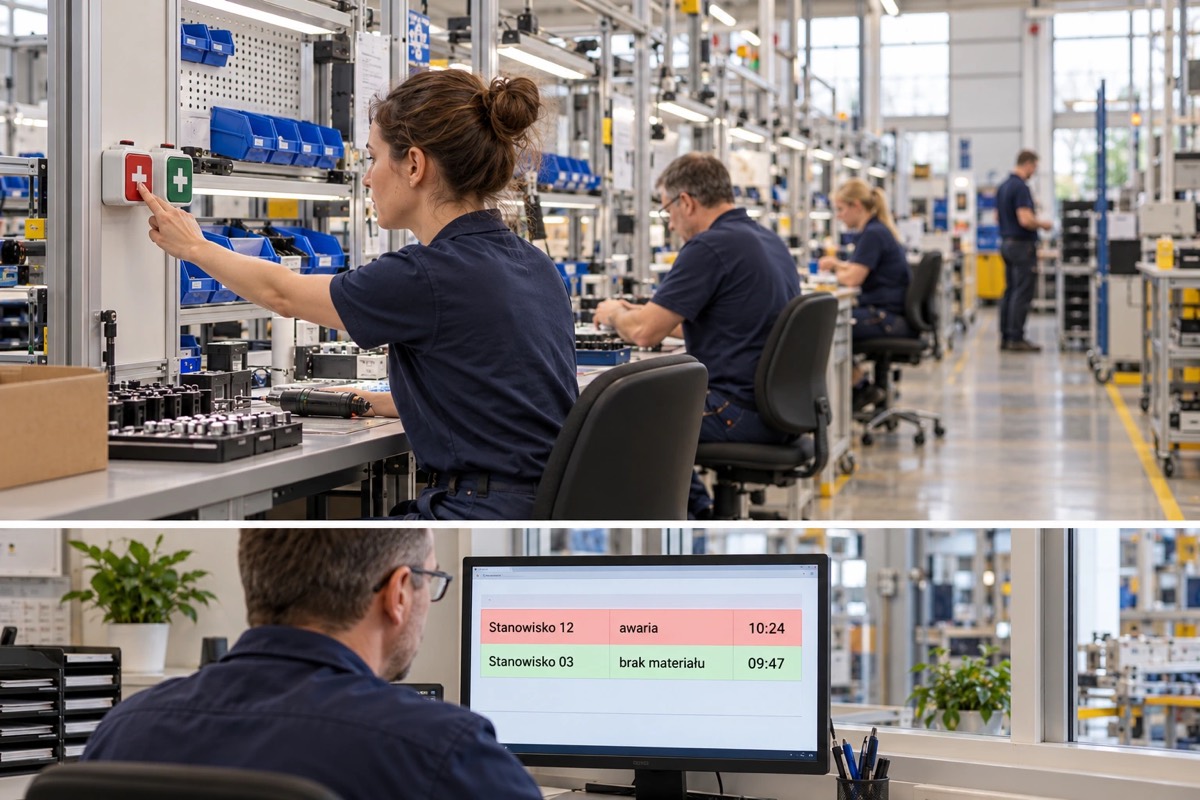
An assembly line with 20 workstations: two buttons at each one separate breakdowns from material shortages, and Tablica Synoptyczna logs the time from call to cancellation.
Industry
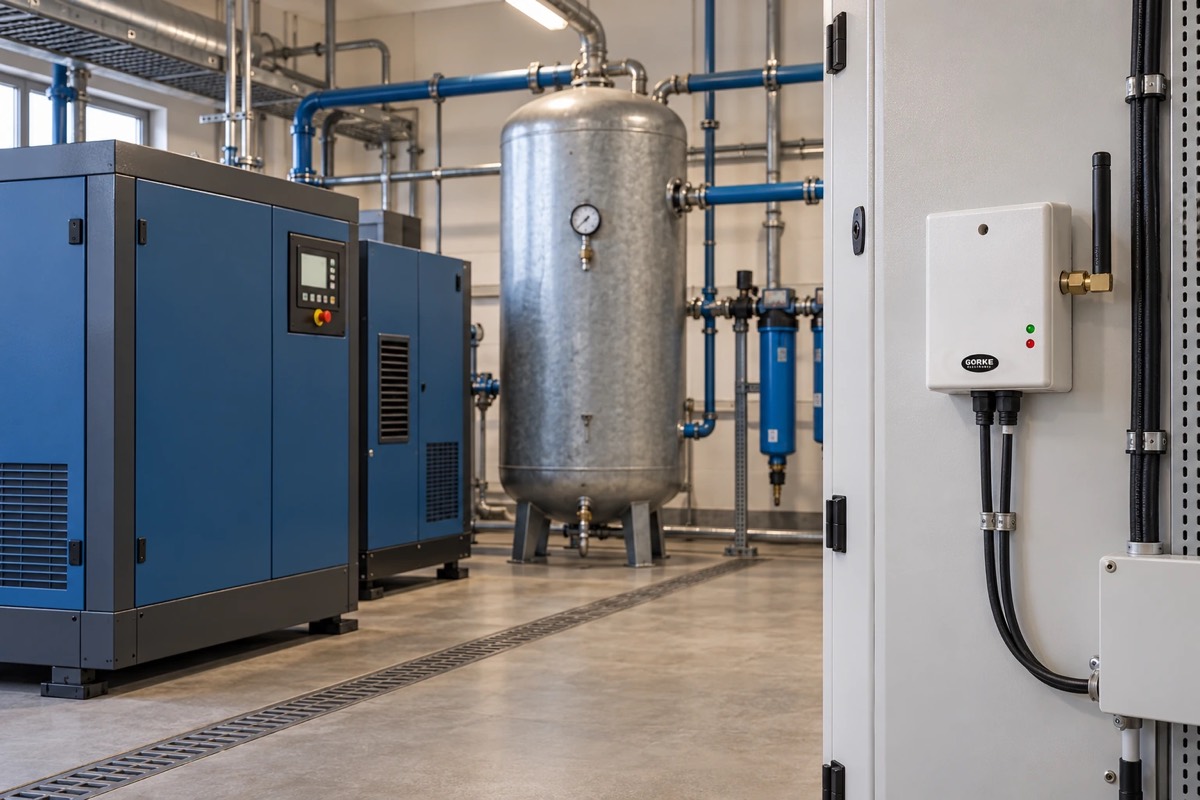
A compressor house 300 m from the maintenance office, behind a steel hall: two alarm states from the controller travel there by LX radio and, after hours, by text to the person on call — no cable across the site.
Industry
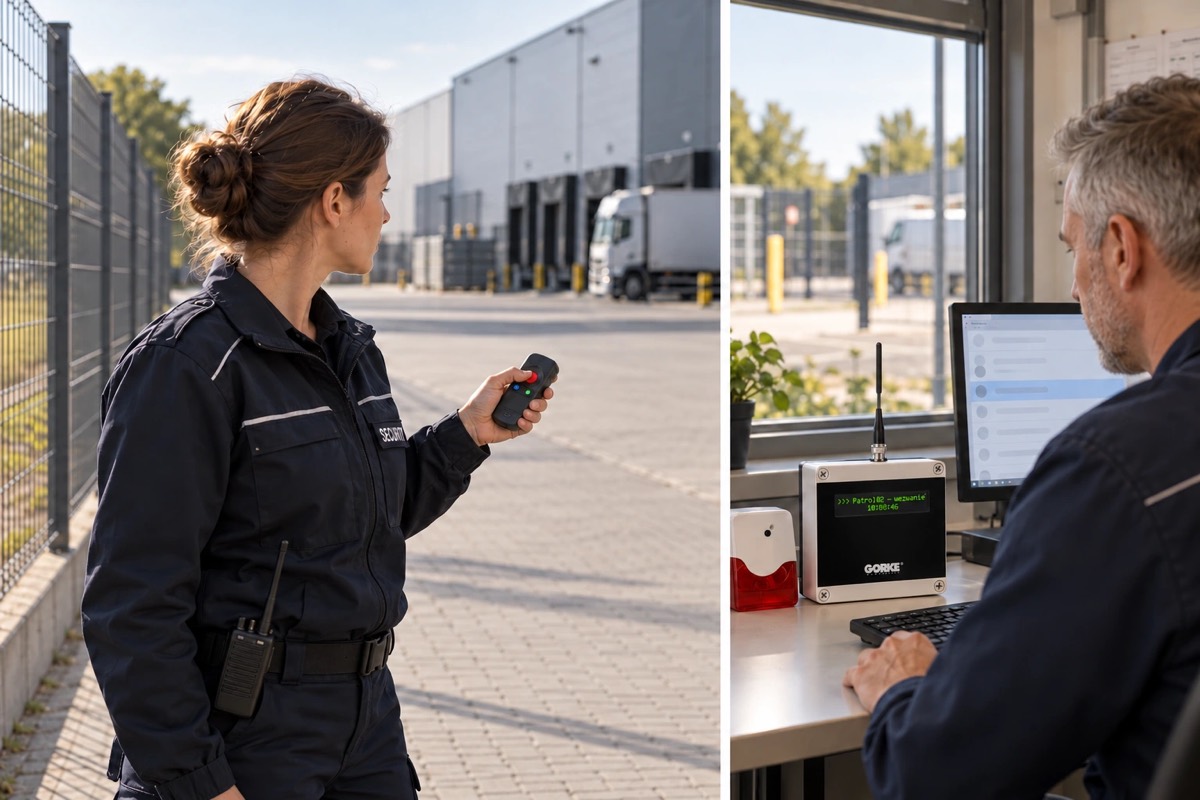
A 20-hectare plant site: a security guard calls for backup with one key, feels the confirmation vibrate, and the guardhouse sees who is calling.
A project for your site
Send us the key requirements — GORKE will help define the scope, the technology and the components that fit the investment.