Installation component
Float switch
Floats in the tank: one detects the minimum level, the other a full tank. Each drives one input of the transmitter.
Quantity: 2
Radio monitoring of the water level in the tank with link supervision, and remote pump control, for a stand-alone hotel supplied from a deep well that is hard to reach in winter.
01 / Investment context
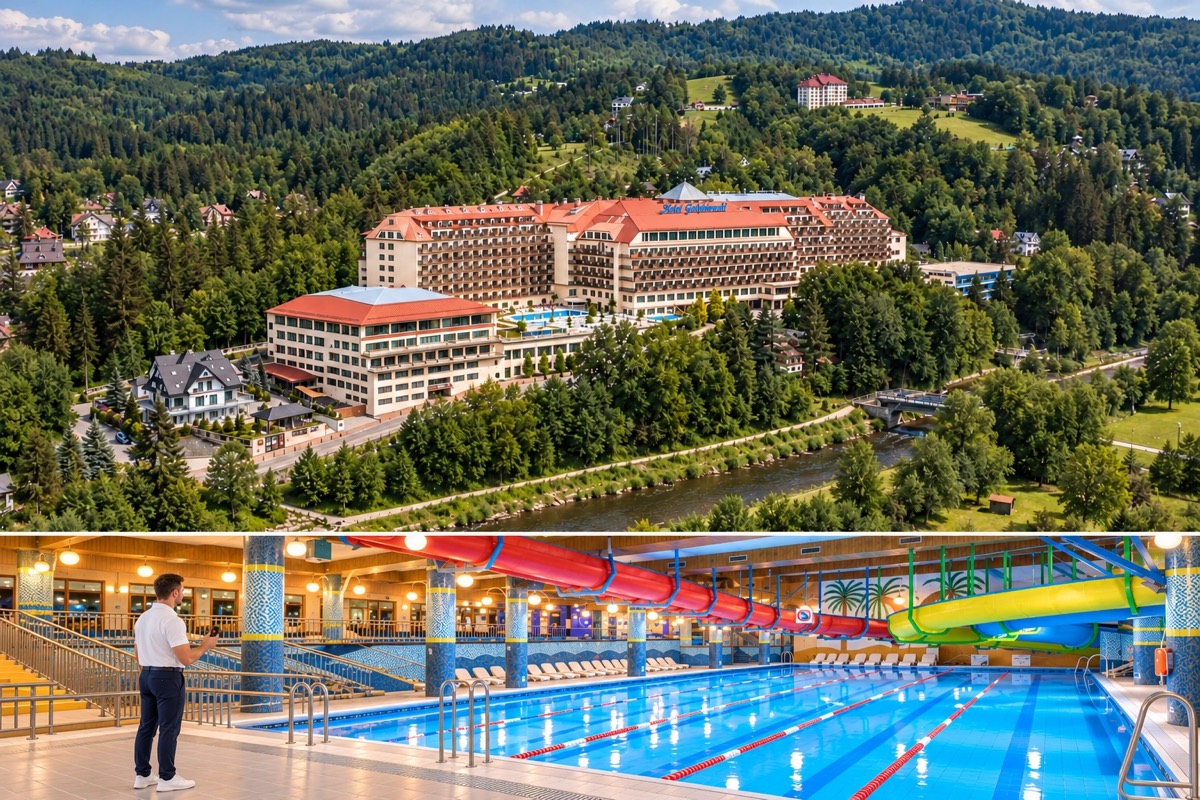
The stand-alone mountain hotel accommodates several hundred guests and draws its water from a deep well about 1.5 km away. The well is hard to reach, especially in winter.
With a high turnover of guests, water consumption was unpredictable and the tank could suddenly run dry. Someone then had to go to the well and switch the pump on there, and filling the tank alone took about 4 hours. This happened fairly often and meant several hours without water in the hotel.
In winter, during heavy snowfall, the range of radio devices drops noticeably — and that is exactly when the well is hardest to reach.
The investor’s goal: To know in the hotel when the water in the tank drops to the minimum, and to start the pump from there, without driving to the well.
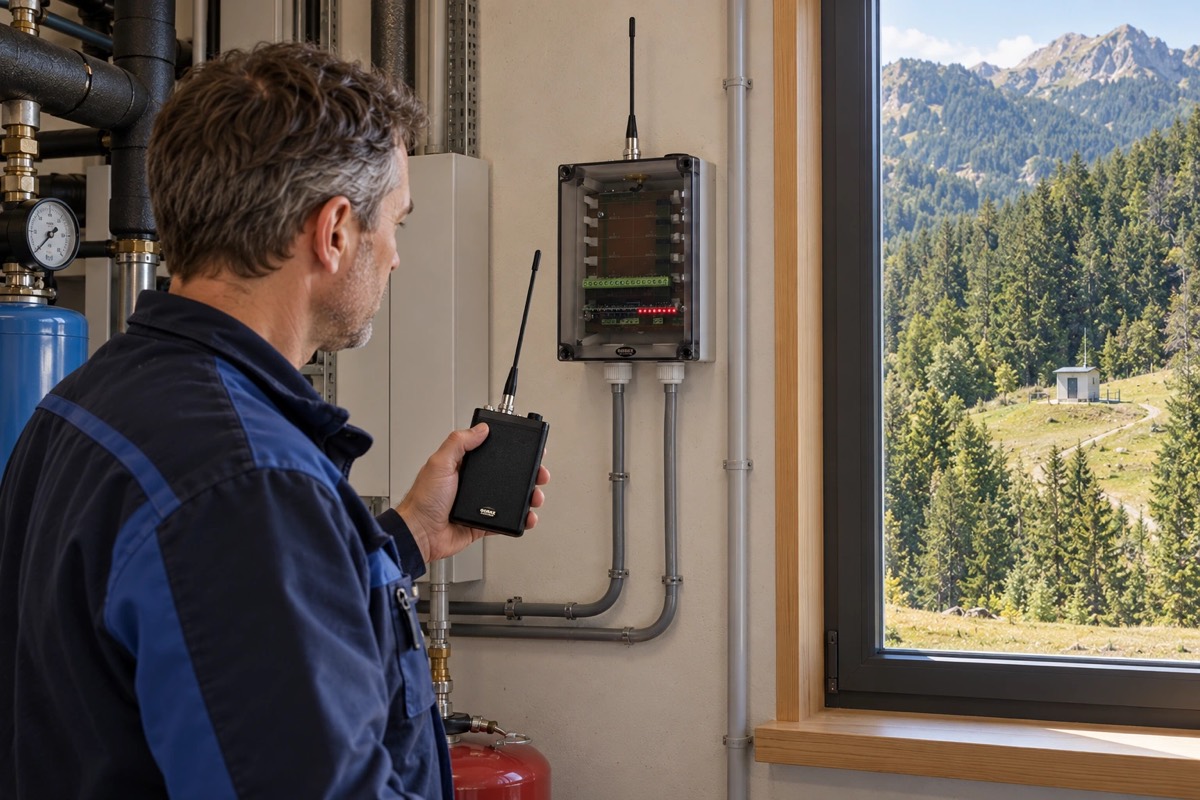
Two float switches are installed in the tank: one detects the minimum level, the other a full tank. They drive two inputs of a transmitter with link supervision (NRP-102K), powered from 12 V DC. In the hotel the receiver (RP10-2K) signals “no water” or “tank full”.
The transmitter and receiver supervise the link and the transmitter’s power supply: the receiver reports a lost link exactly like an alarm. This matters in winter — a missing signal is information, not a silence that reassures the staff.
A member of staff in the hotel switches the pump on and off with a long-range remote control (RNB-101). At the pump a high-sensitivity receiver (OPC-K01) in bistable mode controls the pump through its contactor’s control circuit: one press switches it on, the next switches it off. The “tank full” signal tells staff when to switch the pump off.
02 / Operating principle
The tank’s state reaches the hotel by radio, and a remote control in the hotel starts the pump of the well about 1.5 km away.
01 / Signal source
Float switches Minimum and tank fullTwo float switches in the tank drive the transmitter’s inputs.
02 / Transmission
NRP-102K Transmitter at the tankSends the water states and supervises the link and power supply.
03 / Notification
RP10-2K Receiver in the hotel No water + Tank fullShows staff the tank’s state and any loss of the link.
The hotel knows when the water drops to the minimum. The receiver reports a lost link like an alarm, so in winter a missing signal is information too.
01 / Signal source
RNB-101 Long-range remote control in the hotelStaff switch the pump on and off with one key.
02 / Reception
OPC-K01 Receiver at the pumpIn bistable mode it drives the pump contactor’s control circuit.
03 / Action
Pump Well about 1.5 km from the hotelOne press switches it on, the next switches it off.
The pump is switched on from the hotel, with no trip to the well. The “tank full” signal tells staff when to switch it off; filling the tank takes about 4 hours.
A simplified functional diagram.
03 / Installation components
The devices named in the description of the installation.
Floats in the tank: one detects the minimum level, the other a full tank. Each drives one input of the transmitter.
Quantity: 2
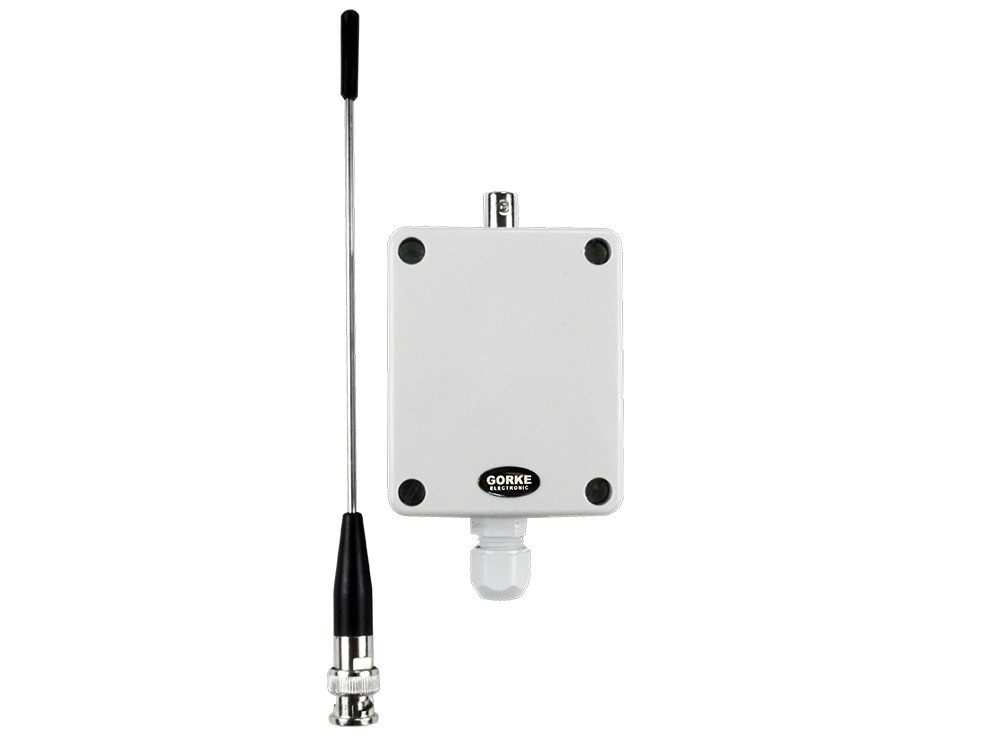
Transmitter at the tank: sends two water-level states plus link and power supervision signals. 12 V DC supply, IP66 enclosure.
Quantity: 1
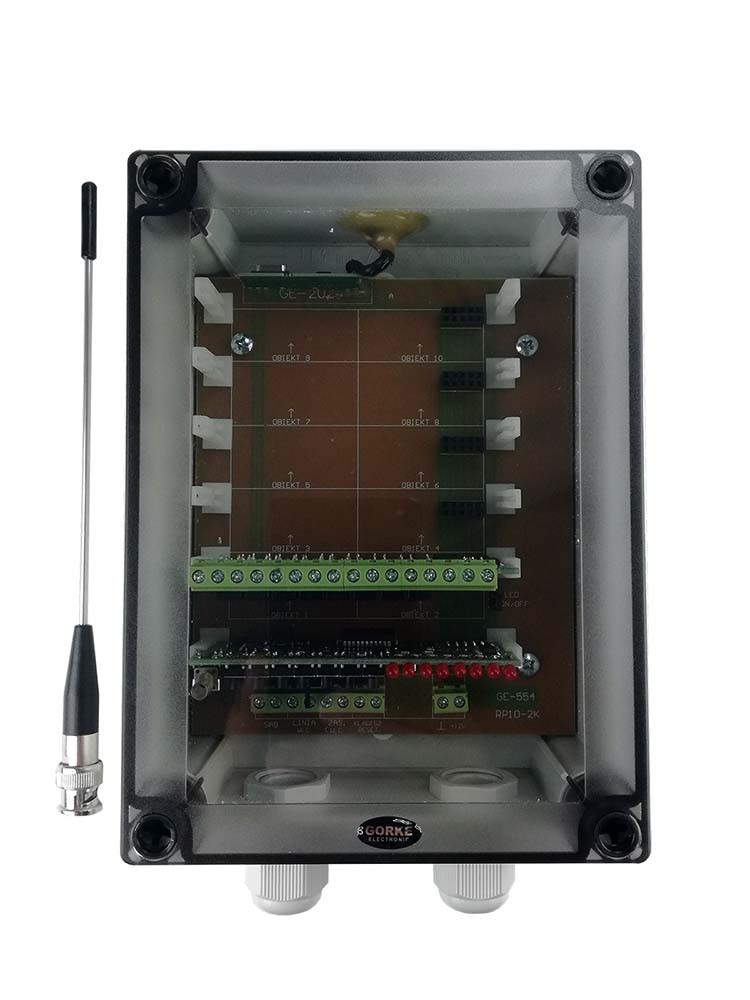
Receiver in the hotel: signals “no water” and “tank full”, and reports a lost link to the transmitter like an alarm.
Quantity: 1
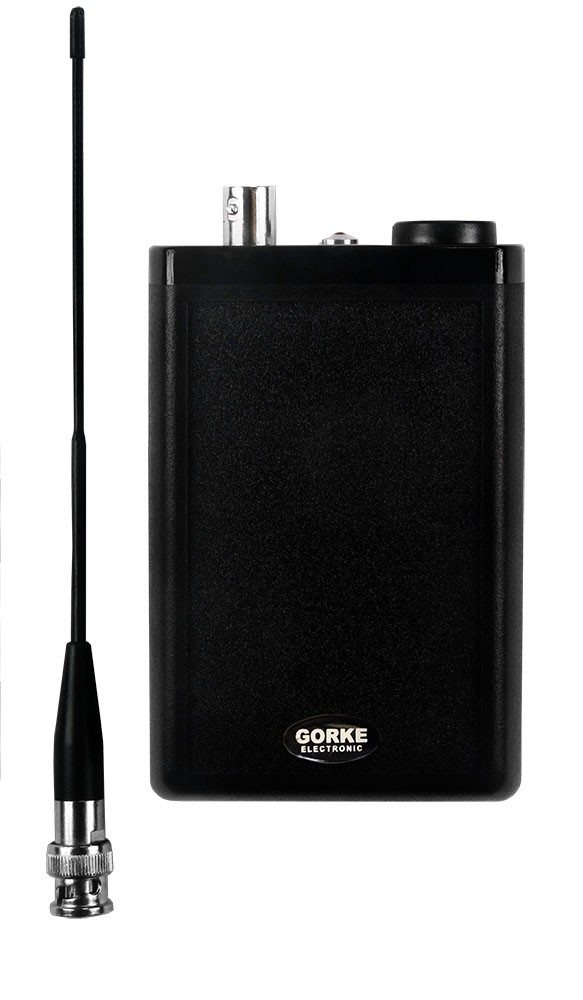
Long-range remote control in the hotel: one key with which staff switch the pump on and off. 9 V battery, external antenna.
Quantity: 1
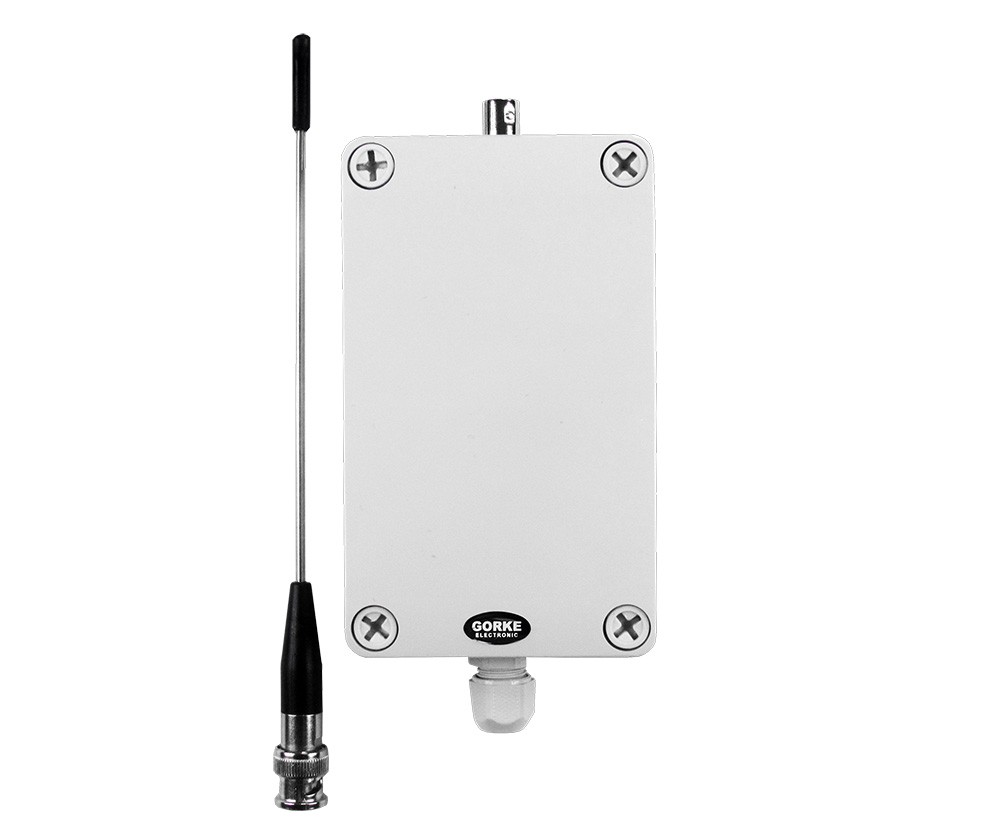
High-sensitivity receiver at the pump, in bistable mode: its relay output drives the pump contactor’s control circuit, not the pump itself.
Quantity: 1
Catalogue figures describe a device under stated conditions, usually in open terrain, and are not a guaranteed range in every installation. Device quantities in the examples are indicative.
04 / Value for the investor
The minimum-level signal arrives in the hotel, so the pump can be started at once, instead of the problem showing up as taps suddenly running dry.
The pump is started from the hotel, so the difficult winter road to the well no longer decides whether the hotel has water.
Link supervision reports a lost link like an alarm, so in winter, when snow reduces the range, staff know they have lost sight of the tank.
05 / Before installation
Before devices are chosen, what matters is the site’s conditions and how the system ties into the final installation.
Source: an archived GORKE description of the installation. For a new investment we choose current models.
More from this sector
Hotels and tourism
A hotel and conference complex with accessible toilets in several buildings: every call reaches the reception, even from another building.
Hotels and tourism
A hotel complex in Wisła: access to car park zones, the water slide pumps, stopping water attractions in an emergency, and calls for help from the saunas.
Hotels and tourism
For a Scandinavian client GORKE adapted its standard call button for use inside a sauna: up to 110°C, resistant to high-pressure washing, with a light signal.
A project for your site
Send us the key requirements — GORKE will help define the scope, the technology and the components that fit the investment.