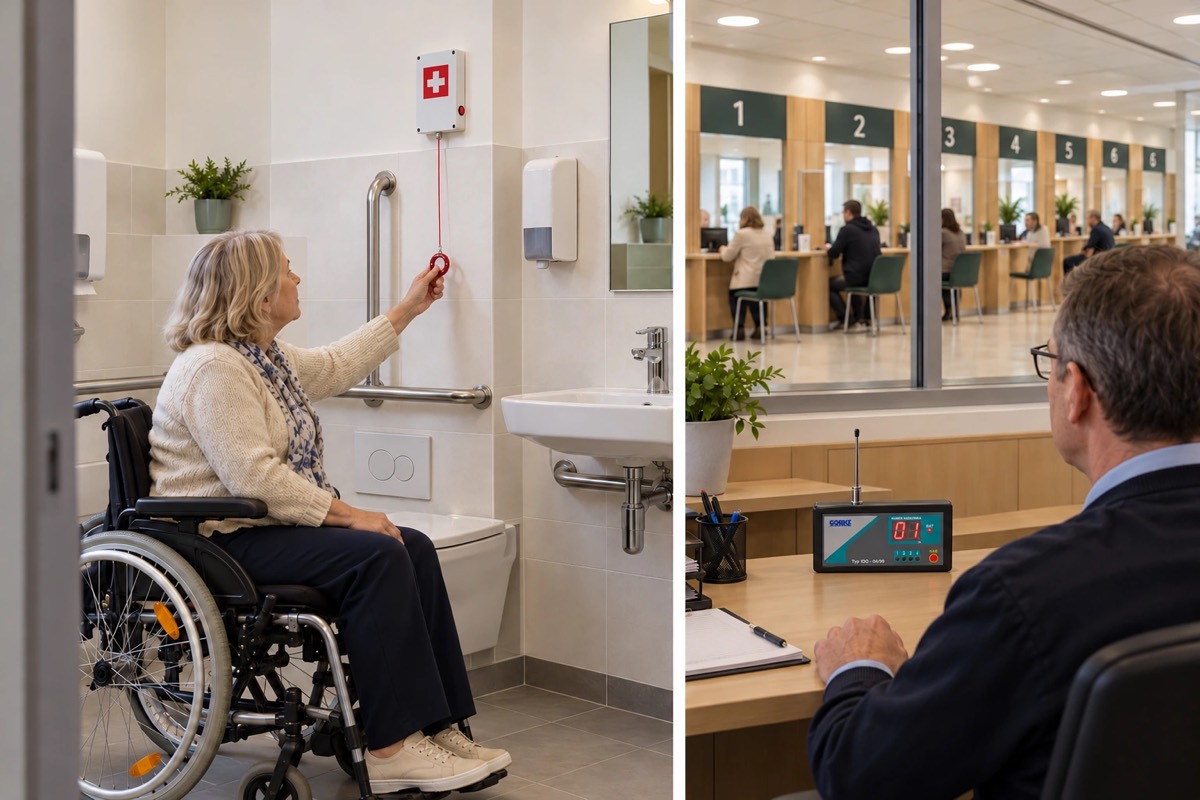
Installation component
Door reed contact
Magnetic sensor on the leaf and frame of the fire door: opening the door breaks the circuit of the transmitter input.
Quantity: 5
Monitoring whether fire doors are closed, for a security company in a multi-storey shopping centre with difficult radio conditions — without cables from the doors to the monitoring centre.
01 / Investment context
A security company looks after a multi-storey shopping centre. Security needs to know which fire doors someone has opened and whether they were closed again afterwards.
Fire doors left open do not do their job, and an open door to a stairwell or back-of-house area is also a gap in the building’s security. Walking all the storeys to check every door takes time, and between rounds nobody knows what is happening with them.
The building has several storeys and difficult radio conditions: floor slabs, walls and the structure attenuate the signal. Running cables from every door between storeys to the monitoring centre in an operating shopping centre would be costly and disruptive.
The investor’s goal: The monitoring centre knows which fire doors are open and whether they have been closed again — despite the difficult radio conditions of a multi-storey building.
Reed contacts were fitted to the doors. Opening a door breaks the contact’s circuit, and an LX-series transmitter sends a signal to the monitoring centre. The installation used an NRX-105 transmitter; today the same function is served by the LX transmitter with five NC inputs (NBX-105), battery-powered, with an enclosure tamper circuit.
In the monitoring centre a multi-channel receiver indicated the door with an LED and a sound. The operator cancelled the alarm, but the open state stayed signalled until the door was closed — so security saw not only that the door had been opened, but also that it was still standing open. Today the monitoring centre would use the LX identification receiver (IDX-1001U/E), which shows a label for the door instead of an LED, for example “Fire door stair B, level 0”.
The LX link is two-way, and its module can receive a signal weaker than the noise — it works between storeys and amid interference where an ordinary radio link fails. If the range test on any storey reveals a weak spot, a range extender (RTX-100BP) carries the signal.
02 / Operating principle
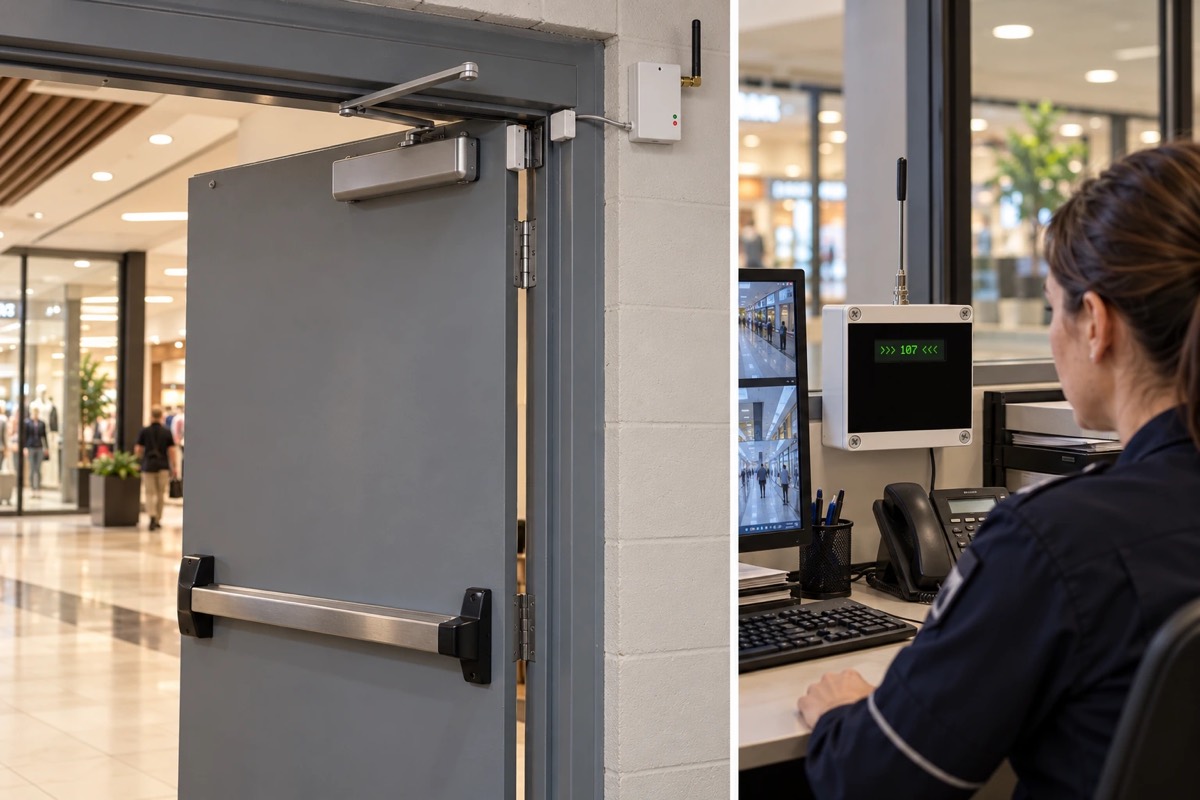
The opening of any of the 5 fire doors reaches the monitoring centre over the LX radio link, with no cables from the doors.
01 / Signal source
Reed contact On the fire doorOpening the door breaks the circuit of the transmitter input.
02 / Transmission
NBX-105 LX transmitter by the doorSends the signal by radio to the monitoring centre, also between storeys.
03 / Notification
Security Receiver in the monitoring centreThe door’s label on the display, e.g. “Fire door stair B, level 0”.
Security knows which door was opened and whether it was closed. In the installation the open state stayed visible even after the alarm was cancelled, until someone closed the door.
A simplified functional diagram.
03 / Installation components
The models used in the project, with their equivalents in the current range.
Magnetic sensor on the leaf and frame of the fire door: opening the door breaks the circuit of the transmitter input.
Quantity: 5
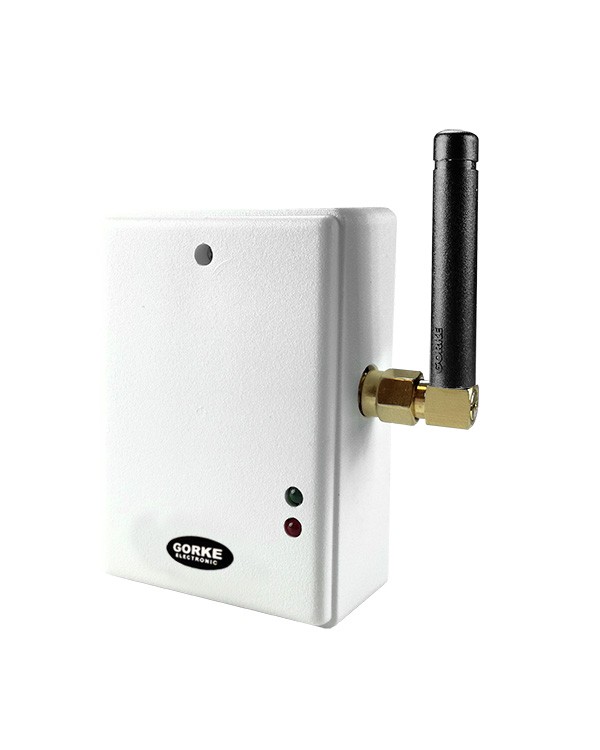
LX transmitter with five NC inputs and a tamper circuit — today’s equivalent of the NRX-105 transmitter used in the installation. Battery-powered, mounted by the door.
Quantity: per door layout
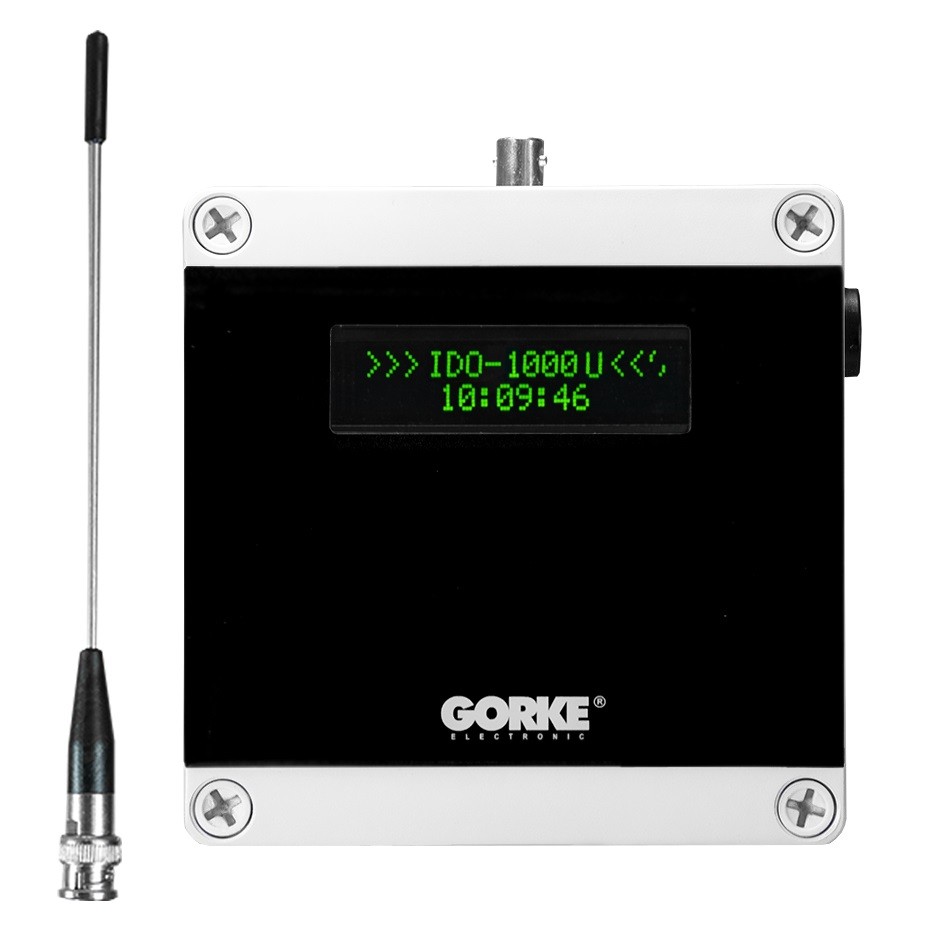
LX identification receiver in the monitoring centre — today’s equivalent of the RPX-102K receiver used in the installation. Shows the door’s label and keeps events in its buffer.
Quantity: 1
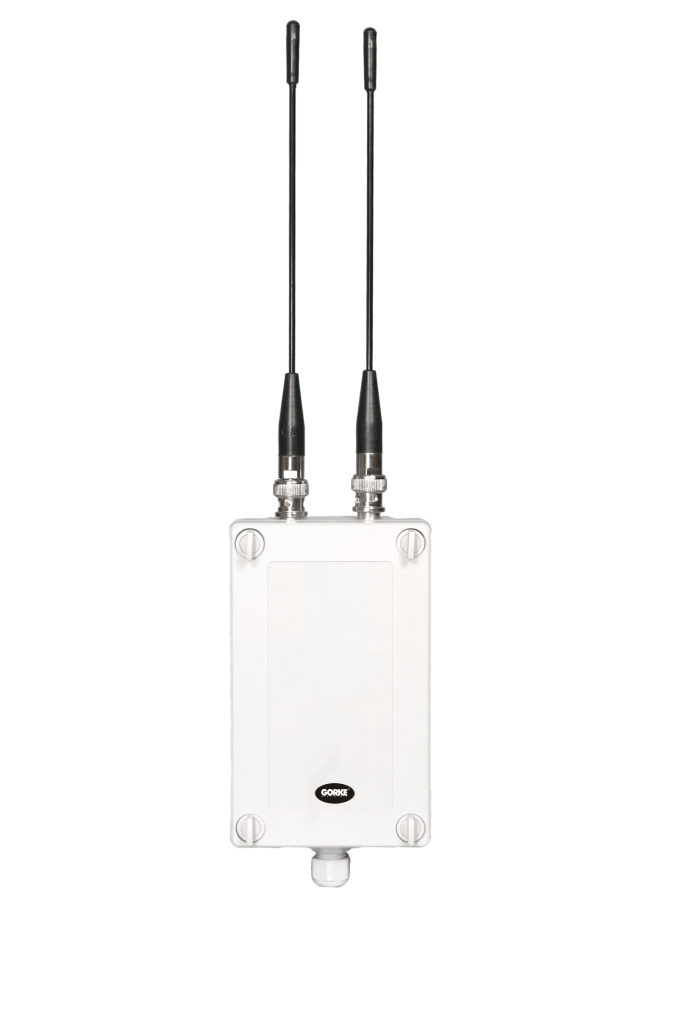
LX range extender — if the test on any storey shows that the signal does not reliably reach the monitoring centre.
Quantity: optional
Catalogue figures describe a device under stated conditions, usually in open terrain, and are not a guaranteed range in every installation. Device quantities in the examples are indicative.
04 / Value for the investor
Security sees in the monitoring centre which of the five doors was opened and goes straight there instead of walking every storey.
In the installation, cancelling the alarm did not end the monitoring: the open state stayed visible until someone closed the door, so a door left open did not escape security’s notice.
The LX transmitters run on batteries and reach the monitoring centre by radio, so installation needs no cable routes in an operating shopping centre.
05 / Before installation
Before devices are chosen, what matters is the site’s conditions and how the system ties into the final installation.
Source: an archived GORKE description of the installation. For a new investment we choose current models.
More from this sector
Public buildings and events
The gold panning competition in Złotoryja: competitors’ stations, the judges’ station, a control point and a results board linked by radio, with times measured to 0.01 s.
Public buildings and events
A municipal office: a call for help from the accessible toilet and a discreet call from under six service desks reach one receiver at the porter’s lodge, with the number of the spot.
Public buildings and events
A museum with 14 rooms on two floors: the room attendant calls security with a key fob, and the security desk and the staff on patrol see which room it is.
A project for your site
Send us the key requirements — GORKE will help define the scope, the technology and the components that fit the investment.