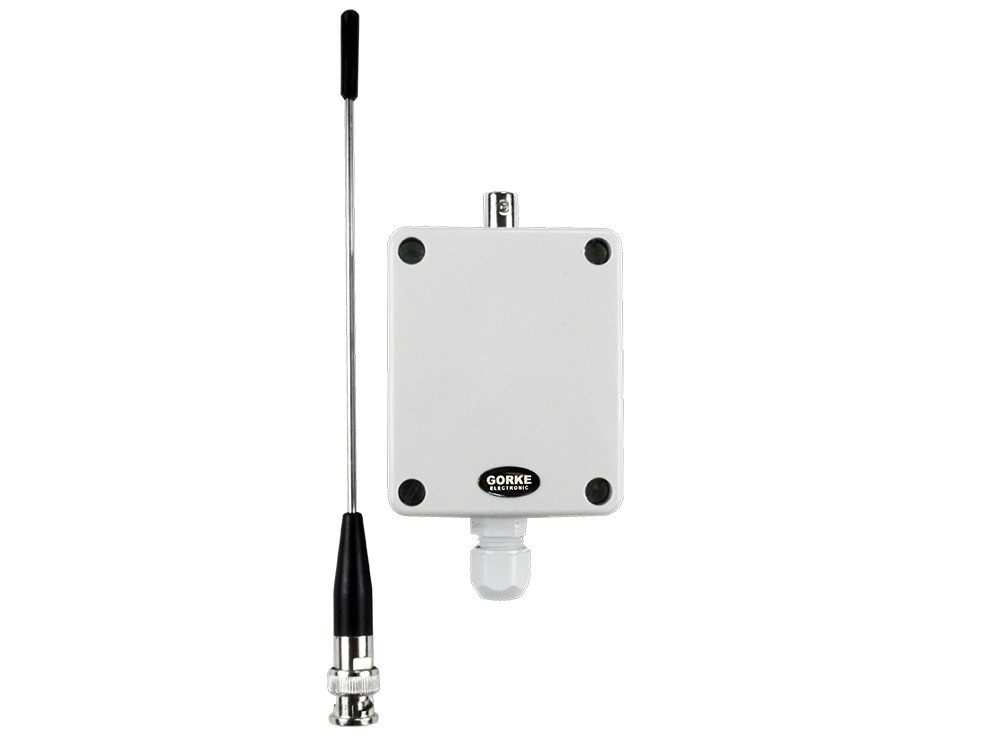
NRP-102K
Transmitter with link supervision in the boiler house, 12 V DC, IP66: input 1 — boiler fault, input 2 — flooding. It also sends link and power supervision signals.
Quantity: 1
Radio alarm transmission with link supervision between the boiler house and the estate management office: two alarm states, link and power supervision, plus a text message to the maintenance technician after hours.
01 / Investment context
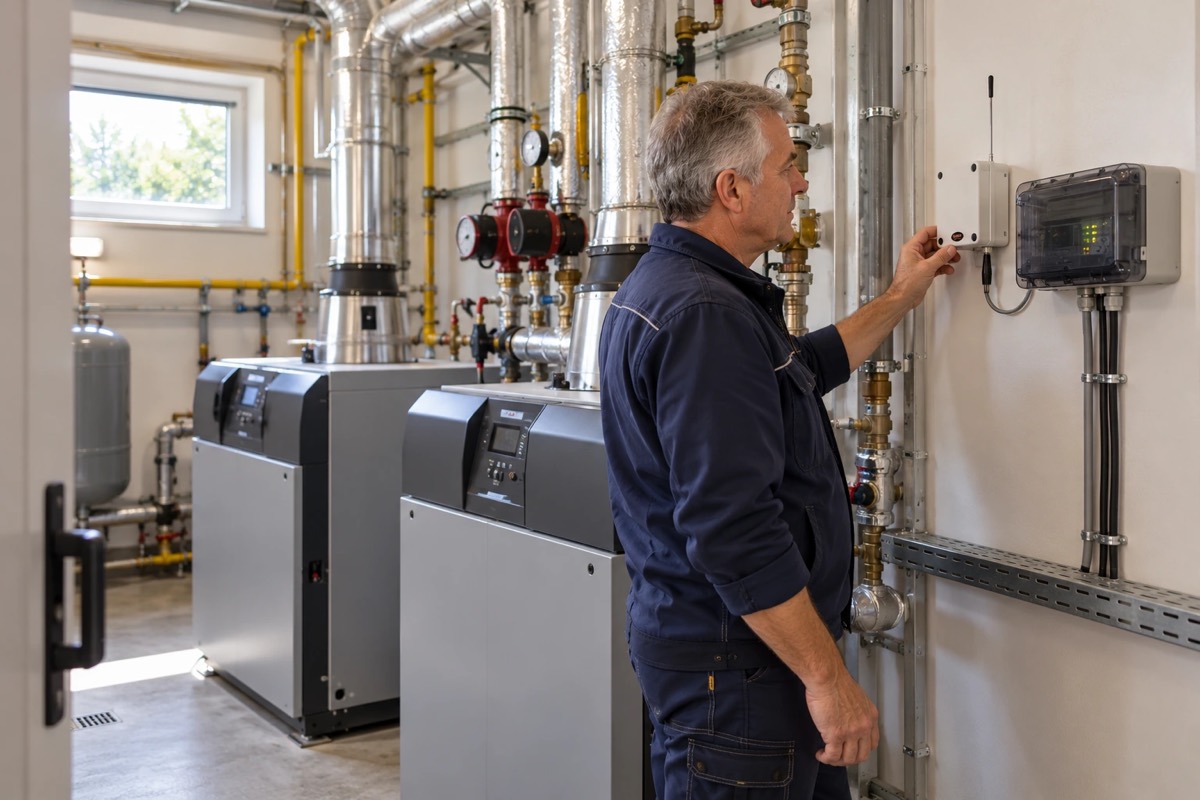
The estate has its own gas boiler house that heats its buildings. It stands 600 m from the management office and runs unattended — the maintenance technician looks in during rounds.
The boiler controller provides a “fault” contact, and a flood sensor sits on the floor. Today both signals end in the boiler house: the office only learns of a fault from residents whose radiators are going cold, and of flooding on the next round.
The office wants to see both states at its desk and — just as important — to know when the link itself stops working. No alarm should mean “all is well”, not “we don’t know”.
The investor’s goal: Boiler faults and flooding are visible in the management office, go by text to the technician after hours, and a lost link is reported like an alarm.
A transmitter with link supervision (NRP-102K) works in the boiler house, powered at 12 V DC with battery backup. Input 1 is the boiler controller’s “fault” contact, input 2 the flood sensor’s contact. The transmitter also sends link and power supervision signals.
In the management office a receiver with link supervision (RP10-2K) reports boiler fault, flooding, lost link and lost transmitter power separately. Its output switches on a signal unit with volume control (SWR-108) in the office, so that the alarm can be heard throughout the room without being needlessly loud.
The receiver’s outputs are also wired to a GSM transmitter in a housing with a power supply (ATG-SG4set), which sends a text message to the technician — after office hours the alarm does not go unanswered. If the estate’s buildings block the radio path, a repeater with link supervision (RTS-1000K) carries the signal.
02 / Operating principle
Boiler faults and flooding reach the management office 600 m away by radio, and the technician by text after hours.
01 / Signal source
NRP-102K Transmitter in the boiler house Boiler fault + FloodingSends both states plus link and power supervision signals.
02 / Reception
RP10-2K Receiver in the management officeReports both states, a lost link and lost power separately.
03 / Notification
Management office The office, and the technician after hours Office + TechnicianSWR-108 signal unit in the office, a text from the ATG-SG4set to the technician.
No alarm means the link is working. A lost link and lost transmitter power are reported like alarms; if buildings block the path, an RTS-1000K carries the signal.
A simplified functional diagram.
03 / Installation components
An example selection — the number of devices depends on the site.
Transmitter with link supervision in the boiler house, 12 V DC, IP66: input 1 — boiler fault, input 2 — flooding. It also sends link and power supervision signals.
Quantity: 1
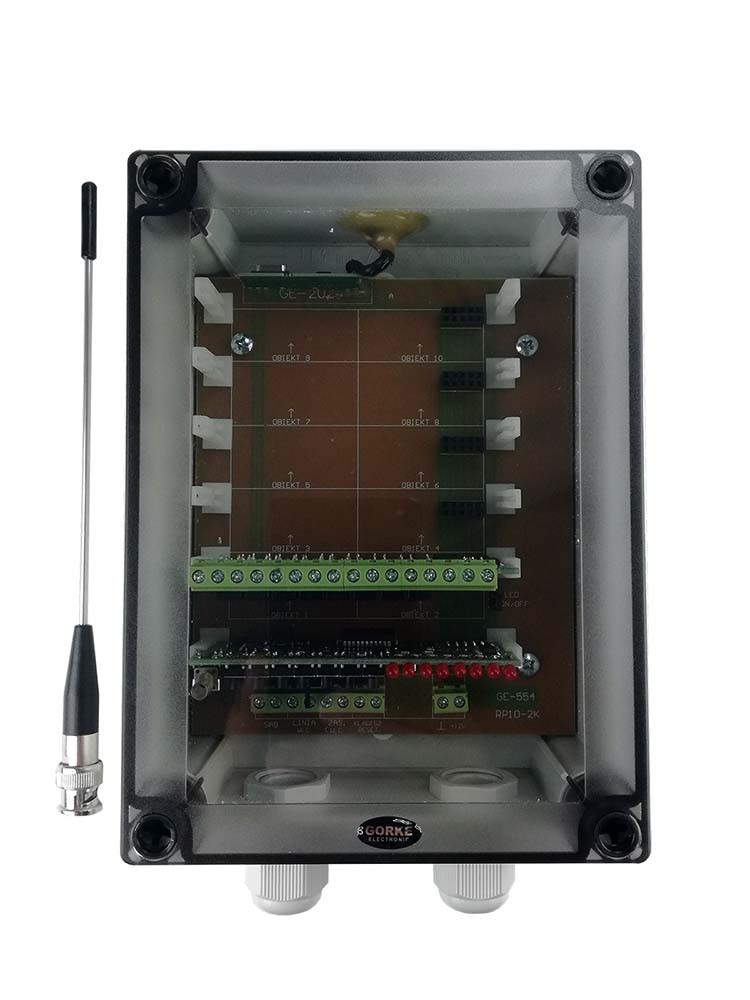
Receiver with link supervision in the management office: it reports both states as well as a broken link and lost transmitter power. The second site in the basic version stays in reserve.
Quantity: 1
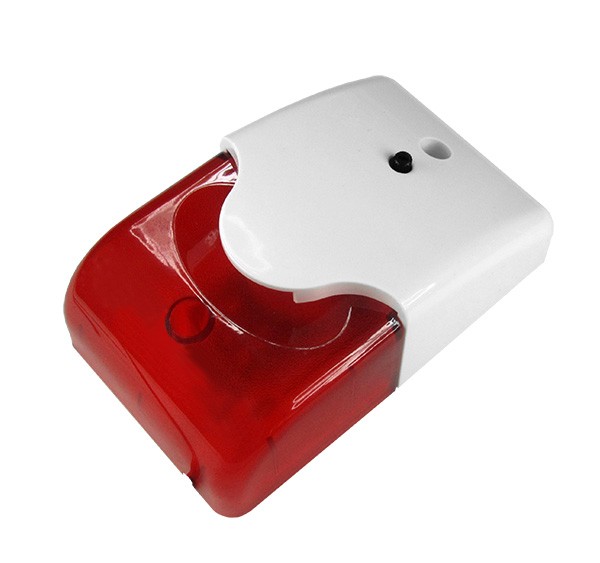
Light-and-sound signal unit in the management office, switched by the receiver’s output. The volume is set with a knob on the housing.
Quantity: 1
GSM transmitter in a housing with a power supply, next to the receiver: it turns the states on the receiver’s outputs into a text message to the technician.
Quantity: 1
Powers the transmitter in the boiler house and the receiver in the office, also during a mains failure, and the receiver monitors the transmitter’s power and reports its loss.
Quantity: 2
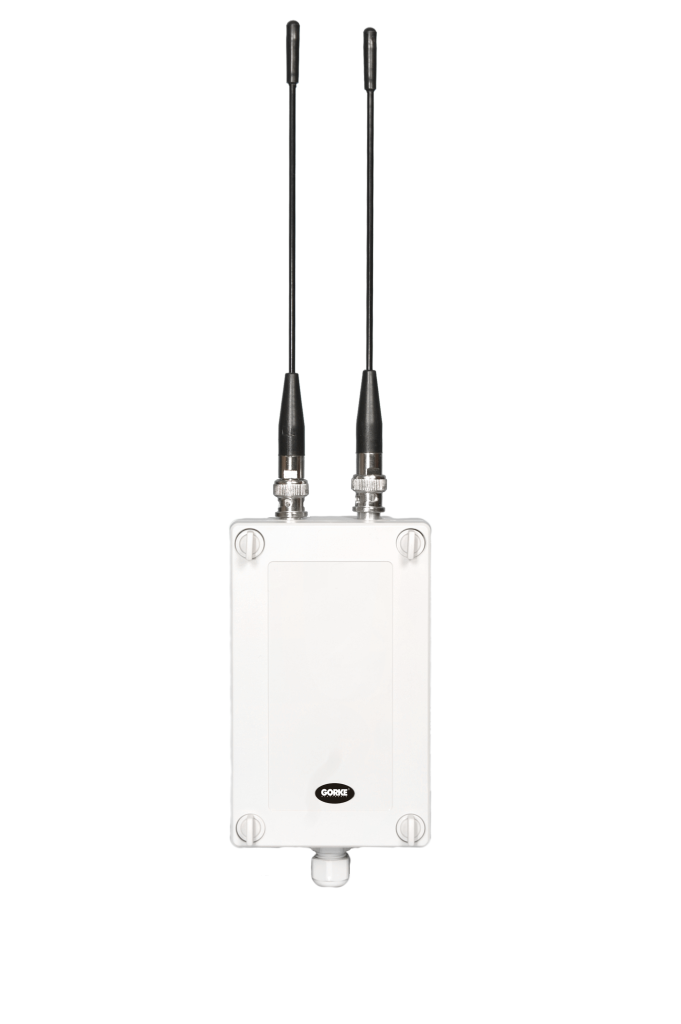
Repeater with link supervision — if the radio test shows that the estate’s buildings block the path; it extends the range by about a kilometre. Powered at 12 V DC.
Quantity: optional
Catalogue figures describe a device under stated conditions, usually in open terrain, and are not a guaranteed range in every installation. Device quantities in the examples are indicative.
04 / Value for the investor
A lost link and lost transmitter power are reported like alarms, so no alarm means the link is working and the boiler house reports no fault.
The office knows about a boiler fault before residents start calling about cold radiators — and can send the technician sooner.
The text message reaches the technician’s phone at night and at weekends too, when the management office is closed.
05 / Before installation
Before devices are chosen, what matters is the site’s conditions and how the system ties into the final installation.
Example configuration — it needs a technical selection for your site.
More from this sector
Energy
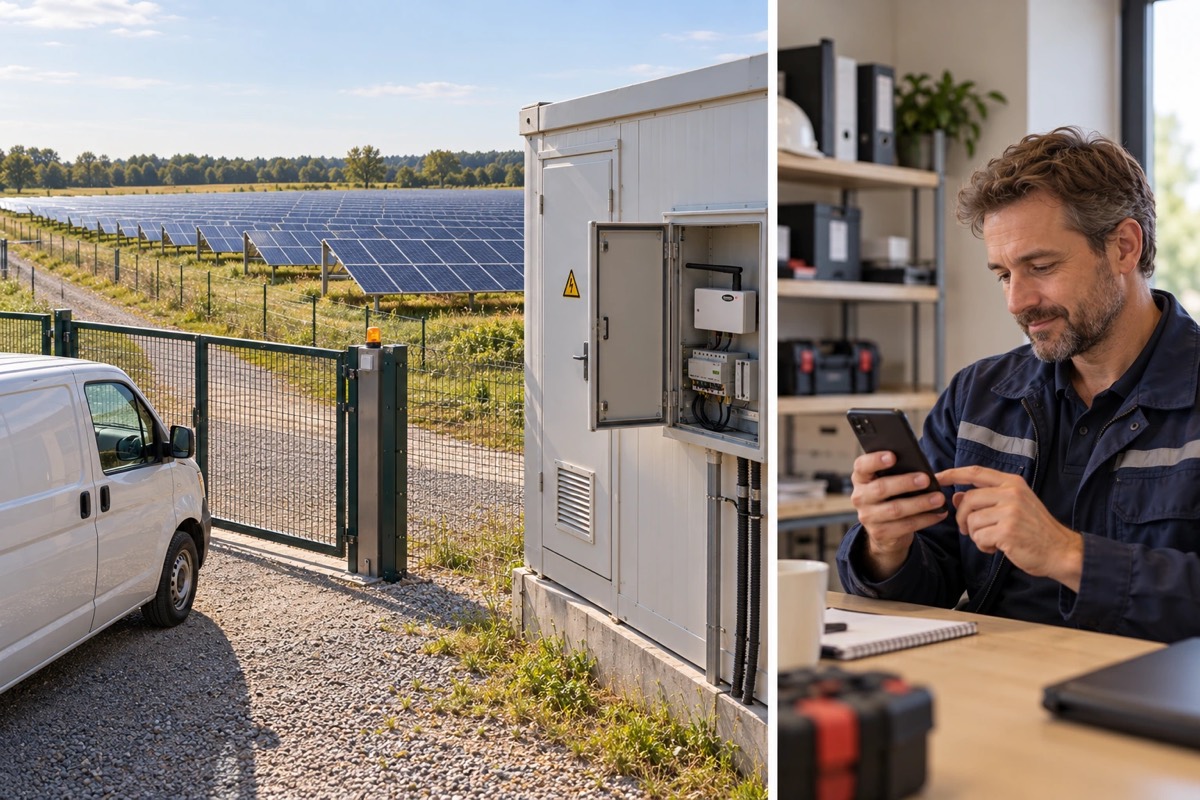
A 2 MW PV farm with no permanent staff: an inverter fault, a protection trip and the container being opened arrive by text at the service team, and crews open the gate by phone.
A project for your site
Send us the key requirements — GORKE will help define the scope, the technology and the components that fit the investment.